啄
| ||||||||
Translingual
Han character
啄 (Kangxi radical 30, 口+8 in Chinese, 口+7 in Japanese, 11 strokes in Chinese, 10 strokes in Japanese, cangjie input 口一尸人 (RMSO), four-corner 61032, composition ⿰口豖)
- to peck
- (Cantonese) to slander
References
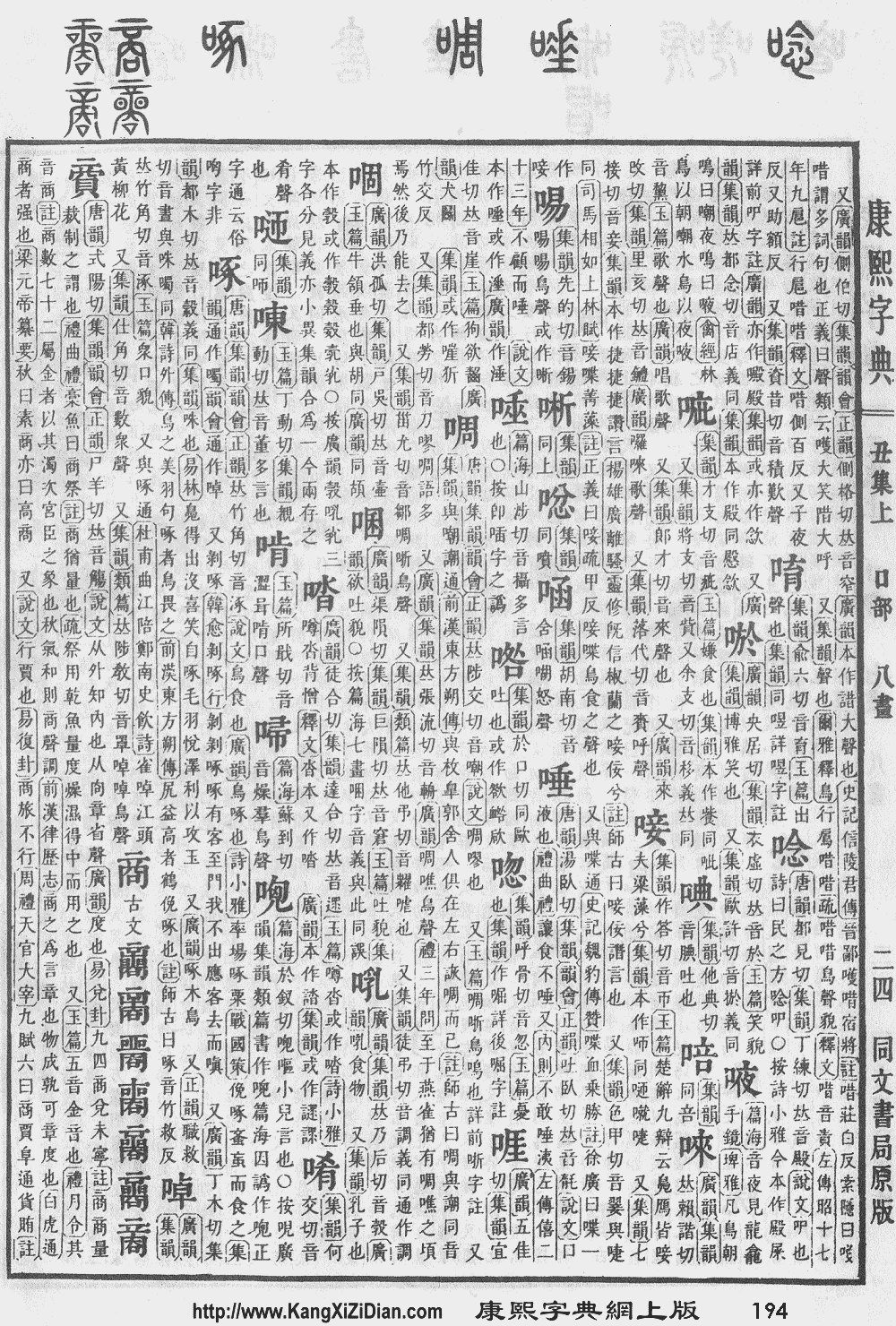
- KangXi: page 194, character 30
- Dai Kanwa Jiten: character 3801
- Dae Jaweon: page 415, character 7
- Hanyu Da Zidian (first edition): volume 1, page 639, character 1
- Unihan data for U+5544
Chinese
| trad. | 啄 | |
|---|---|---|
| simp. # | 啄 | |
Glyph origin
Characters in the same phonetic series (豖) (Zhengzhang, 2003)
Phono-semantic compound (形聲, OC *rtoːɡ, *toːɡ) : semantic 口 (“mouth”) + phonetic 豖 (OC *tʰoɡ)
Pronunciation
Compounds
References
- “啄”, in 漢語多功能字庫 (Multi-function Chinese Character Database), 香港中文大學 (the Chinese University of Hong Kong), 2014–
Japanese
| Shinjitai | 啄 | |
| Kyūjitai [1] |
啄󠄁 啄+ 󠄁?(Adobe-Japan1) |
 |
| 啄󠄅 啄+ 󠄅?(Hanyo-Denshi) (Moji_Joho) | ||
| The displayed kanji may be different from the image due to your environment. See here for details. | ||
Readings
Hypernyms
- 永字八法 (eiji happō, “the Eight Principles of Yong”)
Coordinate terms
- 側 (soku, “the first of the Eight Principles of Yong”)
- 勒 (roku, “the second of the Eight Principles of Yong”)
- 努 (do, “the third of the Eight Principles of Yong”)
- 趯 (teki, “the fourth of the Eight Principles of Yong”)
- 策 (saku, “the fifth of the Eight Principles of Yong”)
- 掠 (ryaku, “the sixth of the Eight Principles of Yong”)
- 磔 (taku, “the eighth of the Eight Principles of Yong”)
References
- “啄”, in 漢字ぺディア (Kanjipedia) (in Japanese), 日本漢字能力検定協会, 2015—2023
- 2006, 大辞林 (Daijirin), Third Edition (in Japanese), Tōkyō: Sanseidō, →ISBN
Korean
Hanja
啄 (eum 탁 (tak))
- This term needs a translation to English. Please help out and add a translation, then remove the text
{{rfdef}}.
Vietnamese
This article is issued from Wiktionary. The text is licensed under Creative Commons - Attribution - Sharealike. Additional terms may apply for the media files.