端
| ||||||||
Translingual
Han character
端 (Kangxi radical 117, 立+9, 14 strokes, cangjie input 卜廿山一月 (YTUMB), four-corner 02127, composition ⿰立耑)
Derived characters
- 𭋬, 𭢺, 𧞖, 𦾸, 𤻨, 𥵣
References
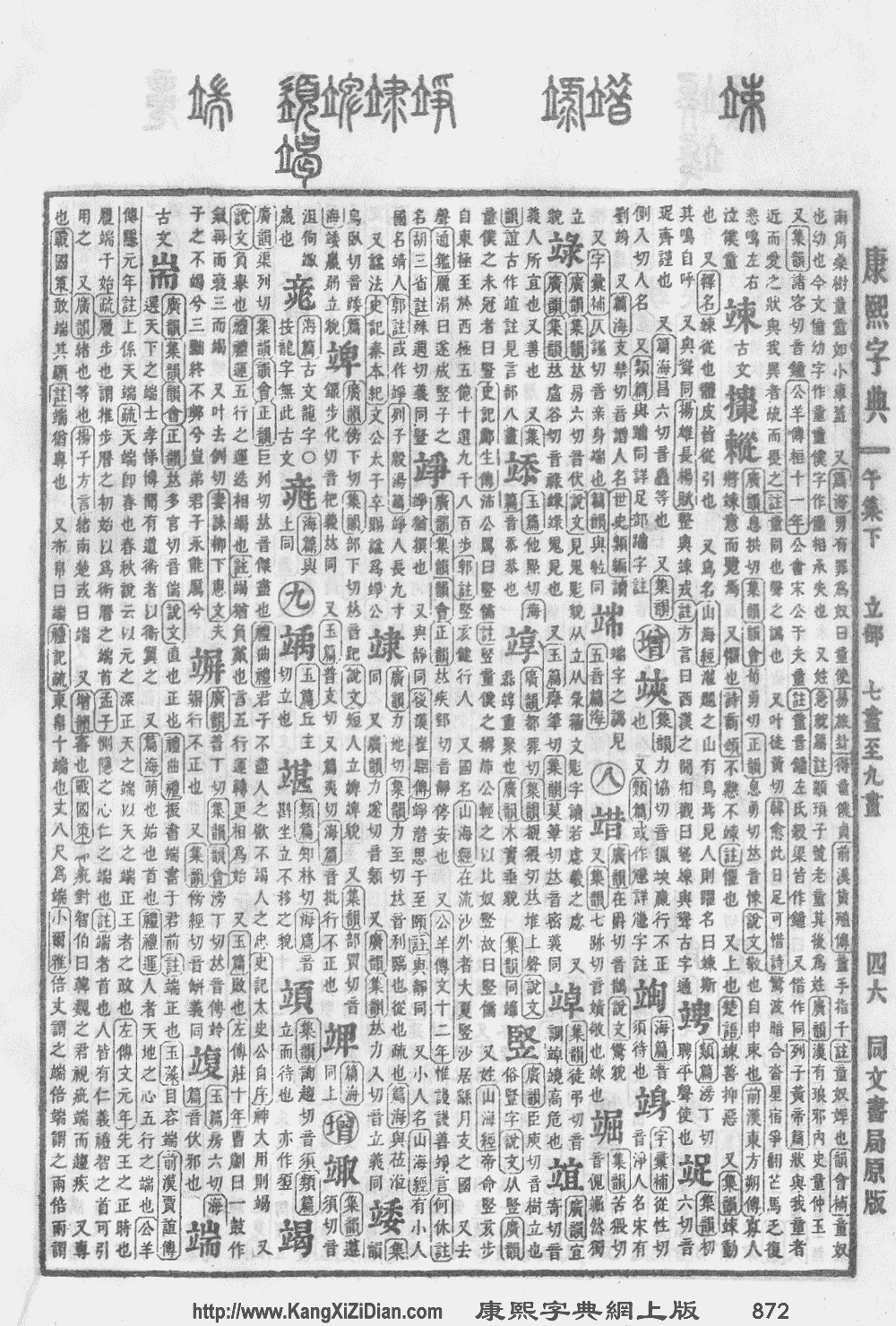
- KangXi: page 872, character 32
- Dai Kanwa Jiten: character 25806
- Dae Jaweon: page 1303, character 20
- Hanyu Da Zidian (first edition): volume 4, page 2714, character 1
- Unihan data for U+7AEF
Chinese
| simp. and trad. |
端 | |
|---|---|---|
| alternative forms | 耑 | |
Glyph origin
| Historical forms of the character 端 | ||
|---|---|---|
| Warring States | Shuowen Jiezi (compiled in Han) | Liushutong (compiled in Ming) |
| Chu slip and silk script | Small seal script | Transcribed ancient scripts |
 |
 |
 |
Characters in the same phonetic series (耑) (Zhengzhang, 2003)
| Old Chinese | |
|---|---|
| 揣 | *toːlʔ, *sʰrolʔ |
| 褍 | *toːlʔ, *toːn |
| 惴 | *tjols |
| 圌 | *djol, *djon |
| 篅 | *djol, *djon |
| 瑞 | *djols |
| 端 | *toːn |
| 剬 | *toːn, *tjonʔ |
| 偳 | *toːn, *tʰoːn |
| 鍴 | *toːn |
| 耑 | *toːn |
| 踹 | *toːns, *djonʔ |
| 湍 | *tʰoːn, *tjon |
| 煓 | *tʰoːn |
| 貒 | *tʰoːn, *tʰoːns |
| 諯 | *stʰons, *tjon, *tʰjons, *djon |
| 顓 | *tjon |
| 喘 | *tʰjonʔ |
| 遄 | *djon |
| 輲 | *djon |
| 椯 | *djon |
| 歂 | *djon, *djonʔ |
| 腨 | *djonʔ |
Phono-semantic compound (形聲, OC *toːn) : semantic 立 + phonetic 耑 (OC *toːn).
Pronunciation
Definitions
端
- to hold something level with hand
- end; tip
- beginning; start
- upright; erect
- 端正 ― duānzhèng ― upright; proper
- to wipe out; to destroy altogether
- (figurative, colloquial, derogatory, usually followed by 著/着) to put on airs; to act pretentiously
- (~母) (Chinese linguistics) the Middle Chinese initial of 端 (MC tuɑn)
Compounds
Derived terms from 端
|
|
|
Descendants
Japanese
Readings
Etymology
| Kanji in this term |
|---|
| 端 |
| はし Grade: S |
| kun’yomi |
(This etymology is missing or incomplete. Please add to it, or discuss it at the Etymology scriptorium.)
Korean
Hanja
Vietnamese
This article is issued from Wiktionary. The text is licensed under Creative Commons - Attribution - Sharealike. Additional terms may apply for the media files.