啟
| ||||||||
Translingual
| Traditional | 啟 |
|---|---|
| Simplified | 启 |
| Japanese | 啓 |
| Korean | 啓 |
Han character
啟 (Kangxi radical 66, 攴+7, 11 strokes, cangjie input 竹口人大 (HROK), four-corner 38604, composition ⿰户攵(G) or ⿰启攵(HT))
Usage notes
This character form is not found in the Kangxi dictionary and is not used in Japan or Korea (啓 is used instead). However, this character is the preferred form used in Hong Kong and Taiwan.
Derived characters
- 闙, 𣘼, 𭨠, 𦘦, 𮮝, 𫫤, 𫹢
Related characters
- 啓 (Similar character form)
Descendants
References
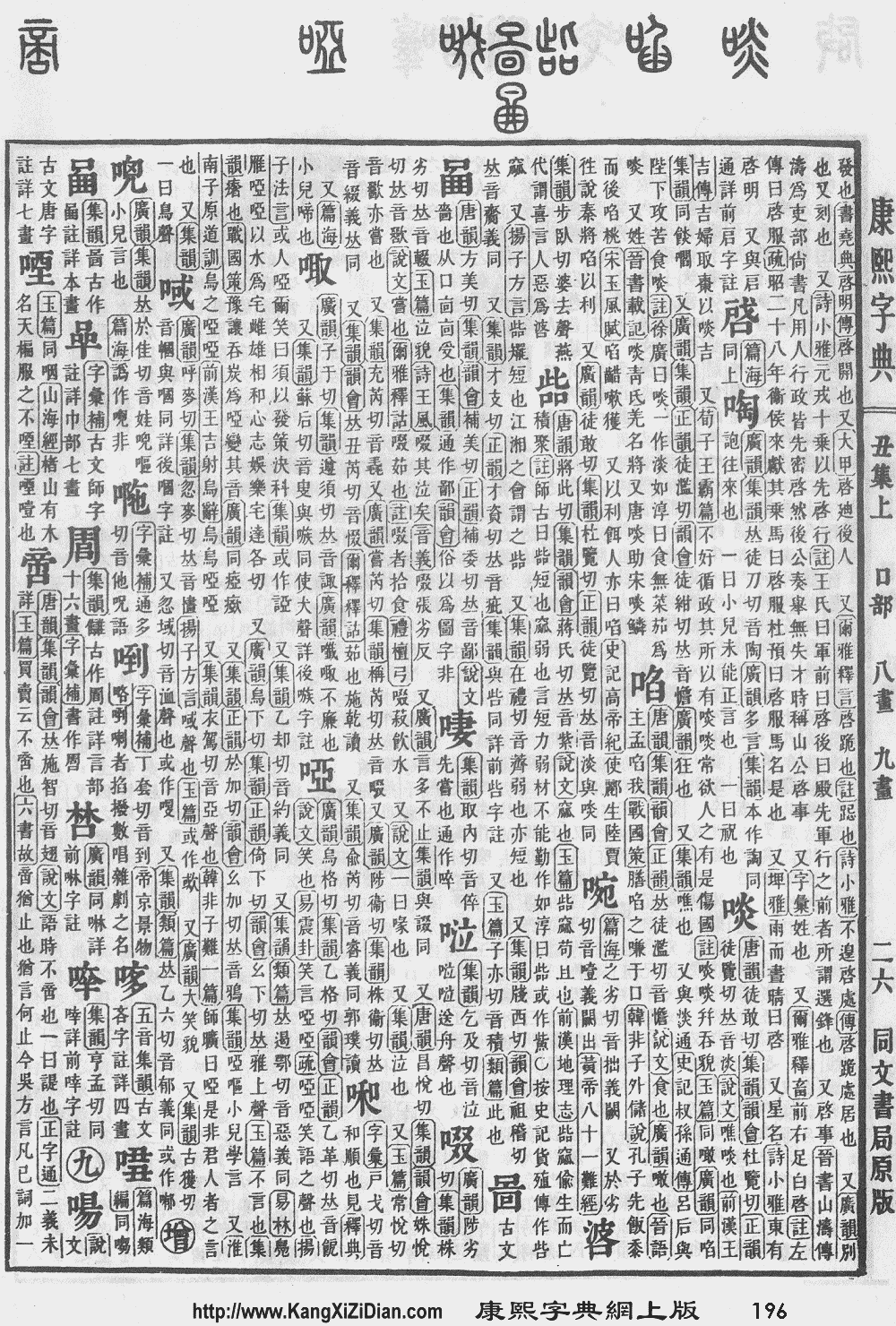
- KangXi: not present, would follow page 196, character 26
- Dai Kanwa Jiten: character 3821
- Hanyu Da Zidian (first edition): volume 2, page 1463, character 8
- Unihan data for U+555F
Chinese
| trad. | 啟/啓 | |
|---|---|---|
| simp. | 启 | |
| alternative forms | 唘 啔 | |
Glyph origin
Pronunciation
Definitions
啟
Synonyms
Terms for the book of Revelation in different branches of Christianity
| Branch | Names | Abbreviations |
|---|---|---|
| Protestant | 啟示錄 | 啟 |
| Roman Catholic | 若望默示錄, 默示錄 | 默 |
| Eastern Orthodox | 約安之啟示錄 |
Compounds
Derived terms from 啟
Japanese
Kanji
啟
- This term needs a translation to English. Please help out and add a translation, then remove the text
{{rfdef}}.
Korean
Hanja
啟 • (gye) (hangeul 계, revised gye, McCune–Reischauer kye)
- This term needs a translation to English. Please help out and add a translation, then remove the text
{{rfdef}}.
Vietnamese
This article is issued from Wiktionary. The text is licensed under Creative Commons - Attribution - Sharealike. Additional terms may apply for the media files.