址

See also: 阯
址 U+5740, 址
CJK UNIFIED IDEOGRAPH-5740
← 圿
[U+573F]
CJK Unified Ideographs 坁 →
[U+5741]

Translingual

Han character

址 (Kangxi radical 32, 土+4, 7 strokes, cangjie input 土卜中一 (GYLM), four-corner 41110, composition ⿰土止)

Further reading

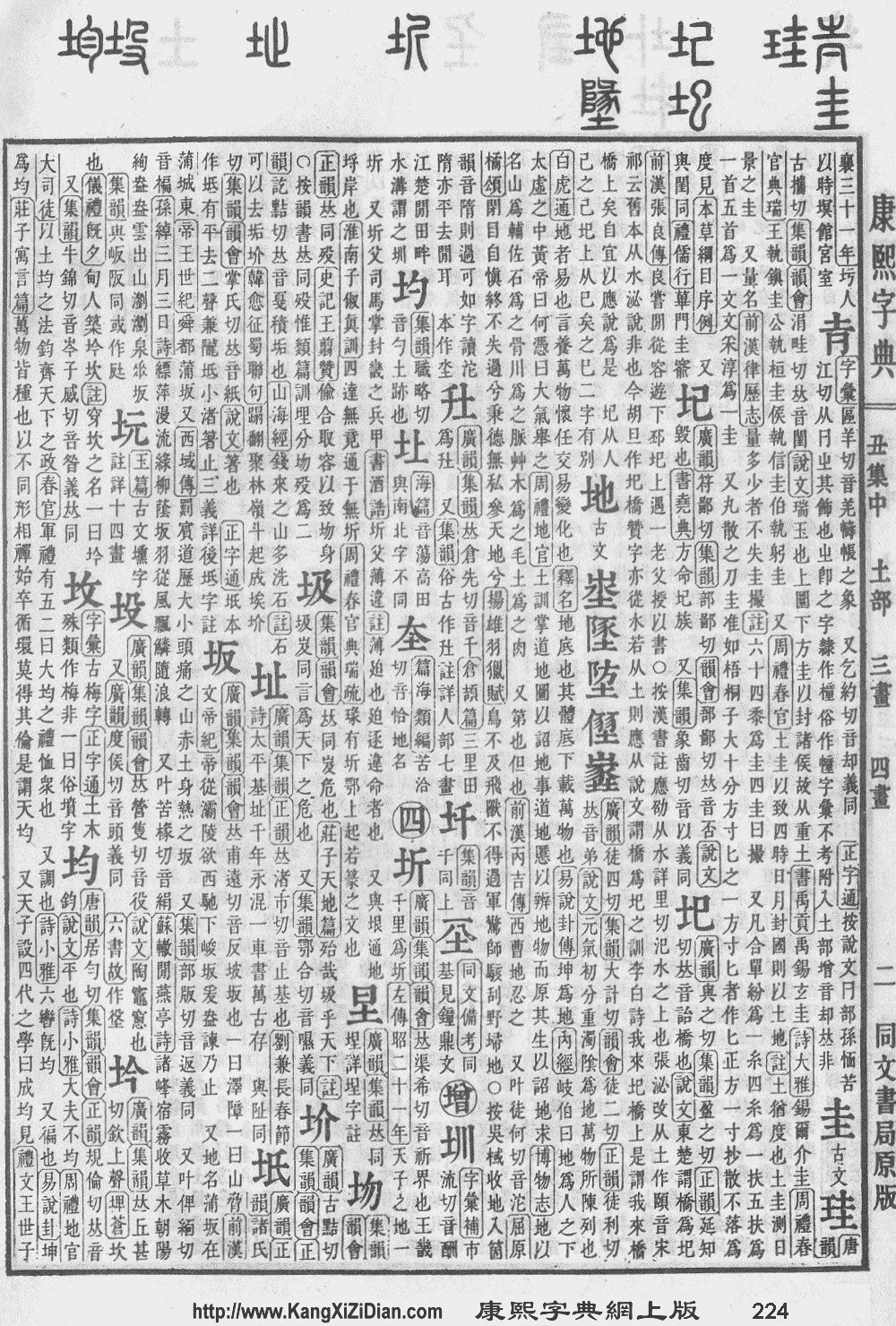
  • KangXi: page 224, character 24
  • Dai Kanwa Jiten: character 4908
  • Dae Jaweon: page 459, character 12
  • Hanyu Da Zidian (first edition): volume 1, page 422, character 13
  • Unihan data for U+5740

Chinese

simp. and trad.
址

Glyph origin

Historical forms of the character 址
Shuowen Jiezi (compiled in Han)
Small seal script

Phono-semantic compound (形聲, OC *kjɯʔ) : semantic 土 (“earth”) + phonetic 止 (OC *kjɯʔ).

Pronunciation


Rime
Character 址
Reading # 1/1
Initial (聲) 章 (23)
Final (韻) 之 (19)
Tone (調) Rising (X)
Openness (開合) Open
Division (等) III
Fanqie 諸市切
Reconstructions
Zhengzhang
Shangfang
/t͡ɕɨX/
Pan
Wuyun
/t͡ɕɨX/
Shao
Rongfen
/t͡ɕieX/
Edwin
Pulleyblank
/cɨX/
Li
Rong
/t͡ɕiəX/
Wang
Li
/t͡ɕĭəX/
Bernard
Karlgren
/t͡ɕiX/
Expected
Mandarin
Reflex
zhǐ
Expected
Cantonese
Reflex
zi2
Zhengzhang system (2003)
Character 址
Reading # 1/1
No. 17296
Phonetic
component
止
Rime
group
之
Rime
subdivision
0
Corresponding
MC rime
止
Old
Chinese
/*kjɯʔ/

Definitions

址

  1. location; address; site
  2. ground; foundation

Compounds

  • 校址 (xiàozhǐ)
  • 界址 (jièzhǐ)
  • 站址
  • 壩址/坝址
  • 廠址/厂址
  • 會址/会址

Japanese

Kanji

址

(uncommon “Hyōgai” kanji)

Readings

  • Go-on: し (shi)
  • Kan-on: し (shi)
  • Kun: あと (ato, 址)

Etymology 1

Kanji in this term
址
し
Hyōgaiji
on’yomi

(This etymology is missing or incomplete. Please add to it, or discuss it at the Etymology scriptorium.)

Pronunciation

  • IPA(key): [ɕi]

Noun

址(し) • (shi) 

  1. (architecture) base of a structure
    基(き)址(し) ― kishi ― foundations
  2. remains, ruins
    遺(い)址(し) ― ishi ― ancient remains

Etymology 2

Kanji in this term
址
あと
Hyōgaiji
kun’yomi
For pronunciation and definitions of 址 – see the following entry.
【跡あと】S
[noun] evidence of something passing; footsteps, trace, tracks
[noun] mark or trace left on something after a certain act is done to it
[noun] remains, ruins
[noun] family estate or property
[noun] precedent, example
Alternative spellings
痕, 迹, 址, 𫐤
(This term, 址, is an alternative spelling of the above term.)

Korean

Hanja

址 (eum 지 (ji))

  1. This term needs a translation to English. Please help out and add a translation, then remove the text {{rfdef}}.

Vietnamese

Han character

址: Hán Việt readings: chỉ
址: Nôm readings: chỉ, xởi

  1. This term needs a translation to English. Please help out and add a translation, then remove the text {{rfdef}}.
This article is issued from Wiktionary. The text is licensed under Creative Commons - Attribution - Sharealike. Additional terms may apply for the media files.