痕
| ||||||||
Translingual
Han character
痕 (Kangxi radical 104, 疒+6, 11 strokes, cangjie input 大日女 (KAV), four-corner 00132, composition ⿸疒艮)
References
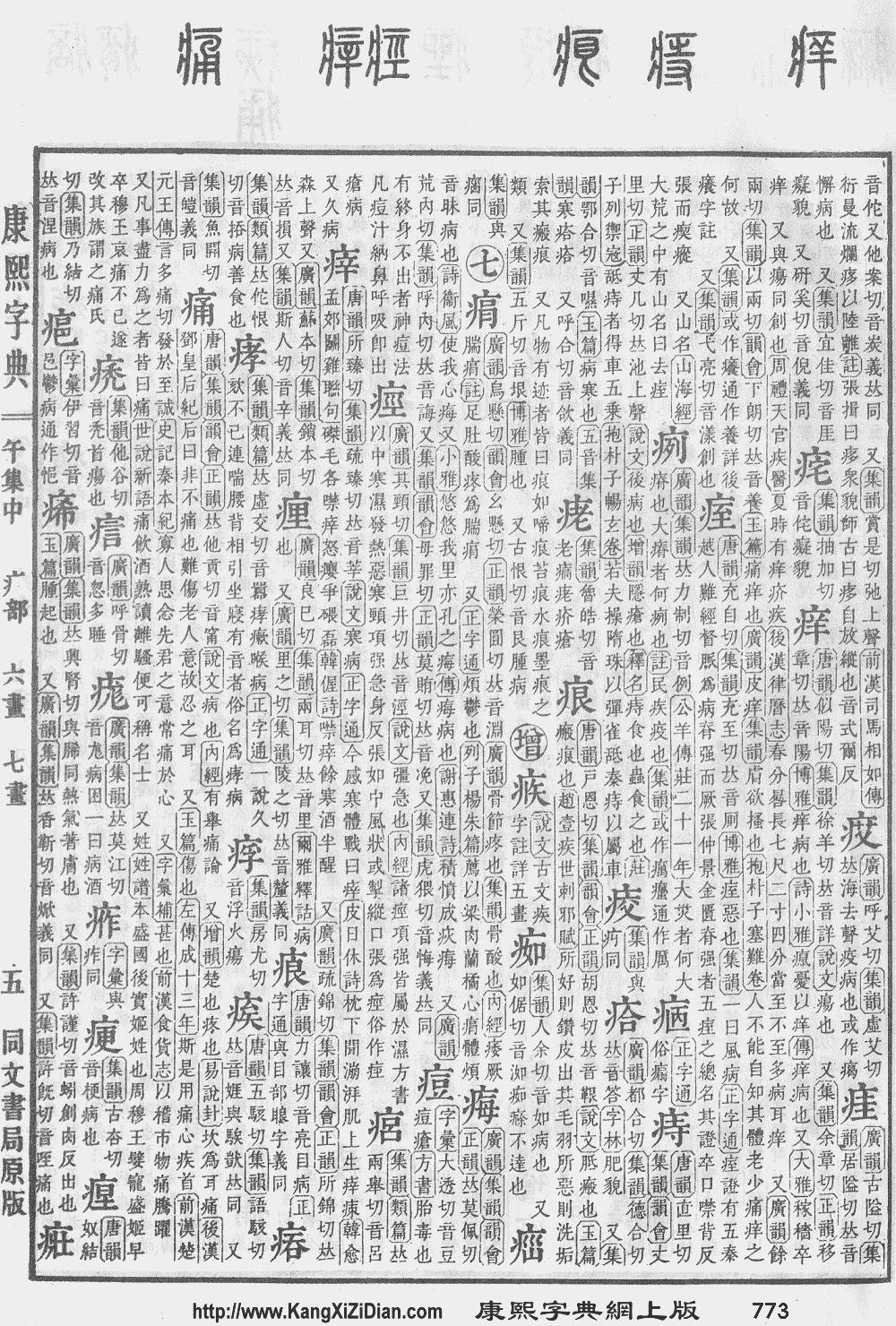
- KangXi: page 773, character 12
- Dai Kanwa Jiten: character 22171
- Dae Jaweon: page 1183, character 26
- Hanyu Da Zidian (first edition): volume 4, page 2673, character 5
- Unihan data for U+75D5
Chinese
Glyph origin
Characters in the same phonetic series (艮) (Zhengzhang, 2003)
| Old Chinese | |
|---|---|
| 艱 | *krɯːn |
| 齦 | *kʰrɯːnʔ, *kʰɯːnʔ, *ŋɯn |
| 眼 | *ŋrɯːnʔ |
| 蛝 | *ɡrɯːn |
| 限 | *ɡrɯːnʔ |
| 硍 | *ɡrɯːnʔ |
| 豤 | *kʰɯːnʔ, *kʰɯːnʔ, *kʰuːn |
| 詪 | *ɡlɯːnʔ, *kɯːnʔ, *kɯːns |
| 根 | *kɯːn |
| 跟 | *kɯːn |
| 珢 | *kɯːn, *kɯːns, *ŋrɯn |
| 艮 | *kɯːns |
| 茛 | *kɯːns |
| 墾 | *kʰɯːnʔ |
| 懇 | *kʰɯːnʔ |
| 垠 | *ŋɯːn, *ŋrɯn, *ŋɯn |
| 泿 | *ŋɯːn, *ŋrɯn |
| 痕 | *ɡɯːn |
| 拫 | *ɡɯːn |
| 鞎 | *ɡɯːn |
| 很 | *ɡɯːnʔ |
| 恨 | *ɡɯːns |
| 銀 | *ŋrɯn |
| 檭 | *ŋrɯn |
Phono-semantic compound (形聲, OC *ɡɯːn) : semantic 疒 + phonetic 艮 (OC *kɯːns).
Etymology 1
| simp. and trad. |
痕 | |
|---|---|---|
(This etymology is missing or incomplete. Please add to it, or discuss it at the Etymology scriptorium.)
Pronunciation
Definitions
痕
Compounds
Derived terms from 痕
Etymology 2
| simp. and trad. |
痕 | |
|---|---|---|
Kra-Dai substrate word. Compare Zhuang haenz (“to itch”), humz (“to itch”), Hlai kom (“to itch”).
Pronunciation
Definitions
痕
Synonyms
Dialectal synonyms of 癢 (“itchy”) [map]
Japanese
Compounds
- 漣痕 (renkon, “ripple mark”)
Etymology 1
| Kanji in this term |
|---|
| 痕 |
| こん Grade: S |
| kan’on |
(This etymology is missing or incomplete. Please add to it, or discuss it at the Etymology scriptorium.)
Pronunciation
- IPA(key): [kõ̞ɴ]
Korean
Etymology
From Middle Chinese 痕 (MC ɦən). Recorded as Middle Korean 흔 (hun) (Yale: hun) in Hunmong Jahoe (訓蒙字會 / 훈몽자회), 1527.
Compounds
Compounds
- 흔적 (痕跡/痕迹, heunjeok)
- 도흔 (刀痕, doheun)
- 묵흔 (墨痕, mukheun)
- 필흔 (筆痕, pilheun)
- 누흔 (淚痕, nuheun)
- 상흔 (傷痕, sangheun)
- 생흔 (生痕, saengheun)
- 수흔 (水痕, suheun)
- 여흔 (餘痕, yeoheun)
- 연흔 (漣痕, yeonheun)
- 우흔 (雨痕, uheun)
- 전흔 (戰痕, jeonheun)
- 족흔 (足痕, jokheun)
- 주흔 (酒痕, juheun)
- 혈흔 (血痕, hyeolheun)
- 소흔 (燒痕, soheun)
- 압흔 (壓痕, apheun)
- 잔흔 (殘痕, janheun)
- 탄흔 (彈痕, tanheun)
- 늑흔 (勒痕, neukheun)
- 반흔 (瘢痕, banheun)
- 조흔 (條痕, joheun)
- 엽흔 (葉痕, yeopheun)
- 무흔 (無痕, muheun)
Vietnamese
Han character
痕: Hán Nôm readings: ngấn, ngằn, ngẩn, ngân, ngần
- This term needs a translation to English. Please help out and add a translation, then remove the text
{{rfdef}}.
References
- Thiều Chửu : Hán Việt Tự Điển Hà Nội 1942
- Trần Văn Chánh: Từ Điển Hán Việt NXB Trẻ, Ho Chi Minh Ville, 1999
- Vũ Văn Kính: Đại Tự Điển Chữ Nôm, NXB Văn Nghệ, Ho Chi Minh Ville, 1999
This article is issued from Wiktionary. The text is licensed under Creative Commons - Attribution - Sharealike. Additional terms may apply for the media files.