跡
See also: 迹
| ||||||||
Translingual
| Japanese | 跡 |
|---|---|
| Simplified | 迹 |
| Traditional | 跡/蹟 |
Han character
跡 (Kangxi radical 157, 足+6, 13 strokes, cangjie input 口一卜中金 (RMYLC), four-corner 60130, composition ⿰𧾷亦)
References
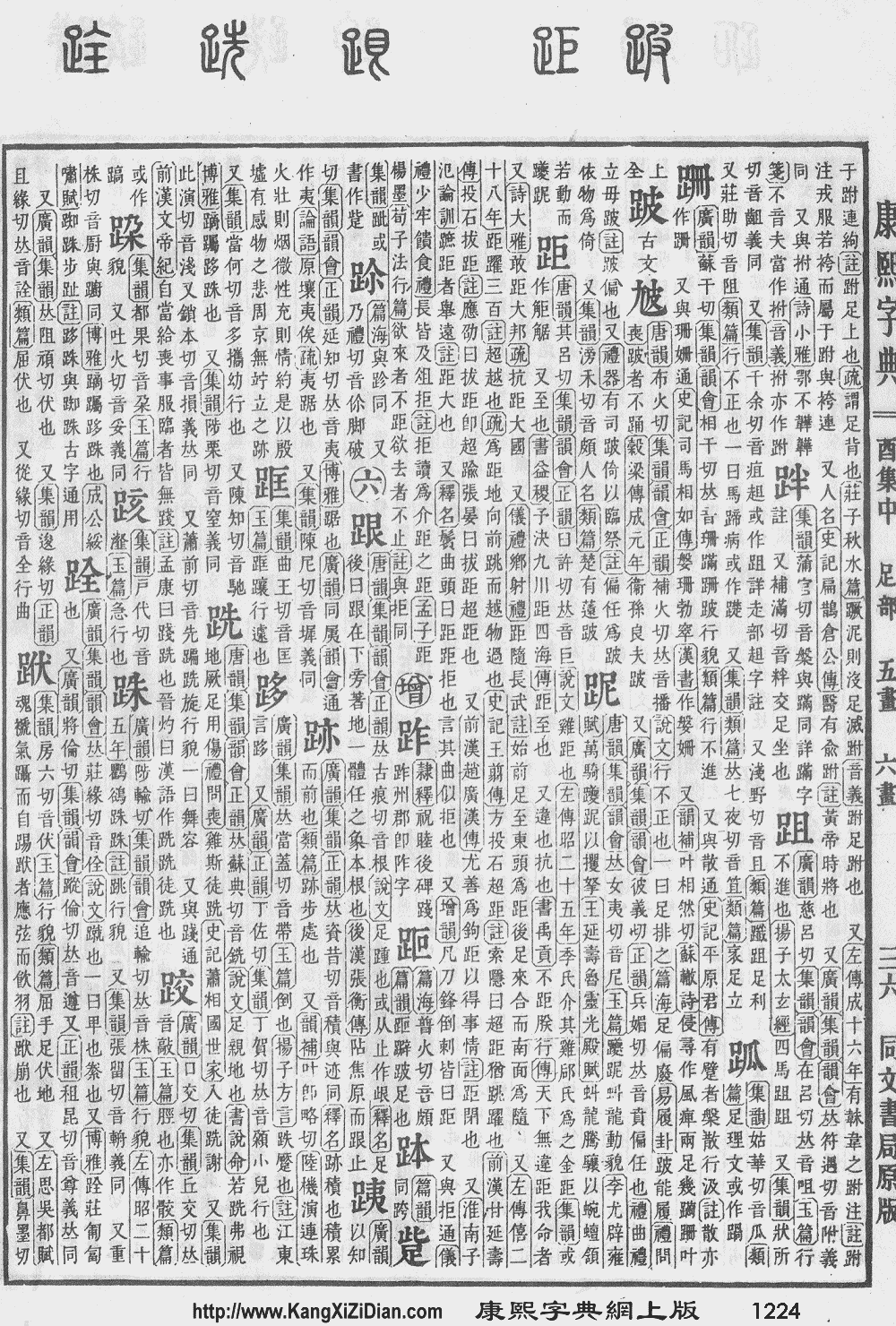
- KangXi: page 1224, character 16
- Dai Kanwa Jiten: character 37493
- Dae Jaweon: page 1696, character 7
- Hanyu Da Zidian (first edition): volume 6, page 3706, character 2
- Unihan data for U+8DE1
Chinese
| trad. | 跡/蹟/迹 | |
|---|---|---|
| simp. | 迹 | |
| alternative forms | 𨒪 𨒏 ancient | |
Glyph origin
Characters in the same phonetic series (亦) (Zhengzhang, 2003)
Phono-semantic compound (形聲, OC *ʔsleːɡ) : semantic 𧾷 (“foot”) + phonetic 亦 (OC *laːɡ).
Pronunciation
Usage notes
- In Taiwan, both 跡 and 蹟 are standard forms. 蹟 is used in some compounds like 奇蹟 and 事蹟 (in which 跡 or 迹 are acceptable but could be seen as informal), while 跡 in some others like 痕跡 and 筆跡 (in which 跡 should not be written as 蹟).
- In Hong Kong, only 跡 is the standard form, while 蹟 and 迹 are acceptable variant forms.
Compounds
Derived terms from 跡
|
|
|
Japanese
Compounds
Noun
跡 • (ato)
- evidence of something passing; footsteps, trace, tracks
- 靴の跡 ― kutsu no ato ― shoeprints
- 犯人の跡を追う
- hannin no ato o ou
- track down the criminal
- (literally, “follow the trace of the criminal”)
- mark or trace left on something after a certain act is done to it
- remains, ruins
- 寺院の址 ― jiin no ato ― remains of a temple
- family estate or property
- Synonym: 家督
- precedent, example
- Synonym: 先例
- 古人の跡にならう
- kojin no ato ni narau
- follow in the footsteps of the ancients
Etymology 2
| Kanji in this term |
|---|
| 跡 |
| せき Grade: S |
| kan’on |
| Alternative spellings |
|---|
| 迹 蹟 |
(This etymology is missing or incomplete. Please add to it, or discuss it at the Etymology scriptorium.)
Pronunciation
- IPA(key): [se̞kʲi]
Noun
跡 • (seki)
Pronunciation
- IPA(key): [to̞]
Noun
跡 • (to)
- Used in compound terms such as 跡絶える (todaeru, “to cut off, sever”), 跡見 (tomi, “tracking (in hunting)”), etc.
Korean
Etymology
(This etymology is missing or incomplete. Please add to it, or discuss it at the Etymology scriptorium. Particularly: “Middle Korean readings, if any”)
Pronunciation
- (SK Standard/Seoul) IPA(key): [t͡ɕʌ̹k̚]
- Phonetic hangul: [적]
Hanja
Wikisource 跡 • (jeok) (hangeul 적)
- This term needs a translation to English. Please help out and add a translation, then remove the text
{{rfdef}}.
Vietnamese
This article is issued from Wiktionary. The text is licensed under Creative Commons - Attribution - Sharealike. Additional terms may apply for the media files.