填
See also: 塡
 | ||||||||
Translingual
Han character
填 (Kangxi radical 32, 土+10, 13 strokes, cangjie input 土十月金 (GJBC), four-corner 41181, composition ⿰土真)
Related characters
- 塡 (Orthodox form in Kangxi dictionary, also the preferred form in Japanese kanji and Korean hanja)
References
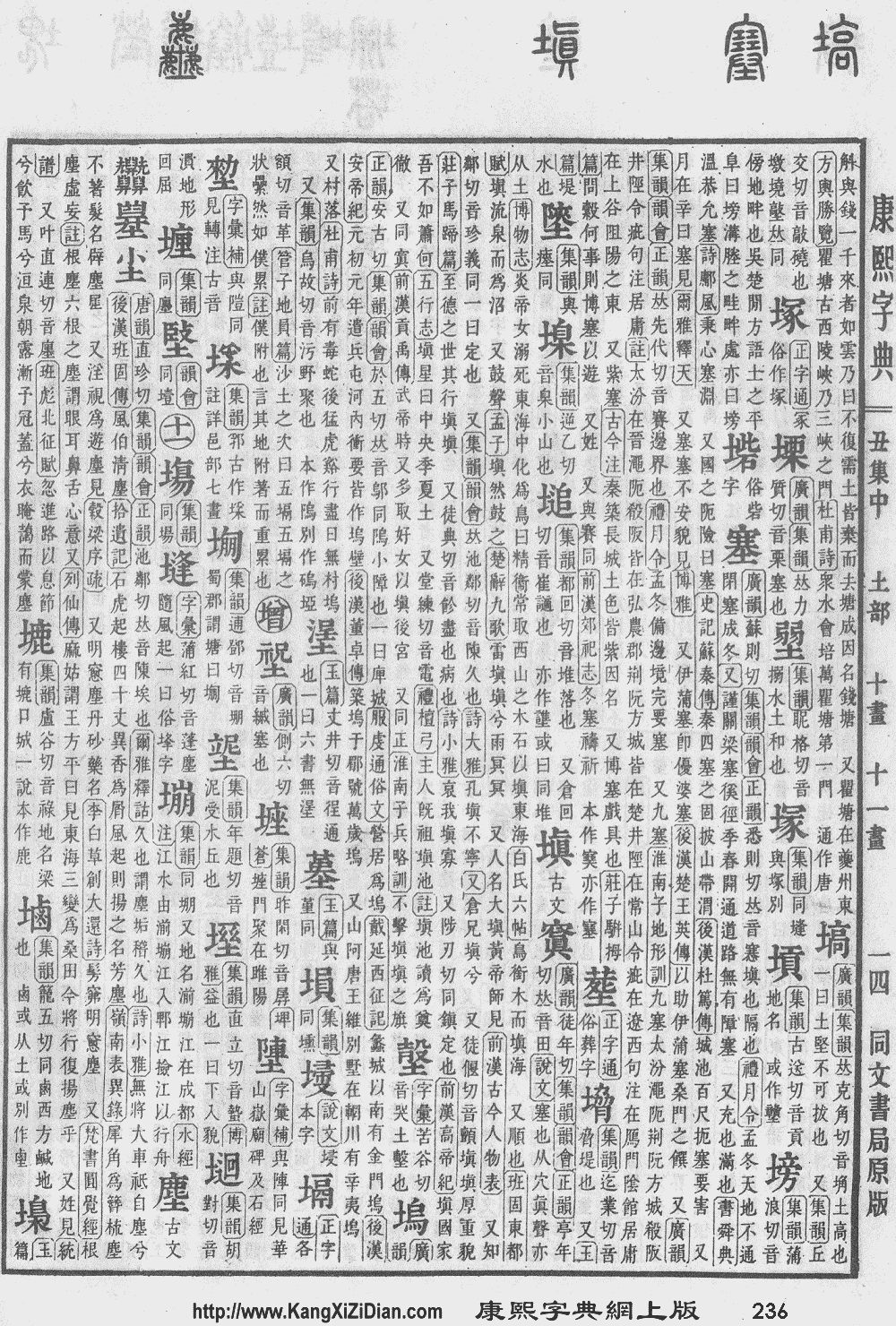
- KangXi: not present, would follow page 236, character 34
- Hanyu Da Zidian (first edition): volume 1, page 470, character 10
- Unihan data for U+586B
Chinese
| trad. | 填/塡 | |
|---|---|---|
| simp. | 填 | |
| 2nd round simp. | 𰉰 | |
| alternative forms | 𡒆 𥧑 ancient 窴 ancient | |
Glyph origin
Characters in the same phonetic series (真) (Zhengzhang, 2003)
| Old Chinese | |
|---|---|
| 寘 | *tjels |
| 䡩 | *kʰriːn |
| 黰 | *ʔriːn, *ʔljinʔ |
| 顛 | *tiːn, *tʰiːns |
| 滇 | *tiːn, *tʰiːns, *diːn |
| 齻 | *tiːn |
| 槙 | *tiːn, *tjinʔ |
| 瘨 | *tiːn |
| 傎 | *tiːn |
| 蹎 | *tiːn |
| 厧 | *tiːn |
| 巔 | *tiːn |
| 癲 | *tiːn |
| 瑱 | *tʰiːns, *tins |
| 填 | *diːn, *diːns, *tin, *tins |
| 窴 | *diːn, *diːns |
| 闐 | *diːn, *diːns |
| 磌 | *diːn, *tjin |
| 鷏 | *diːn |
| 嗔 | *diːn, *tʰjin |
| 搷 | *diːn |
| 鎮 | *tin, *tins |
| 縝 | *tʰin, *ʔljinʔ, *tʰjin |
| 真 | *ʔljin |
| 禛 | *tjin |
| 稹 | *ʔljin, *ʔljinʔ |
| 蒖 | *tjin |
| 鬒 | *ʔljinʔ |
| 瞋 | *tʰjin |
| 謓 | *tʰjin |
| 慎 | *djins |
Pronunciation
Definitions
填
Compounds
Derived terms from 填
References
- Dictionary of Chinese Character Variants (教育部異體字字典), A00799
- “填”, in 漢語多功能字庫 (Multi-function Chinese Character Database), 香港中文大學 (the Chinese University of Hong Kong), 2014–
Japanese
Readings
Usage notes
Despite being part of the JIS X 0208 standard character set, this character was not included in the 2010 Jōyō kanji reform in favor of 塡.
Korean
Vietnamese
Han character
填: Hán Nôm readings: điền, đền, đẩn, thiềm
- This term needs a translation to English. Please help out and add a translation, then remove the text
{{rfdef}}.
References
This article is issued from Wiktionary. The text is licensed under Creative Commons - Attribution - Sharealike. Additional terms may apply for the media files.