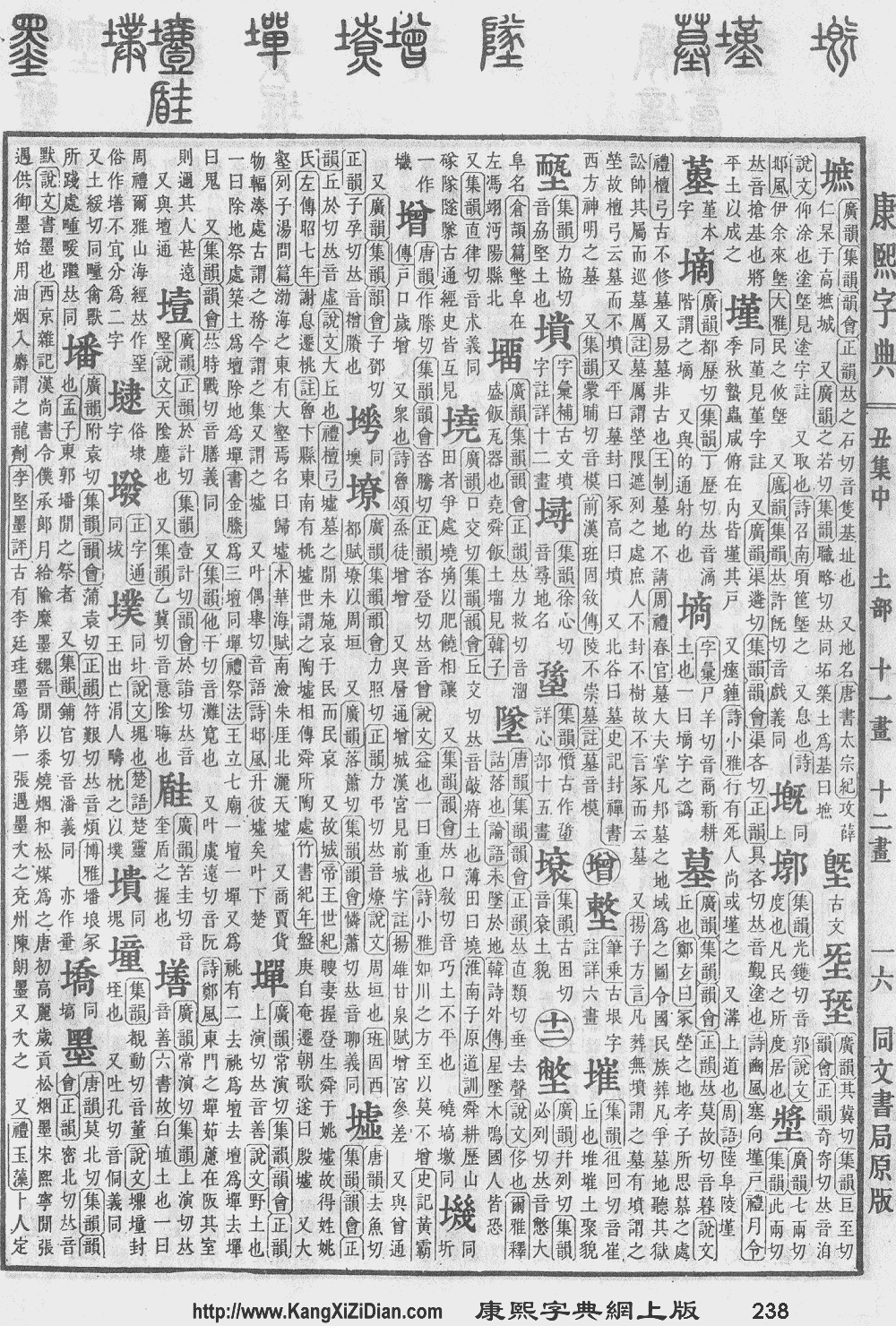
墜

See also: 坠 and 墮
墜 U+589C, 墜
CJK UNIFIED IDEOGRAPH-589C
← 墛
[U+589B]
CJK Unified Ideographs 墝 →
[U+589D]

Translingual

Han character

墜 (Kangxi radical 32, 土+12, 15 strokes, cangjie input 弓人土 (NOG), four-corner 78104, composition ⿱隊土)

References

  • KangXi: page 238, character 22
  • Dai Kanwa Jiten: character 5451
  • Dae Jaweon: page 477, character 7
  • Hanyu Da Zidian (first edition): volume 1, page 484, character 6
  • Unihan data for U+589C

Chinese

trad. 墜
simp. 坠

Glyph origin

Phono-semantic compound (形聲, OC *l'uds) : phonetic 隊 (OC *l'uːds) + semantic 土.

Pronunciation


Rime
Character 墜
Reading # 1/1
Initial (聲) 澄 (11)
Final (韻) 脂 (18)
Tone (調) Departing (H)
Openness (開合) Closed
Division (等) III
Fanqie 直類切
Reconstructions
Zhengzhang
Shangfang
/ɖˠiuɪH/
Pan
Wuyun
/ɖʷᵚiH/
Shao
Rongfen
/ȡiuɪH/
Edwin
Pulleyblank
/ɖjwiH/
Li
Rong
/ȡjuiH/
Wang
Li
/ȡwiH/
Bernard
Karlgren
/ȡʱwiH/
Expected
Mandarin
Reflex
zhuì
Expected
Cantonese
Reflex
zeoi6
Baxter–Sagart system 1.1 (2014)
Character 墜
Reading # 1/1
Modern
Beijing
(Pinyin)
zhuì
Middle
Chinese
‹ drwijH ›
Old
Chinese
/*m.lru[t]-s/
English fall down

Notes for Old Chinese notations in the Baxter–Sagart system:

* Parentheses "()" indicate uncertain presence;
* Square brackets "[]" indicate uncertain identity, e.g. *[t] as coda may in fact be *-t or *-p;
* Angle brackets "<>" indicate infix;
* Hyphen "-" indicates morpheme boundary;

* Period "." indicates syllable boundary.
Zhengzhang system (2003)
Character 墜
Reading # 1/1
No. 12159
Phonetic
component
遂
Rime
group
隊
Rime
subdivision
3
Corresponding
MC rime
墜
Old
Chinese
/*l'uds/

Definitions

墜

  1. to fall down; to drop; to sink; to go to ruin
  2. to hang down; to weigh down; to fall due to a heavy weight
  3. hanging object

Usage notes

  • Not to be confused with 墮/堕 (duò).

Compounds

  • 下墜/下坠
  • 不墜/不坠
  • 亂墜天花/乱坠天花
  • 偏墜/偏坠
  • 加膝墜淵/加膝坠渊
  • 呱呱墜地/呱呱坠地 (gūgūzhuìdì)
  • 執鞭墜鐙/执鞭坠镫
  • 墜入愛河/坠入爱河
  • 墜典/坠典
  • 墜地/坠地 (zhuìdì)
  • 墜子/坠子
  • 墜子戲/坠子戏
  • 墜樓/坠楼 (zhuìlóu)
  • 墜機/坠机 (zhuìjī)
  • 墜歡/坠欢
  • 墜歡重拾/坠欢重拾
  • 墜毀/坠毁 (zhuìhuǐ)
  • 墜緒/坠绪
  • 墜腳/坠脚
  • 墜茵落溷/坠茵落溷
  • 墜落/坠落 (zhuìluò)
  • 墜蹬/坠蹬
  • 墜馬/坠马
  • 天花亂墜/天花乱坠 (tiānhuāluànzhuì)
  • 天花墜地/天花坠地
  • 廢墜/废坠
  • 扇墜兒/扇坠儿
  • 搖搖欲墜/摇摇欲坠 (yáoyáoyùzhuì)
  • 昭王墜屨/昭王坠屦
  • 月墜花折/月坠花折
  • 民墜塗炭/民坠涂炭
  • 河南墜子/河南坠子
  • 流沙墜簡/流沙坠简
  • 瓶墜簪折/瓶坠簪折
  • 磨扇墜手/磨扇坠手
  • 累墜/累坠
  • 耳墜子/耳坠子 (ěrzhuìzi)
  • 自墜陷阱/自坠陷阱
  • 遺簪墜屨/遗簪坠屦
  • 隕墜/陨坠

Japanese

Shinjitai 墜
Kyūjitai
[1]

墜󠄁
墜+&#xE0101;?
(Adobe-Japan1)
墜󠄄
墜+&#xE0104;?
(Hanyo-Denshi)
(Moji_Joho)
The displayed kanji may be different from the image due to your environment.
See here for details.

Kanji

墜

(common “Jōyō” kanji)

  1. This term needs a translation to English. Please help out and add a translation, then remove the text {{rfdef}}.

Readings

References

  1. “墜”, in 漢字ぺディア (Kanjipedia)‎ (in Japanese), 日本漢字能力検定協会, 2015—2023

Korean

Etymology

From Middle Chinese 墜 (MC ɖˠiuɪH).

Hanja

Wikisource 墜 (eumhun 떨어질 추 (tteoreojil chu))

  1. Hanja form? of 추 (“fall”).

Compounds

  • 추락 (墜落, churak)
  • 실추 (失墜, silchu)
  • 격추 (擊墜, gyeokchu)

References

  • 국제퇴계학회 대구경북지부 (國際退溪學會 大邱慶北支部) (2007). Digital Hanja Dictionary, 전자사전/電子字典.

Vietnamese

Han character

墜: Hán Nôm readings: trụy/truỵ, trụy/truỵ, đụi

  1. This term needs a translation to English. Please help out and add a translation, then remove the text {{rfdef}}.
This article is issued from Wiktionary. The text is licensed under Creative Commons - Attribution - Sharealike. Additional terms may apply for the media files.