墮
| ||||||||
Translingual
| Traditional | 墮 |
|---|---|
| Shinjitai | 堕 |
| Simplified | 堕 |
Han character
墮 (Kangxi radical 32, 土+12, 15 strokes, cangjie input 弓月土 (NBG) or X弓月土 (XNBG), four-corner 74104, composition ⿱隋土)
Derived characters
- 𡃏, 𭐄, 𣟁, 𥶴
Related characters
- 堕 (Japanese shinjitai and simplified Chinese)
References
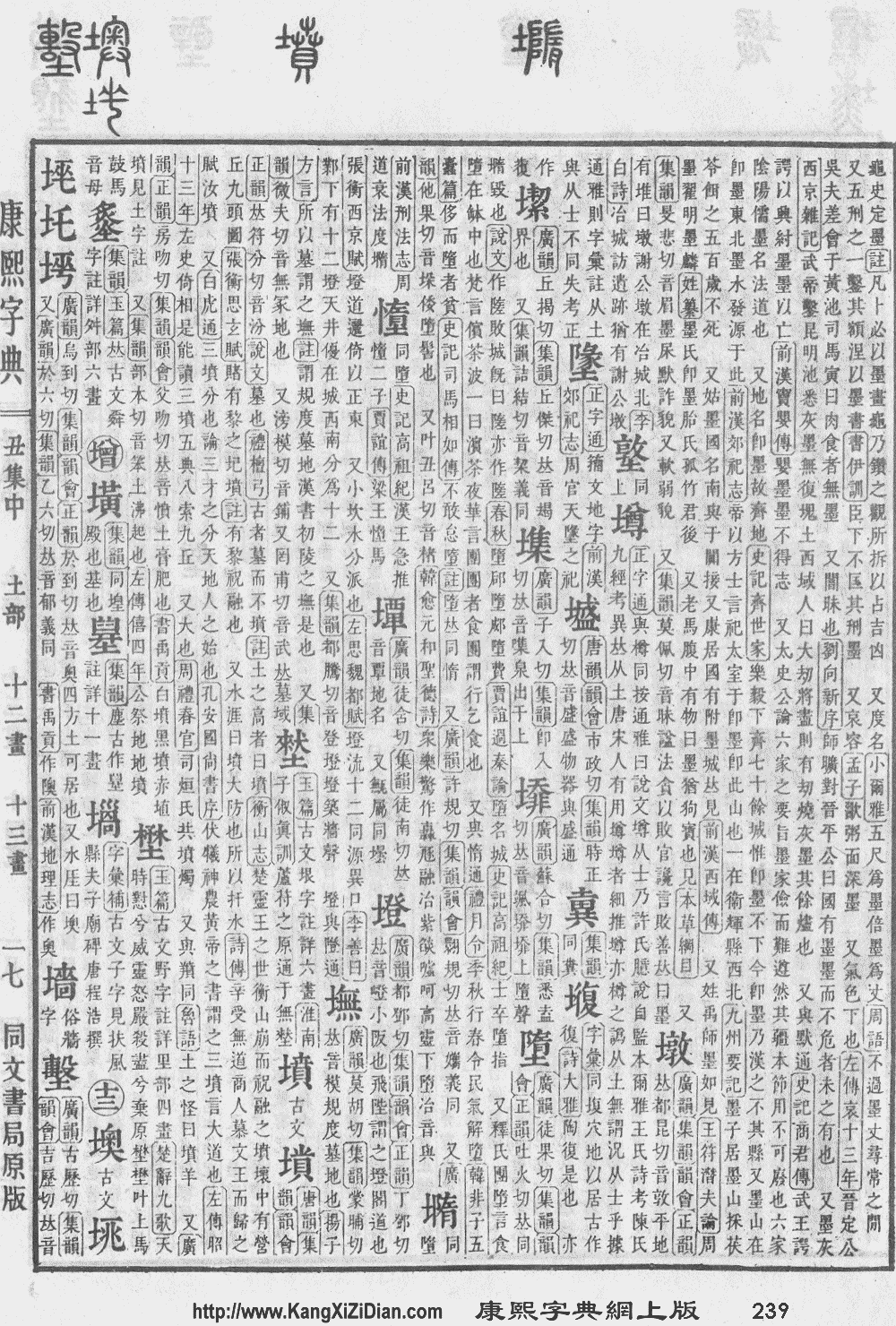
- KangXi: page 239, character 11
- Dai Kanwa Jiten: character 5481
- Dae Jaweon: page 478, character 12
- Hanyu Da Zidian (first edition): volume 1, page 484, character 3
- Unihan data for U+58AE
Chinese
| trad. | 墮 | |
|---|---|---|
| simp. | 堕 | |
| alternative forms | 𫝡 隓 obsolete 墯 𡐦 dur (doe6) Cantonese, nonstandard | |
Glyph origin
Characters in the same phonetic series (隓) (Zhengzhang, 2003)
Phono-semantic compound (形聲, OC *l̥ʰoːlʔ, *l'oːlʔ, *hlol) : phonetic 隋 (OC *l̥ʰoːlʔ, *l'oːlʔ, *ljol) + semantic 土.
Pronunciation 1
Definitions
墮
- to fall; to sink
- to degenerate
- 故上悖日月之明,下爍山川之精,中墮四時之施,惴耎之蟲,肖翹之物,莫不失其性。 [Classical Chinese, trad.]
- From: Zhuangzi, circa 3rd – 2nd centuries BCE, translated based on James Legge's version
- Gù shàng bèi rìyuè zhī míng, xià shuò shānchuān zhī jīng, zhōng duò sìshí zhī shī, zhuìnuò zhī chóng, xiàoqiào zhī wù, mòbù shī qí xìng. [Pinyin]
- It is just as if, above, the brightness of the sun and moon were darkened; as if, beneath, the productive vigour of the hills and streams were dried up; and as if, between, the operation of the four seasons were brought to an end: in which case there would not be a single weak and wriggling insect, nor any plant that grows up, which would not lose its proper nature.
故上悖日月之明,下烁山川之精,中堕四时之施,惴耎之虫,肖翘之物,莫不失其性。 [Classical Chinese, simp.]
- (Cantonese) droopy; saggy
- Alternative form of 惰 (duò).
Compounds
Japanese
| 堕 | |
| 墮 |
Kanji
墮
(uncommon “Hyōgai” kanji, kyūjitai kanji, shinjitai form 堕)
- This term needs a translation to English. Please help out and add a translation, then remove the text
{{rfdef}}.
Korean
Etymology
From Middle Chinese 墮 (MC tʰuɑX).
| Historical readings |
|---|
|
Pronunciation
- (SK Standard/Seoul) IPA(key): [tʰa̠(ː)]
- Phonetic hangul: [타(ː)]
- Though still prescribed in Standard Korean, most speakers in both Koreas no longer distinguish vowel length.
Vietnamese
This article is issued from Wiktionary. The text is licensed under Creative Commons - Attribution - Sharealike. Additional terms may apply for the media files.