夒
See also: 夔
| ||||||||
Translingual
Han character
夒 (Kangxi radical 35, 夊+16, 19 strokes, cangjie input 一金竹水 (MCHE), four-corner 10407, composition ⿱⿳一⿲止自巳八夂(GH) or ⿱⿳丆⿲止目巳八夂(GH) or ⿱⿳一⿲止自巳八夊(T) or ⿱⿳丆⿲止目巳八夊(T) or ⿱⿳一⿲止自巳儿夂(J) or ⿱⿳丆⿲止目巳儿夂(J) or ⿳丆⿲止見巳夂(J) or ⿱⿳一⿲止自㔾八夂(K) or ⿱⿳丆⿲止目㔾八夂(K) or ⿳丆⿲止貝㔾夂(K))
References
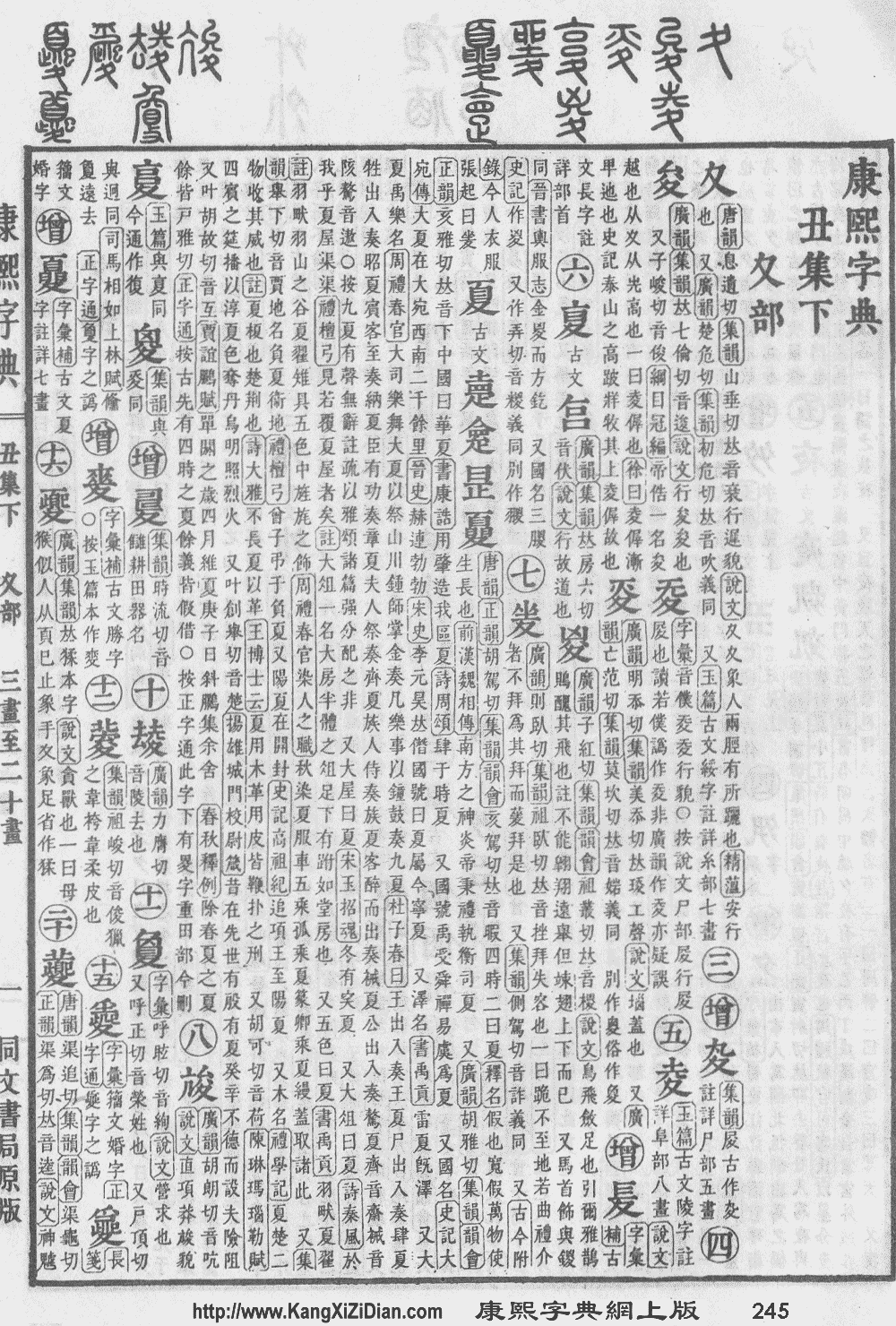
- KangXi: page 245, character 28
- Dai Kanwa Jiten: character 5741
- Hanyu Da Zidian (first edition): volume 2, page 871, character 23
- Unihan data for U+5912
Chinese
| trad. | 夒 | |
|---|---|---|
| simp. # | 夒 | |
Glyph origin
| Historical forms of the character 夒 | ||
|---|---|---|
| Shang | Spring and Autumn | Shuowen Jiezi (compiled in Han) |
| Oracle bone script | Bronze inscriptions | Small seal script |
 |
 |
 |
Pictogram (象形) .
Pronunciation
Japanese
Kanji
夒
- This term needs a translation to English. Please help out and add a translation, then remove the text
{{rfdef}}.
This article is issued from Wiktionary. The text is licensed under Creative Commons - Attribution - Sharealike. Additional terms may apply for the media files.