妙
See also: 玅
| ||||||||
Translingual
| Stroke order | |||
|---|---|---|---|
 | |||
Han character
妙 (Kangxi radical 38, 女+4, 7 strokes, cangjie input 女火竹 (VFH), four-corner 49420, composition ⿰女少)
References
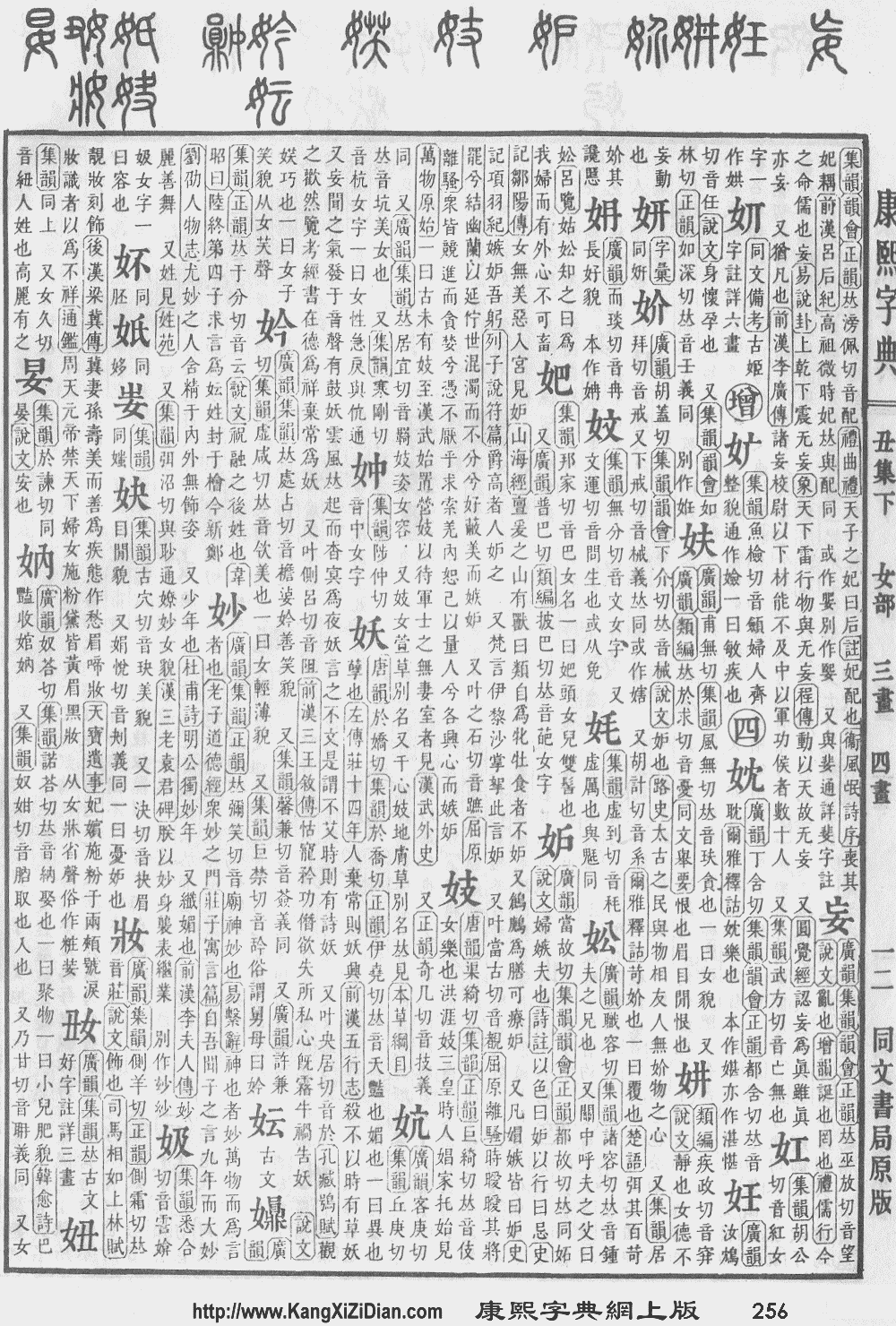
- KangXi: page 256, character 24
- Dai Kanwa Jiten: character 6090
- Dae Jaweon: page 521, character 4
- Hanyu Da Zidian (first edition): volume 2, page 1030, character 10
- Unihan data for U+5999
Chinese
| trad. | 妙 | |
|---|---|---|
| simp. # | 妙 | |
| alternative forms | 玅 眇 | |
Glyph origin
Characters in the same phonetic series (小) (Zhengzhang, 2003)
Phono-semantic compound (形聲, OC *mews) : semantic 女 (“woman”) + phonetic 少 (OC *hmjewʔ, *hmjews)
Pronunciation 1
Definitions
妙
Synonyms
- (ingenious):
- (fine):
Compounds
Derived terms from 妙
|
|
|
Pronunciation 2
| For pronunciation and definitions of 妙 – see 眇 (“tiny; minute; minuscule”). (This character, 妙, is a variant form of 眇.) |
References
- “妙”, in 漢語多功能字庫 (Multi-function Chinese Character Database), 香港中文大學 (the Chinese University of Hong Kong), 2014–
Japanese
Readings
- Go-on: みょう (myō, Jōyō)←めう (meu, historical)
- Kan-on: びょう (byō)←べう (beu, historical)
- Kun: わかい (wakai, 妙い); たえ (tae, 妙)←たへ (tafe, 妙, historical)
| Kanji in this term |
|---|
| 妙 |
| みょう Grade: S |
| on’yomi |
Adjective
妙 • (myō) ←めう (meu)?-na (adnominal 妙な (myō na), adverbial 妙に (myō ni))
- strange
- 1906, Natsume Sōseki, Botchan:
- 妙に女のような優しい声を出す人だった。
- Myō ni onna no yō na yasashii koe o dasu hito datta.
- He talked in a strangely effeminate voice like a woman.
- 妙に女のような優しい声を出す人だった。
-
- excellent
Inflection
Inflection of 妙
| Stem forms | |||
|---|---|---|---|
| Imperfective (未然形) | 妙だろ | みょうだろ | myō daro |
| Continuative (連用形) | 妙で | みょうで | myō de |
| Terminal (終止形) | 妙だ | みょうだ | myō da |
| Attributive (連体形) | 妙な | みょうな | myō na |
| Hypothetical (仮定形) | 妙なら | みょうなら | myō nara |
| Imperative (命令形) | 妙であれ | みょうであれ | myō de are |
| Key constructions | |||
| Informal negative | 妙ではない 妙じゃない |
みょうではない みょうじゃない |
myō de wa nai myō ja nai |
| Informal past | 妙だった | みょうだった | myō datta |
| Informal negative past | 妙ではなかった 妙じゃなかった |
みょうではなかった みょうじゃなかった |
myō de wa nakatta myō ja nakatta |
| Formal | 妙です | みょうです | myō desu |
| Formal negative | 妙ではありません 妙じゃありません |
みょうではありません みょうじゃありません |
myō de wa arimasen myō ja arimasen |
| Formal past | 妙でした | みょうでした | myō deshita |
| Formal negative past | 妙ではありませんでした 妙じゃありませんでした |
みょうではありませんでした みょうじゃありませんでした |
myō de wa arimasen deshita myō ja arimasen deshita |
| Conjunctive | 妙で | みょうで | myō de |
| Conditional | 妙なら(ば) | みょうなら(ば) | myō nara (ba) |
| Provisional | 妙だったら | みょうだったら | myō dattara |
| Volitional | 妙だろう | みょうだろう | myō darō |
| Adverbial | 妙に | みょうに | myō ni |
| Degree | 妙さ | みょうさ | myōsa |
Korean
Vietnamese
This article is issued from Wiktionary. The text is licensed under Creative Commons - Attribution - Sharealike. Additional terms may apply for the media files.