孩
| ||||||||
Translingual
| Stroke order | |||
|---|---|---|---|
 | |||
Han character
孩 (Kangxi radical 39, 子+6, 9 strokes, cangjie input 弓木卜女人 (NDYVO), four-corner 10482, composition ⿰子亥)
Derived characters
- 𫫂, 𢱙
References
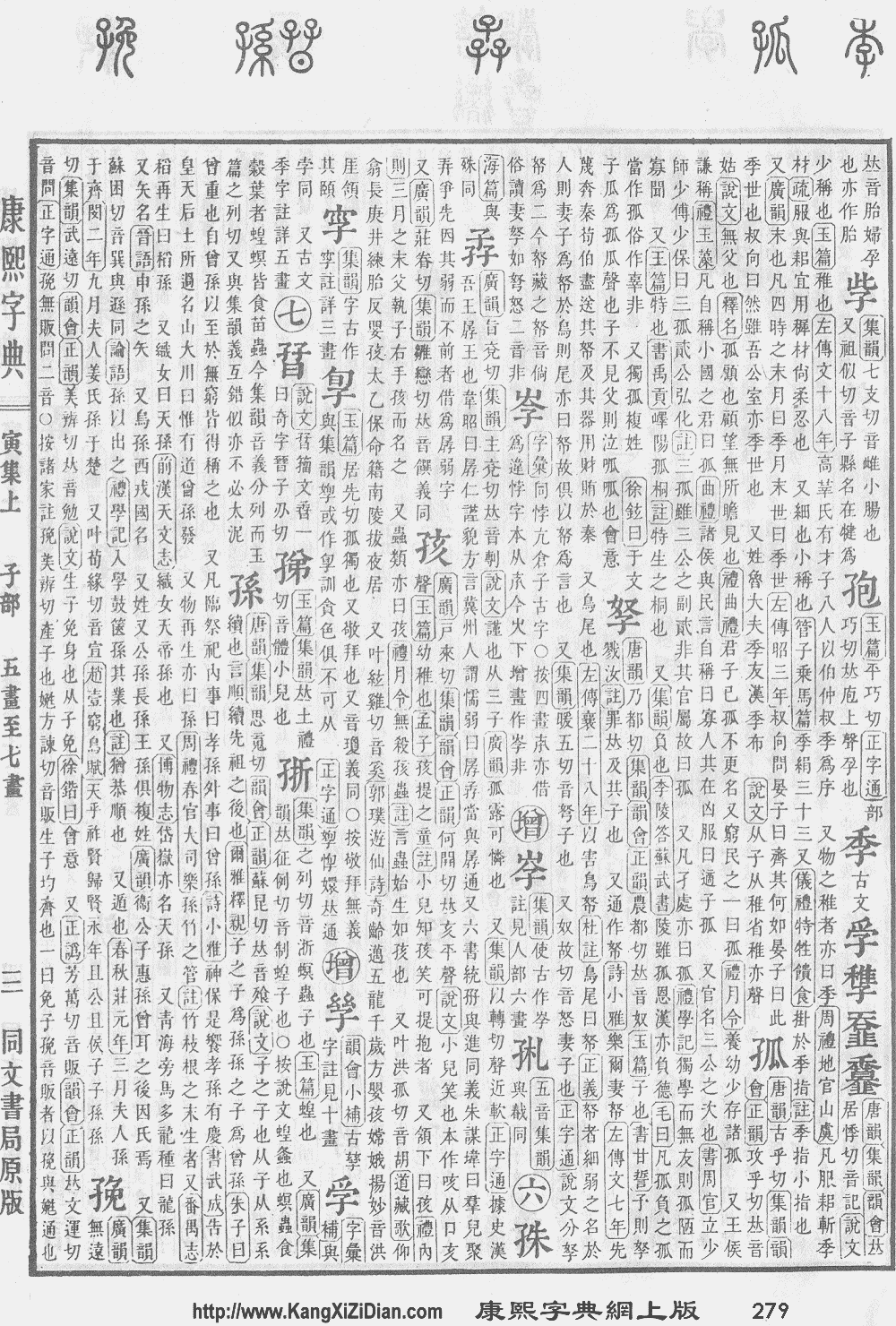
- KangXi: page 279, character 15
- Dai Kanwa Jiten: character 6977
- Dae Jaweon: page 548, character 10
- Hanyu Da Zidian (first edition): volume 2, page 1015, character 11
- Unihan data for U+5B69
Chinese
| simp. and trad. |
孩 | |
|---|---|---|
| alternative forms | 㜾 | |
Glyph origin
Characters in the same phonetic series (亥) (Zhengzhang, 2003)
| Old Chinese | |
|---|---|
| 該 | *kɯː |
| 垓 | *kɯː |
| 賅 | *kɯː |
| 陔 | *kɯː |
| 豥 | *kɯː, *ɡɯː |
| 荄 | *kɯː, *krɯː |
| 郂 | *kɯː |
| 姟 | *kɯː |
| 絯 | *kɯː, *ɡrɯːʔ |
| 晐 | *kɯː |
| 峐 | *kɯː |
| 侅 | *kɯː, *kʰɯː, *ɡɯːʔ, *ɡrɯːʔ |
| 胲 | *kɯː |
| 頦 | *kɯːʔ, *ɡɯː |
| 奒 | *kʰɯː |
| 輆 | *kʰɯːʔ |
| 欬 | *kʰɯːɡs, *qraːds |
| 硋 | *ŋɡɯːɡs |
| 閡 | *ŋɡɯːɡs |
| 咳 | *qʰɯː, *ɡɯː |
| 孩 | *ɡɯː |
| 亥 | *ɡɯːʔ |
| 劾 | *ɡɯːɡs, *kʰrɯːɡs, *ɡɯːɡ |
| 痎 | *krɯː |
| 烗 | *kʰrɯːɡs |
| 骸 | *ɡrɯː |
| 駭 | *ɡrɯːʔ |
| 刻 | *kʰɯːɡ |
| 餩 | *qɯːɡ |
| 核 | *ɡuːd, *ɡrɯːɡ |
Phono-semantic compound (形聲, OC *ɡɯː) : semantic 子 + phonetic 亥 (OC *ɡɯːʔ).
Etymology
Smith (2011) groups this word along with these items into a word family meaning “root, germ, generative core”:
- 荄 (OC *kɯː, “grassroot”), and its derivative 根 (OC *kɯːn, “root”),
- 核 (OC *ɡrɯːɡ, “germ, kernel”),
- 骸 (OC *ɡrɯː, “(human) bones”),
- 亥 (OC *ɡɯːʔ, “sprouting stage”), i.e. "the moon’s first appearance" > "twelfth earthly branch".
He suggests a derivation from 荄 (OC *kɯː) by voicing, glossing 孩 as “to sprout”; the derivation is not explained any further. However, this sense does not seem to be attested.
Pronunciation
Definitions
孩
Compounds
Derived terms from 孩
Japanese
Kanji
孩
- This term needs a translation to English. Please help out and add a translation, then remove the text
{{rfdef}}.
Korean
Hanja
孩 • (hae) (hangeul 해, revised hae, McCune–Reischauer hae)
- This term needs a translation to English. Please help out and add a translation, then remove the text
{{rfdef}}.
Vietnamese
This article is issued from Wiktionary. The text is licensed under Creative Commons - Attribution - Sharealike. Additional terms may apply for the media files.