帽
| ||||||||
 | ||||||||
Translingual
| Stroke order | |||
 | |||
Han character
帽 (Kangxi radical 50, 巾+9, 12 strokes, cangjie input 中月日月山 (LBABU), four-corner 46260, composition ⿰巾冒)
References
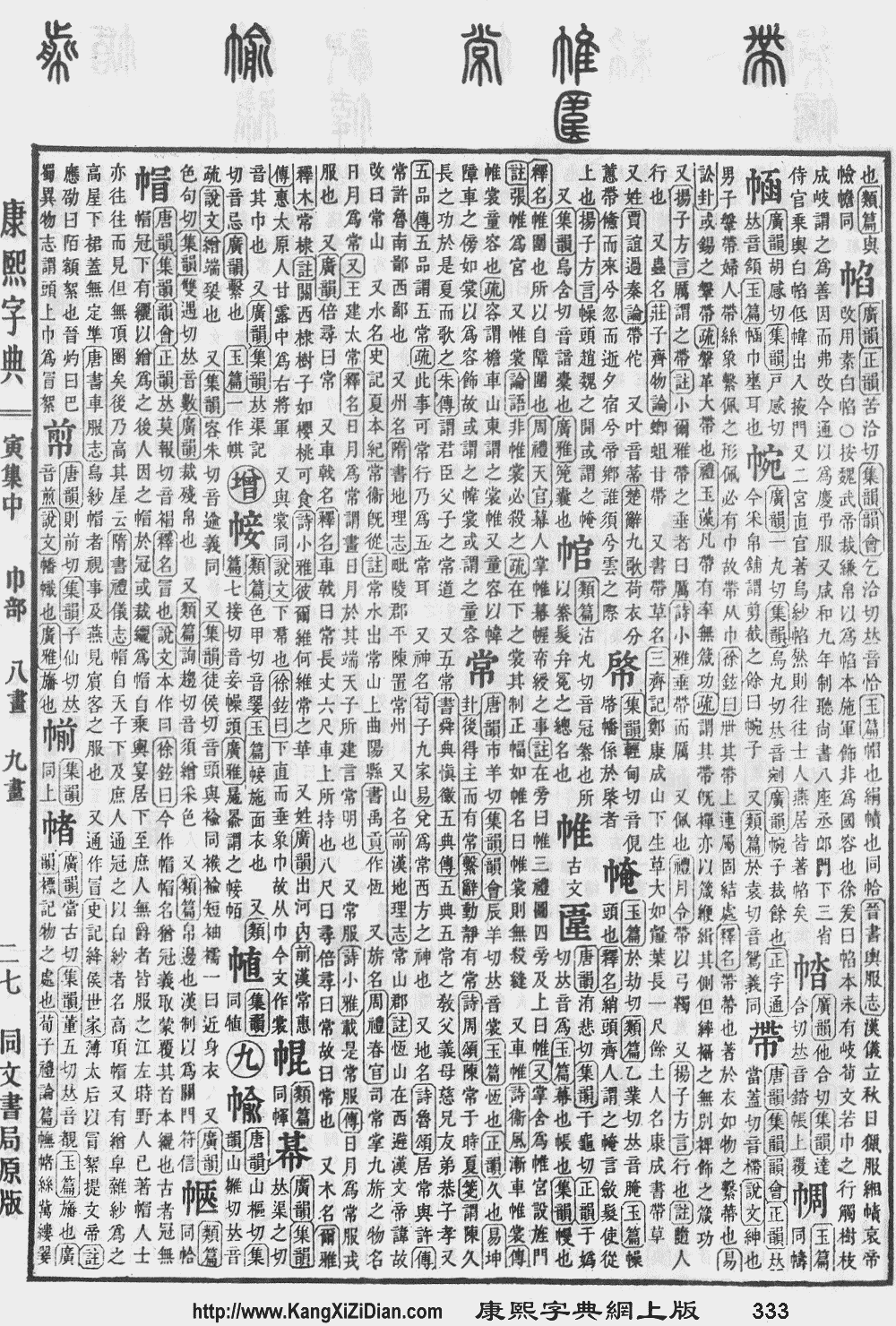
- KangXi: page 333, character 19
- Dai Kanwa Jiten: character 8971
- Dae Jaweon: page 640, character 7
- Hanyu Da Zidian (first edition): volume 1, page 747, character 8
- Unihan data for U+5E3D
- Unihan data for U+2F886
Chinese
| simp. and trad. |
帽 | |
|---|---|---|
| 2nd round simp. | 𫷀 | |
| alternative forms | 冃 㡌 𧛕 | |
Glyph origin
Phono-semantic compound (形聲, OC *muːɡs) : semantic 巾 (“cloth”) + phonetic 冒 (OC *muːɡs, *mɯːɡ).
Etymology
Wanderwort of Southeastern and Eastern Asia, thus its origin is disputed.
Possibly from Sino-Tibetan. It has been compared to Tibetan རྨོག (rmog, “helmet”) (Starostin; Sagart, 2017) and Rgyalrongic forms for “mushroom” (cf. Breton tog-touseg, literally “frog hat”), such as Japhug tɤ-jmɤɣ (Zhang, Jacques and Lai, 2019).
Alternatively, Schuessler (2007) suggests an Austroasiatic derivation since this is a relatively late word and Shuowen defines 冃 (an ancient form of 帽) as “head cover” of the Southern indigenous people, which may allude to a southern origin. Compare Proto-Mon-Khmer *muuk ~ muək (“hat”), whence Mon ဒမှော် (həmok, “wide hat”) and Khmer មួក (muək), which he also connects to 鍪 (OC *mu, “metal cap; helmet”). Also compare Thai หมวก (mùuak), which Schuessler (2007) derives from the Khmer word. However, Alves (2018) considers it likely for the Proto-Mon-Khmer word to be a loan from Chinese, and Alves (2020) also suggests that the Tai forms spread from Chinese.
Often considered to be related to 冒 (OC *muːɡs, “to cover”) (Wang, 1982; Starostin), though Schuessler (2007) thinks that it may be reinterpreted as such based on parallel development of 被 (OC *bralʔ, *brals, “to cover; bedding”).
Pronunciation
Definitions
帽
Synonyms
Compounds
|
Descendants
Others:
References
- “帽”, in 漢語多功能字庫 (Multi-function Chinese Character Database), 香港中文大學 (the Chinese University of Hong Kong), 2014–
Japanese
| Shinjitai | 帽 | |
| Kyūjitai [1] |
帽󠄁 帽+ 󠄁?(Adobe-Japan1) |
 |
| 帽󠄃 帽+ 󠄃?(Hanyo-Denshi) (Moji_Joho) | ||
| The displayed kanji may be different from the image due to your environment. See here for details. | ||
References
- “帽”, in 漢字ぺディア (Kanjipedia) (in Japanese), 日本漢字能力検定協会, 2015—2023
Korean
Etymology
(This etymology is missing or incomplete. Please add to it, or discuss it at the Etymology scriptorium. Particularly: “Middle Korean readings, if any”)
Pronunciation
- (SK Standard/Seoul) IPA(key): [mo̞]
- Phonetic hangul: [모]
Hanja
Wikisource 帽 • (mo) (hangeul 모)
- This term needs a translation to English. Please help out and add a translation, then remove the text
{{rfdef}}.