被

被 U+88AB, 被
CJK UNIFIED IDEOGRAPH-88AB
← 袪
[U+88AA]
CJK Unified Ideographs 袬 →
[U+88AC]

Translingual

Stroke order
10 strokes

Han character

被 (Kangxi radical 145, 衣+5, 10 strokes, cangjie input 中木竹水 (LDHE), four-corner 34247, composition ⿰衤皮)

References

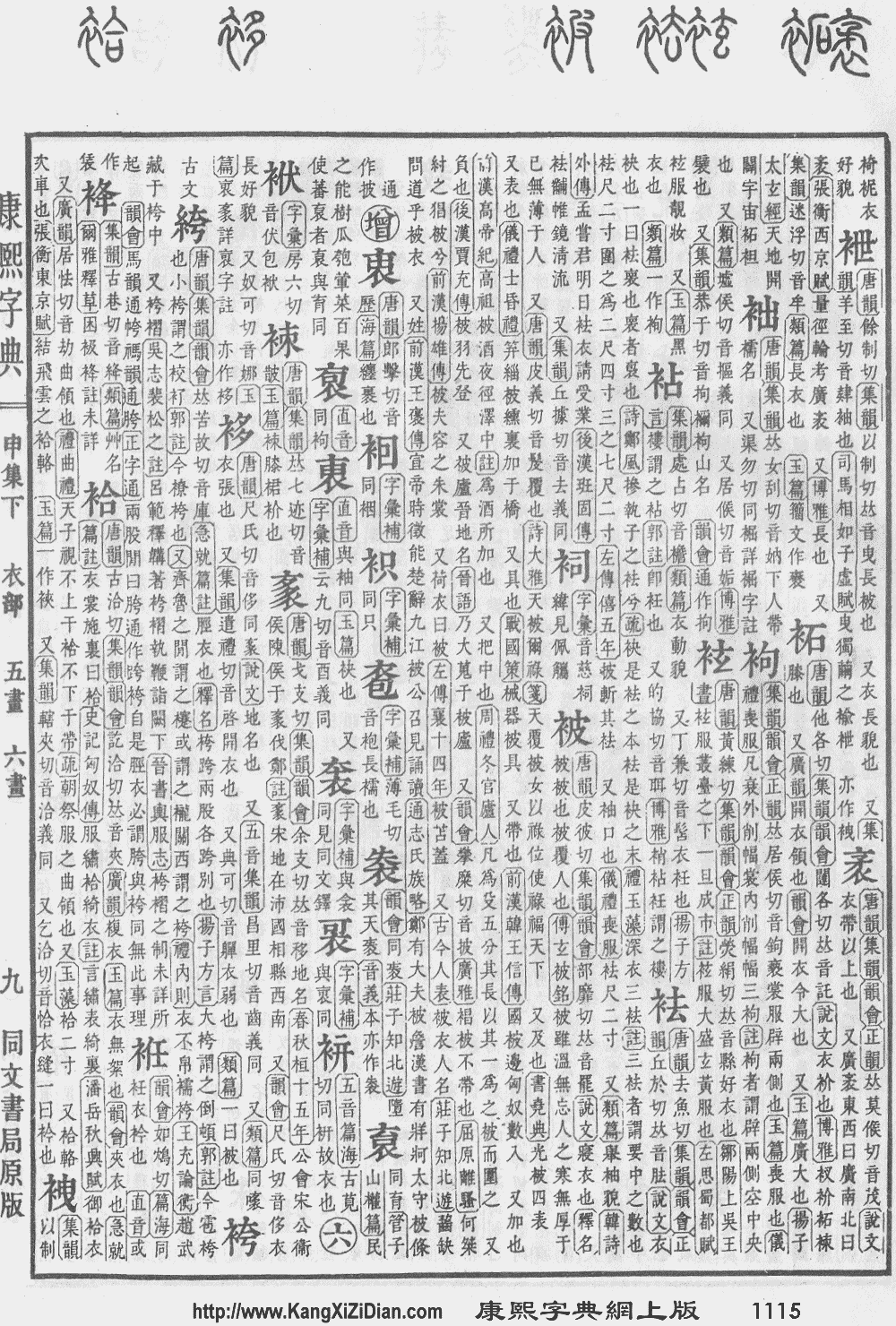
  • KangXi: page 1115, character 10
  • Dai Kanwa Jiten: character 34222
  • Dae Jaweon: page 1580, character 26
  • Hanyu Da Zidian (first edition): volume 5, page 3085, character 11
  • Unihan data for U+88AB

Chinese

simp. and trad.
被

Glyph origin

Phono-semantic compound (形聲, OC *bralʔ, *brals) : semantic 衣 (“clothing”) + phonetic 皮 (OC *bral).

Etymology

Cognate with 披 (OC *pʰral, *pʰralʔ). The meaning of passive marker is an extension of "to wear; to be covered by something".

Pronunciation 1


Note: colloquial reading.

Rime
Character 被
Reading # 1/2
Initial (聲) 並 (3)
Final (韻) 支 (13)
Tone (調) Rising (X)
Openness (開合) Open
Division (等) III
Fanqie 皮彼切
Reconstructions
Zhengzhang
Shangfang
/bˠiᴇX/
Pan
Wuyun
/bᵚiɛX/
Shao
Rongfen
/biɛX/
Edwin
Pulleyblank
/bjiə̆X/
Li
Rong
/bjeX/
Wang
Li
/bǐeX/
Bernard
Karlgren
/bʱie̯X/
Expected
Mandarin
Reflex
bì
Expected
Cantonese
Reflex
bei6
Baxter–Sagart system 1.1 (2014)
Character 被 被
Reading # 1/4 2/4
Modern
Beijing
(Pinyin)
bèi bèi
Middle
Chinese
‹ bjeX › ‹ bjeH ›
Old
Chinese
/*m-pʰ(r)ajʔ/ /*m-pʰ(r)ajʔ-s/
English coverlet cover (v.)

Notes for Old Chinese notations in the Baxter–Sagart system:

* Parentheses "()" indicate uncertain presence;
* Square brackets "[]" indicate uncertain identity, e.g. *[t] as coda may in fact be *-t or *-p;
* Angle brackets "<>" indicate infix;
* Hyphen "-" indicates morpheme boundary;

* Period "." indicates syllable boundary.
Zhengzhang system (2003)
Character 被
Reading # 1/2
No. 9713
Phonetic
component
皮
Rime
group
歌
Rime
subdivision
1
Corresponding
MC rime
被
Old
Chinese
/*bralʔ/

Definitions

被

  1. bedding; quilt; blanket (Classifier: 張/张 c; 領/领 mn)
    被子  ―  bèizi  ―  quilt
    被褥  ―  bèirù  ―  bedding, bedclothes
    墊被/垫被  ―  diànbèi  ―  mattress
  2. † to cover
Synonyms
  • (quilt):

Pronunciation 2


Note: literary reading.

Rime
Character 被
Reading # 1/2
Initial (聲) 並 (3)
Final (韻) 支 (13)
Tone (調) Rising (X)
Openness (開合) Open
Division (等) III
Fanqie 皮彼切
Reconstructions
Zhengzhang
Shangfang
/bˠiᴇX/
Pan
Wuyun
/bᵚiɛX/
Shao
Rongfen
/biɛX/
Edwin
Pulleyblank
/bjiə̆X/
Li
Rong
/bjeX/
Wang
Li
/bǐeX/
Bernard
Karlgren
/bʱie̯X/
Expected
Mandarin
Reflex
bì
Expected
Cantonese
Reflex
bei6
Baxter–Sagart system 1.1 (2014)
Character 被 被
Reading # 1/4 2/4
Modern
Beijing
(Pinyin)
bèi bèi
Middle
Chinese
‹ bjeX › ‹ bjeH ›
Old
Chinese
/*m-pʰ(r)ajʔ/ /*m-pʰ(r)ajʔ-s/
English coverlet cover (v.)

Notes for Old Chinese notations in the Baxter–Sagart system:

* Parentheses "()" indicate uncertain presence;
* Square brackets "[]" indicate uncertain identity, e.g. *[t] as coda may in fact be *-t or *-p;
* Angle brackets "<>" indicate infix;
* Hyphen "-" indicates morpheme boundary;

* Period "." indicates syllable boundary.
Zhengzhang system (2003)
Character 被
Reading # 1/2
No. 9713
Phonetic
component
皮
Rime
group
歌
Rime
subdivision
1
Corresponding
MC rime
被
Old
Chinese
/*bralʔ/

Definitions

被

  1. † to suffer; to sustain (loss, misfortune, etc.)
  2. by
    我被蚊子咬了。  ―  Wǒ bèi wénzi yǎo le.  ―  I got bitten by mosquitoes.
  3. Used before a verb to indicate passive voice, often with a negative connotation.
    我的錶被偷了。/我的表被偷了。  ―  Wǒ de biǎo bèi tōu le.  ―  My watch has been stolen.
    我們的汽車尾巴被撞壞了。 [MSC, trad.]
    我们的汽车尾巴被撞坏了。 [MSC, simp.]
    Wǒmen de qìchē wěiba bèi zhuànghuài le. [Pinyin]
    The rear end of our car was smashed.
  4. (neologism) passively; under duress; in a forged manner; etc.
    被自殺/被自杀  ―  bèi zìshā  ―  to "be suicided"; to be killed by the authorities who then pass one's death off as suicide
    被就業/被就业  ―  bèi jiùyè  ―  to "be achieved employment"; to be falsely recorded as employed (for the purpose of falsifying employment data)
    被吸菸/被吸烟  ―  bèi xīyān  ―  to smoke secondhand
    被嫖娼  ―  bèi piáochāng  ―  to be falsely accused of visiting a prostitute
  5. a surname.
Usage notes
  • In a passive-voice sentence, 被 is placed after the subject and before the doer of the action. The doer of the action is placed before the verb or can be omitted.
  • As a neologism, by affixing 被 to a verb or verb phrase that is rarely used in the passive sense (e.g. an intransitive verb), a deliberate awkwardness is constructed to call to the absurdity of the situation being referred to.
Synonyms

Pronunciation 3


Baxter–Sagart system 1.1 (2014)
Character 被
Reading # 3/4
Modern
Beijing
(Pinyin)
pī
Middle
Chinese
‹ phje ›
Old
Chinese
/*mə-pʰ(r)aj/
English cover oneself with

Notes for Old Chinese notations in the Baxter–Sagart system:

* Parentheses "()" indicate uncertain presence;
* Square brackets "[]" indicate uncertain identity, e.g. *[t] as coda may in fact be *-t or *-p;
* Angle brackets "<>" indicate infix;
* Hyphen "-" indicates morpheme boundary;

* Period "." indicates syllable boundary.

Definitions

被

  1. † Alternative form of 披 (pī, “to cover oneself; to scatter”).

Pronunciation 4


Rime
Character 被
Reading # 2/2
Initial (聲) 並 (3)
Final (韻) 支 (13)
Tone (調) Departing (H)
Openness (開合) Open
Division (等) III
Fanqie 平義切
Reconstructions
Zhengzhang
Shangfang
/bˠiᴇH/
Pan
Wuyun
/bᵚiɛH/
Shao
Rongfen
/biɛH/
Edwin
Pulleyblank
/bjiə̆H/
Li
Rong
/bjeH/
Wang
Li
/bǐeH/
Bernard
Karlgren
/bʱie̯H/
Expected
Mandarin
Reflex
bì
Expected
Cantonese
Reflex
bei6
Zhengzhang system (2003)
Character 被
Reading # 2/2
No. 9715
Phonetic
component
皮
Rime
group
歌
Rime
subdivision
1
Corresponding
MC rime
髲
Old
Chinese
/*brals/

Definitions

被

  1. Alternative form of 髲 (bì, “wig”).
  2. Alternative form of 彼 (bǐ, “that”).

Pronunciation 5


Baxter–Sagart system 1.1 (2014)
Character 被
Reading # 4/4
Modern
Beijing
(Pinyin)
pì
Middle
Chinese
‹ phjeH ›
Old
Chinese
/*pʰ(r)aj-s/
English cloak

Notes for Old Chinese notations in the Baxter–Sagart system:

* Parentheses "()" indicate uncertain presence;
* Square brackets "[]" indicate uncertain identity, e.g. *[t] as coda may in fact be *-t or *-p;
* Angle brackets "<>" indicate infix;
* Hyphen "-" indicates morpheme boundary;

* Period "." indicates syllable boundary.

Definitions

被

  1. Alternative form of 帔 (pèi).

Compounds

Japanese

Kanji

被

(common “Jōyō” kanji)

Readings

Compounds

Etymology 1

Kanji in this term
被
ひ
Grade: S
on’yomi

From Middle Chinese 被 (bjeH, “to cover”), from the term's use in Chinese as a passive marker.

Pronunciation

  • IPA(key): [çi]

Prefix

被(ひ) • (hi-) 

  1. -ed, -ee (marks the passive recipient of an action)
    被(ひ)傭者(ようしゃ)
    hiyōsha
    employee
    被(ひ)験者(けんしゃ)
    hikensha
    examinee
    被(ひ)減数(げんすう)
    higensū
    minuend (number which is reduced)
    被(ひ)保護国(ほごこく)
    hihogokoku
    protectorate (protected nation)

Etymology 2

Kanji in this term
被
おおい
Grade: S
kun’yomi

The 連用形 (ren'yōkei, “continuative or stem form”) of verb 被う (ōu, “to cover”).[1][2]

Pronunciation

Noun

被(おおい) • (ōi) ←おほい (ofoi)?

  1. a covering
  2. the act of covering something
  3. (by extension) a protector or patron

References

  1. 1988, 国語大辞典(新装版) (Kokugo Dai Jiten, Revised Edition) (in Japanese), Tōkyō: Shogakukan
  2. 2006, 大辞林 (Daijirin), Third Edition (in Japanese), Tōkyō: Sanseidō, →ISBN

Korean

Hanja

被 • (pi) (hangeul 피, revised pi, McCune–Reischauer p'i, Yale phi)

  1. This term needs a translation to English. Please help out and add a translation, then remove the text {{rfdef}}.

Vietnamese

Han character

被: Hán Nôm readings: bị, bệ, bỡ, bự, bợ

  1. This term needs a translation to English. Please help out and add a translation, then remove the text {{rfdef}}.
This article is issued from Wiktionary. The text is licensed under Creative Commons - Attribution - Sharealike. Additional terms may apply for the media files.