說
| ||||||||
| ||||||||
| ||||||||
Translingual
| Traditional | 說 |
|---|---|
| Shinjitai | 説 |
| Simplified | 说 |
Han character
說 (Kangxi radical 149, 言+7, 14 strokes, cangjie input 卜口金口山 (YRCRU), four-corner 08616, composition ⿰訁兌)
Derived characters
- 𡁾, 𧭚
Related characters
- 説 (Traditional form used in Hong Kong, mainland China and Japan)
- 说 (Simplified Chinese)
References
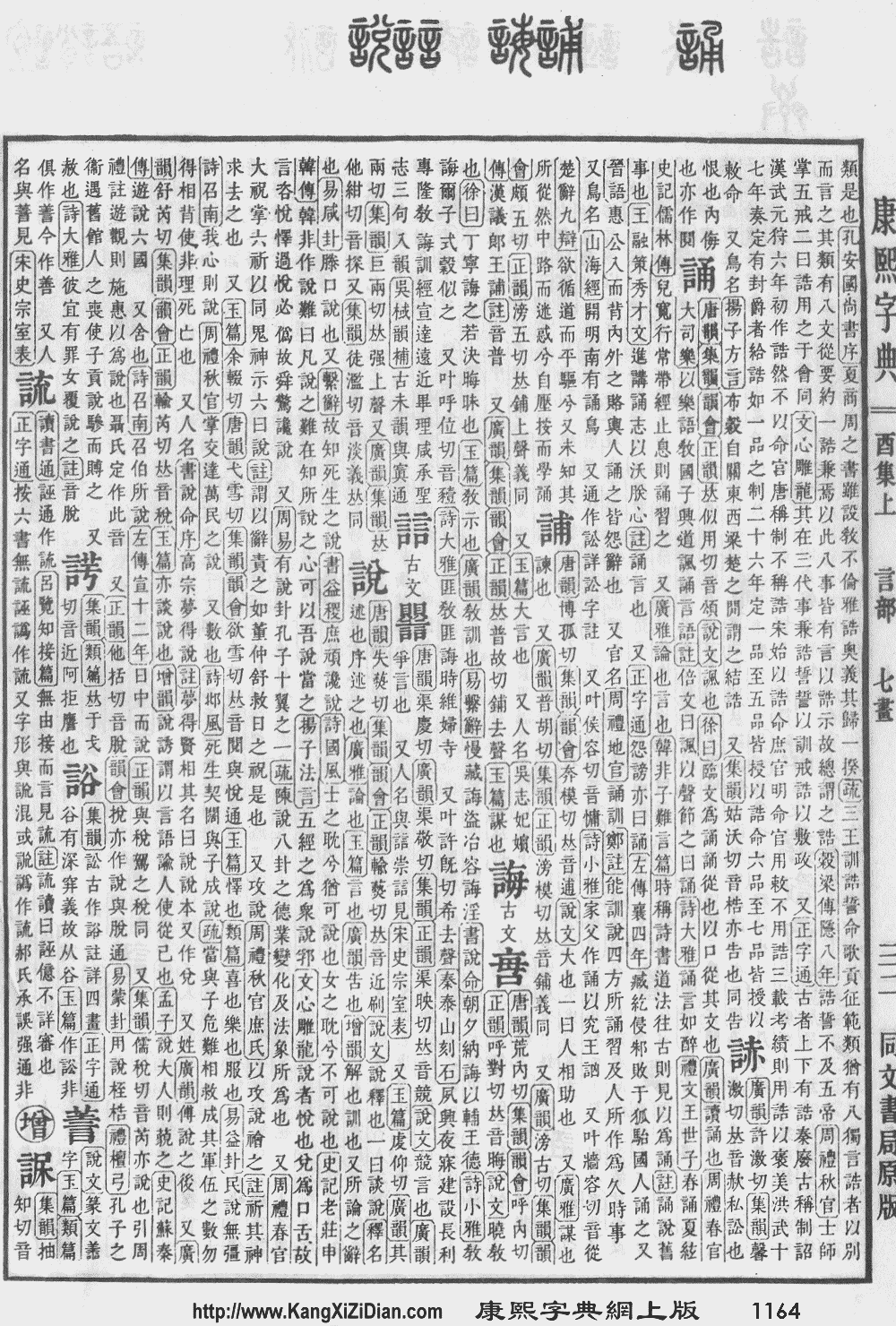
- KangXi: page 1164, character 8
- Dai Kanwa Jiten: character 35556
- Dae Jaweon: page 1629, character 14
- Hanyu Da Zidian (first edition): not present, would follow volume 6, page 3979, character 3
- Unihan data for U+8AAA
- Unihan data for U+F96F
- Unihan data for U+F9A1
Chinese
| trad. | 說/説 | |
|---|---|---|
| simp. | 说 | |
Glyph origin
| Historical forms of the character 說 | |
|---|---|
| Warring States | Shuowen Jiezi (compiled in Han) |
| Chu slip and silk script | Small seal script |
 |
 |
| Old Chinese | |
|---|---|
| 毤 | *l̥ʰoːds |
| 蛻 | *l'oːds, *l̥ʰoːds, *hljods, *lod, *lod |
| 娧 | *l̥ʰoːds, *lod |
| 駾 | *l̥ʰoːds |
| 裞 | *l̥ʰoːds, *hljods |
| 兌 | *l'oːds |
| 綐 | *l'oːds |
| 銳 | *l'oːds, *lods |
| 帨 | *stʰods, *hljods |
| 稅 | *hljods |
| 說 | *hljods, *hljod, *lod |
| 涚 | *hljods |
| 䫄 | *rtʰoːd |
| 脫 | *l̥ʰoːd, *l'oːd |
| 侻 | *l̥ʰoːd |
| 挩 | *l̥ʰoːd, *l'oːd |
| 莌 | *l̥ʰoːd, *l'oːd |
| 梲 | *l̥ʰoːd, *ʔljod, *l̥ʰuːd |
| 鮵 | *l'oːd |
| 敓 | *l'oːd |
| 痥 | *l'oːd |
| 悅 | *lod, *lod |
| 閱 | *lod |
Phono-semantic compound (形聲, OC *hljods, *hljod, *lod) : semantic 言 + phonetic 兌 (OC *l'oːds).
Etymology
All of the pronunciations of this character are in the same word family derived from a root *lo meaning “to loosen; to relax” (Schuessler, 2007). STEDT compares it to Proto-Sino-Tibetan *g/s-lwat (“free; release; slip; dislocate”). Please compare with Burmese လျှောက် (hlyauk, “to address formally, to report, to speak”).
Pronunciation 1 is derived by causative devoicing of 悅 (OC *lod, “to relax; to be delighted”) (pronunciation 3).
Pronunciation 2 is probably the exoactive of pronunciation 1.
Pronunciation 1
Definitions
說
Synonyms
- (to say):
- (to explain):
- (to refer):
- (to discuss):
- (to criticize):
|
|
- (theory):
Compounds
|
|
|
Descendants
Pronunciation 2
Definitions
說
Compounds
Descendants
Pronunciation 3
Compounds
|
Pronunciation 4
Definitions
說
- † Alternative form of 脫/脱 (tuō, “to free; to relieve”).
- 此宜無罪,女反收之;彼宜有罪,女覆說之。 [Pre-Classical Chinese, trad.]
- From: The Classic of Poetry, c. 11th – 7th centuries BCE, translated based on James Legge's version
- Cǐ yí wú zuì, rǔ fǎn shōu zhī; bǐ yí yǒu zuì, rǔ fù tuō zhī. [Pinyin]
- Here is one who ought to be held guiltless,
But you snare him [in the net of crime].
There is one who ought to be held guilty,
But you let him escape [from it].
此宜无罪,女反收之;彼宜有罪,女覆说之。 [Pre-Classical Chinese, simp.]
Compounds
|
References
- “說”, in 漢語多功能字庫 (Multi-function Chinese Character Database), 香港中文大學 (the Chinese University of Hong Kong), 2014–
Japanese
| 説 | |
| 說 |
Readings
Usage notes
This character lacks essential JIS support and is not used in Japanese. The character 説 (U+8AAC) is used instead.
Korean
Etymology 1
From Middle Chinese 說 (MC ɕiuᴇt̚).
| Historical Readings | ||
|---|---|---|
| Dongguk Jeongun Reading | ||
| Dongguk Jeongun, 1448 | ᄉᆑᇙ〮 (Yale: syyélq) | |
| Middle Korean | ||
| Text | Eumhun | |
| Gloss (hun) | Reading | |
| Hunmong Jahoe, 1527 | 니ᄅᆞᆯ (Yale: nilol) | 셜 (Yale: syel) |
Pronunciation
- (SK Standard/Seoul) IPA(key): [sʰʌ̹ɭ]
- Phonetic hangul: [설]
Compounds
Etymology 2
From Middle Chinese 說 (MC ɕiuᴇiH).
| Historical Readings | ||
|---|---|---|
| Dongguk Jeongun Reading | ||
| Dongguk Jeongun, 1448 | ᄉᆒᆼ〮 (Yale: syyéy) | |
| Middle Korean | ||
| Text | Eumhun | |
| Gloss (hun) | Reading | |
| Sinjeung Yuhap, 1576 | 달앨 (Yale: talGayl) | 셰 (Yale: syey) |
Pronunciation
- (SK Standard/Seoul) IPA(key): [sʰe̞(ː)]
- Phonetic hangul: [세(ː)]
- Though still prescribed in Standard Korean, most speakers in both Koreas no longer distinguish vowel length.
Etymology 3
From Middle Chinese 說 (MC jiuᴇt̚).
| Historical Readings | ||
|---|---|---|
| Dongguk Jeongun Reading | ||
| Dongguk Jeongun, 1448 | ᄋᆑᇙ〮 (Yale: yyélq) | |
Pronunciation
- (SK Standard/Seoul) IPA(key): [jʌ̹ɭ]
- Phonetic hangul: [열]
Hanja
References
- Supreme Court of the Republic of Korea (대한민국 대법원, Daehanmin'guk Daebeobwon) (2018). Table of hanja for personal names (인명용 한자표 / 人名用漢字表, Inmyeong-yong hanja-pyo), page 29.