恣
| ||||||||
Translingual
Han character
恣 (Kangxi radical 61, 心+6, 10 strokes, cangjie input 戈人心 (IOP) or 一人心 (MOP), four-corner 37338, composition ⿱次心)
Derived characters
- 𩥝 懿
References
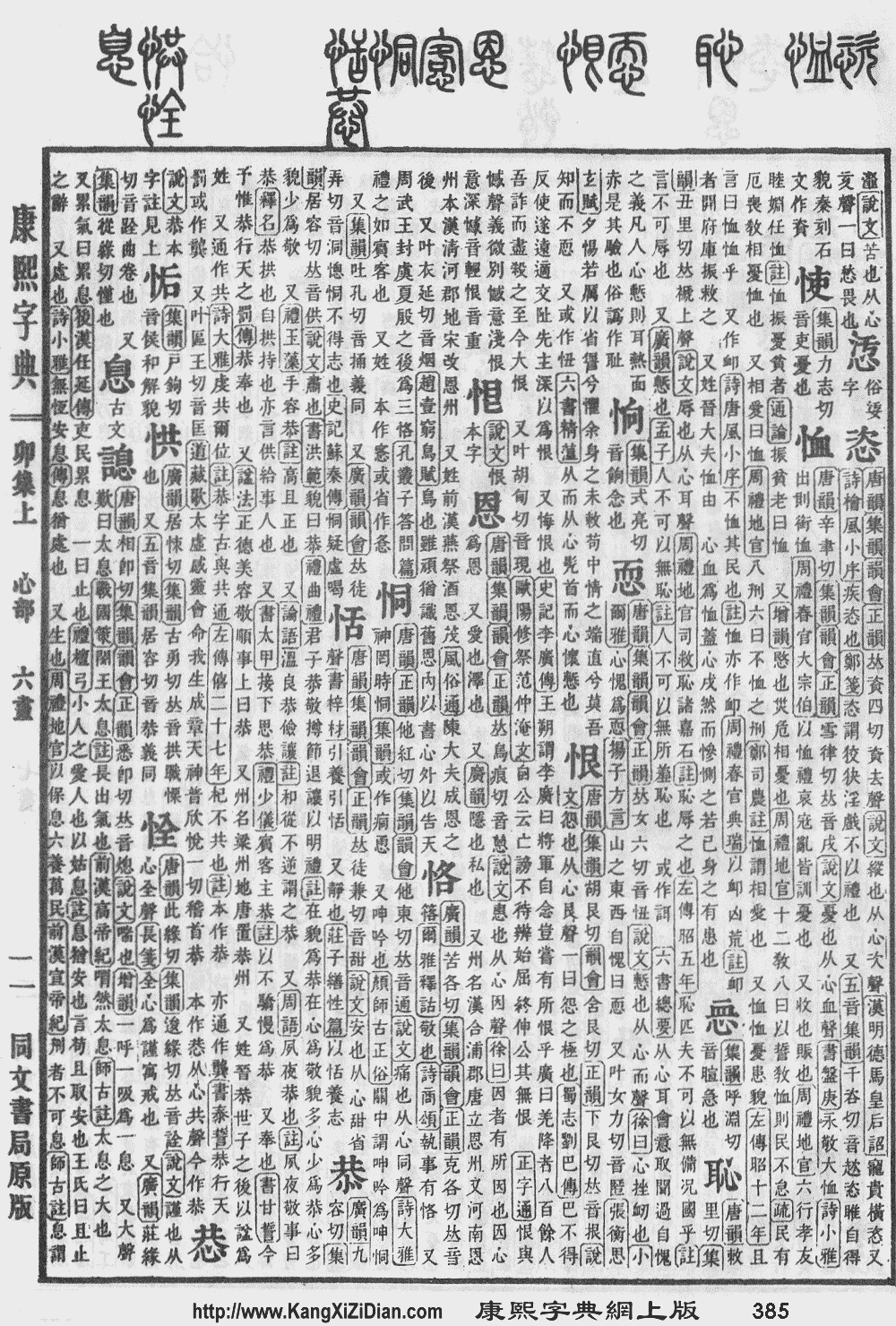
- KangXi: page 385, character 2
- Dai Kanwa Jiten: character 10580
- Dae Jaweon: page 715, character 19
- Hanyu Da Zidian (first edition): volume 4, page 2292, character 9
- Unihan data for U+6063
Chinese
| trad. | 恣 | |
|---|---|---|
| simp. # | 恣 | |
Glyph origin
| Historical forms of the character 恣 | |
|---|---|
| Shuowen Jiezi (compiled in Han) | Liushutong (compiled in Ming) |
| Small seal script | Transcribed ancient scripts |
 |
 |
Characters in the same phonetic series (次) (Zhengzhang, 2003)
Phono-semantic compound (形聲, OC *ʔslis) : phonetic 次 (OC *sn̥ʰis) + semantic 心.
Pronunciation
Definitions
恣
- to indulge oneself; to be profligate; to throw off restraint
- 聖王不作,諸侯放恣,處士橫議。 [Classical Chinese, trad.]
- From: Mencius, c. 4th century BCE
- Shèngwáng bùzuò, zhūhóu fàngzì, chǔshì hèngyì. [Pinyin]
- Sage sovereigns cease to arise, the princes of the States give the reins to their lusts. Unemployed scholars indulge in unreasonable discussions.
圣王不作,诸侯放恣,处士横议。 [Classical Chinese, simp.]
- to allow someone to do as they please
- wantonly; to one’s heart's content
- to change
- (dialectal) comfortable; cosy
Japanese
Etymology 1
| Kanji in this term |
|---|
| 恣 |
| し Grade: S |
| on’yomi |
(This etymology is missing or incomplete. Please add to it, or discuss it at the Etymology scriptorium.)
Pronunciation
- IPA(key): [ɕi]
This term needs a translation to English. Please help out and add a translation, then remove the text {{rfdef}}.
Korean
Hanja
恣 (eum 자 (ja))
- This term needs a translation to English. Please help out and add a translation, then remove the text
{{rfdef}}.
Vietnamese
Han character
- This term needs a translation to English. Please help out and add a translation, then remove the text
{{rfdef}}.
References
This article is issued from Wiktionary. The text is licensed under Creative Commons - Attribution - Sharealike. Additional terms may apply for the media files.