憤
See also: 愤
| ||||||||
 | ||||||||
Translingual
Han character
憤 (Kangxi radical 61, 心+12, 15 strokes, cangjie input 心十廿金 (PJTC), four-corner 94086, composition ⿰忄賁)
References
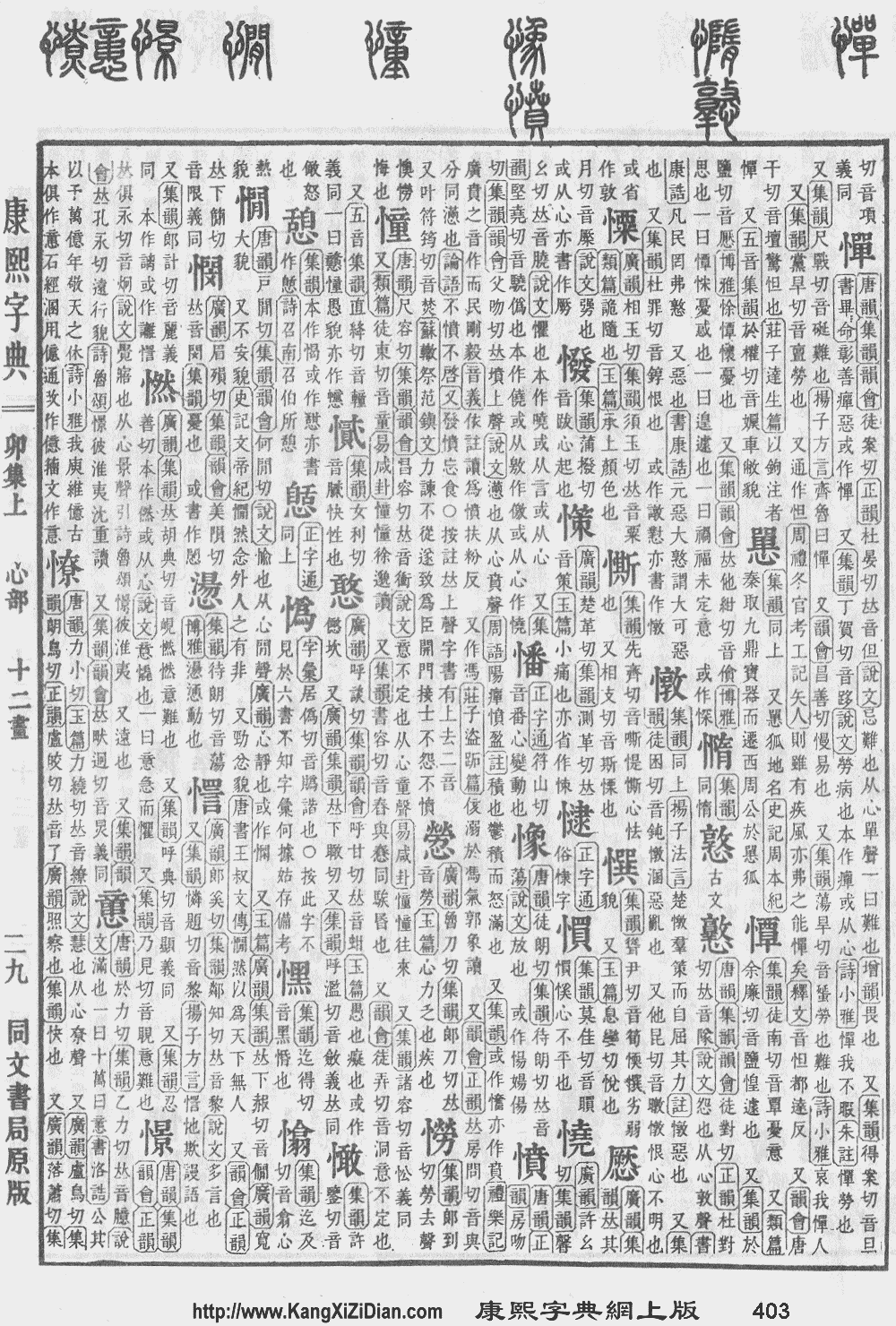
- KangXi: page 403, character 19
- Dai Kanwa Jiten: character 11239
- Dae Jaweon: page 743, character 21
- Hanyu Da Zidian (first edition): volume 4, page 2352, character 11
- Unihan data for U+61A4
- Unihan data for U+2F8AD
Chinese
| trad. | 憤 | |
|---|---|---|
| simp. | 愤 | |
| 2nd round simp. | 忿 | |
| alternative forms | 忿 phonetic loan | |
Glyph origin
| Historical forms of the character 憤 | |
|---|---|
| Shuowen Jiezi (compiled in Han) | Liushutong (compiled in Ming) |
| Small seal script | Transcribed ancient scripts |
 |
 |
Characters in the same phonetic series (奔) (Zhengzhang, 2003)
| Old Chinese | |
|---|---|
| 賁 | *prals, *bɯl, *pɯːn, *bɯn |
| 蟦 | *bɯl, *bɯlʔ, *bɯls |
| 膹 | *bɯlʔ, *bɯnʔ |
| 橨 | *bɯlʔ, *bɯn |
| 奔 | *pɯːn, *pɯːns |
| 錛 | *pɯːn |
| 噴 | *pʰɯːn, *pʰɯːns, *pɯns |
| 濆 | *pʰɯːn, *bɯn |
| 歕 | *pʰɯːn, *pʰɯːns |
| 獖 | *bɯːnʔ |
| 餴 | *pɯn |
| 饙 | *pɯn |
| 僨 | *pɯns |
| 墳 | *bɯn, *bɯnʔ |
| 燌 | *bɯn |
| 豶 | *bɯn |
| 羵 | *bɯn |
| 蕡 | *bɯn |
| 鐼 | *bɯn, *hmɯns |
| 馩 | *bɯn |
| 轒 | *bɯn, *bɯnʔ |
| 鼖 | *bɯn |
| 憤 | *bɯnʔ |
| 鱝 | *bɯnʔ |
Pronunciation
Compounds
Descendants
- → Thai: ฟุน (fun)
- → Isan: ฟุน
- → Lao: ຟຸນ (fun)
Japanese
Korean
Etymology
From Middle Chinese 憤 (MC bɨunX).
Vietnamese
Han character
憤: Hán Nôm readings: phẫn
- This term needs a translation to English. Please help out and add a translation, then remove the text
{{rfdef}}.
This article is issued from Wiktionary. The text is licensed under Creative Commons - Attribution - Sharealike. Additional terms may apply for the media files.