懷

See also: 懐 and 怀
懷 U+61F7, 懷
CJK UNIFIED IDEOGRAPH-61F7
← 懶
[U+61F6]
CJK Unified Ideographs 懸 →
[U+61F8]

Translingual

Traditional 懷
Shinjitai 懐
Simplified 怀

Han character

懷 (Kangxi radical 61, 心+16, 19 strokes, cangjie input 心卜田女 (PYWV), four-corner 94032, composition ⿰忄褱)

References

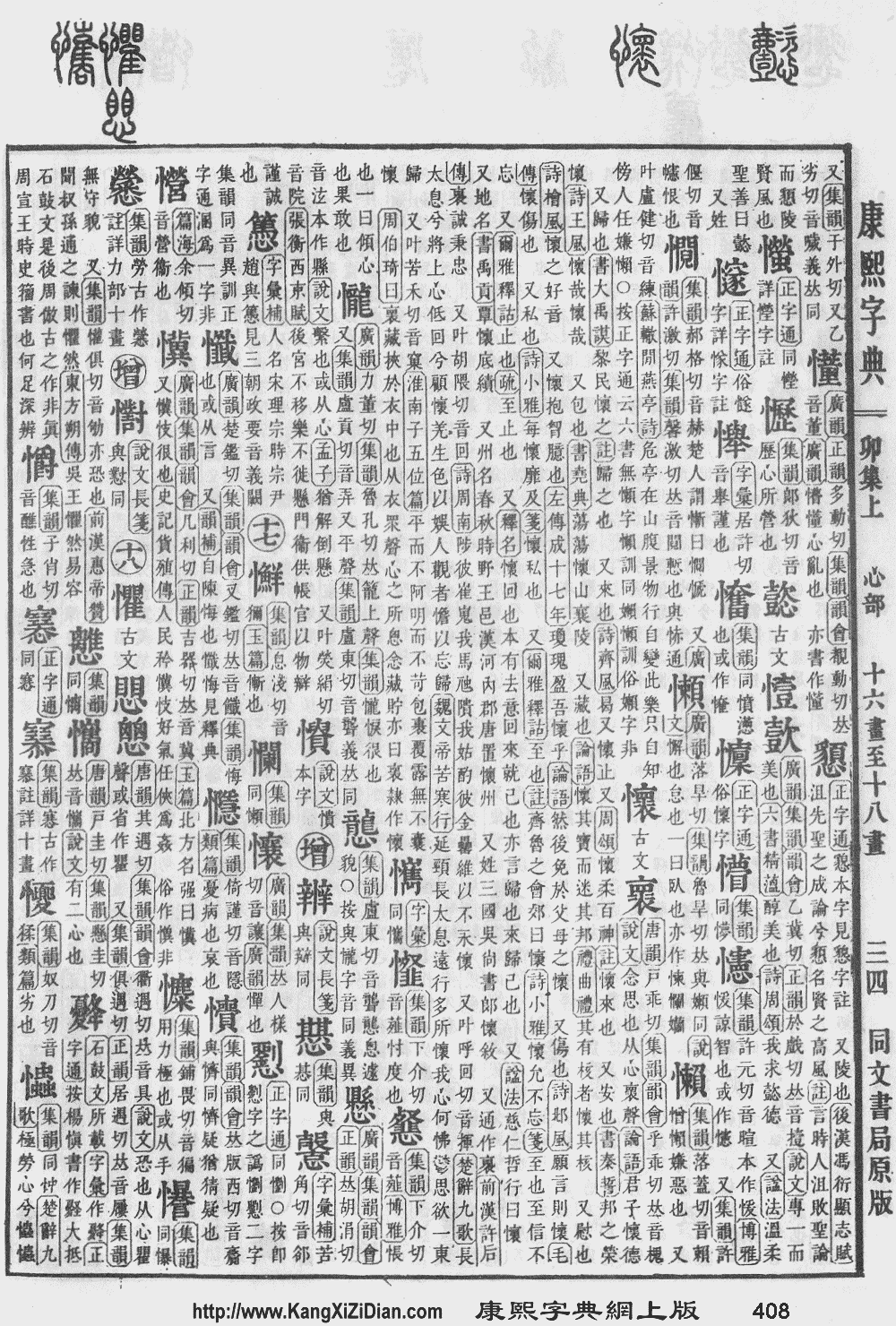
  • KangXi: page 408, character 17
  • Dai Kanwa Jiten: character 11456
  • Dae Jaweon: page 749, character 15
  • Hanyu Da Zidian (first edition): volume 4, page 2369, character 10
  • Unihan data for U+61F7

Chinese

trad. 懷
simp. 怀*
alternative forms 𧞷
褱
褢
懐
𫻡

Glyph origin

Phono-semantic compound (形聲, OC *ɡruːl) and ideogrammic compound (會意) : semantic 心 (“heart”) + phonetic 褱 (OC *ɡruːl, *ɡruːl, “bosom”).

Originally written 褱, see there for more.

Etymology

(This etymology is missing or incomplete. Please add to it, or discuss it at the Etymology scriptorium.)

Pronunciation


Note:
  • uai4 - vernacular;
  • fai4 - literary.
Note:
  • hoâi - literary;
  • kûi - vernacular;
  • kūi - surname.
Note:
  • 3hhua - vernacular;
  • 3hhue - literary.

  • Dialectal data
Variety Location 懷
Mandarin Beijing /xuai³⁵/
Harbin /xuai²⁴/
Tianjin /xuai⁴⁵/
Jinan /xuɛ²¹/
Qingdao /xuɛ⁴²/
Zhengzhou /xuai⁴²/
Xi'an /xuai²⁴/
Xining /xuɛ²⁴/
Yinchuan /xuɛ⁵³/
Lanzhou /xuɛ⁵³/
Ürümqi /xuai⁵¹/
Wuhan /xuai²¹³/
Chengdu /xuai³¹/
Guiyang /xuai²¹/
Kunming /xuæ³¹/
Nanjing /xuae²⁴/
Hefei /xue̞⁵⁵/
Jin Taiyuan /xuai¹¹/
Pingyao /xuæ¹³/
Hohhot /kuɛ³¹/
Wu Shanghai /ɦua²³/
/ɦue²³/
Suzhou /ɦue̞¹³/
Hangzhou /ɦue̞²¹³/
Wenzhou /va³¹/
Hui Shexian /xua⁴⁴/
Tunxi /xua⁴⁴/
Xiang Changsha /fai¹³/
Xiangtan /ɸai¹²/
Gan Nanchang /uai⁴⁵/ ~裡
/fai⁴⁵/
Hakka Meixian /fai¹¹/
Taoyuan /fɑi¹¹/
Cantonese Guangzhou /wai²¹/
Nanning /wai²¹/
Hong Kong /wai²¹/
Min Xiamen (Min Nan) /huai³⁵/
/kui³⁵/
Fuzhou (Min Dong) /huai⁵³/
Jian'ou (Min Bei) /uai²¹/
Shantou (Min Nan) /huai⁵⁵/
Haikou (Min Nan) /huai³¹/
/hɔi³¹/

Rime
Character 懷
Reading # 1/1
Initial (聲) 匣 (33)
Final (韻) 皆 (34)
Tone (調) Level (Ø)
Openness (開合) Closed
Division (等) II
Fanqie 戸乖切
Reconstructions
Zhengzhang
Shangfang
/ɦˠuɛi/
Pan
Wuyun
/ɦʷᵚæi/
Shao
Rongfen
/ɣuɐi/
Edwin
Pulleyblank
/ɦwəɨj/
Li
Rong
/ɣuɛi/
Wang
Li
/ɣwɐi/
Bernard
Karlgren
/ɣwăi/
Expected
Mandarin
Reflex
huái
Expected
Cantonese
Reflex
waai4
Baxter–Sagart system 1.1 (2014)
Character 懷
Reading # 1/1
Modern
Beijing
(Pinyin)
huái
Middle
Chinese
‹ hwɛj ›
Old
Chinese
/*[ɡ]ˁruj/
English bosom; embrace

Notes for Old Chinese notations in the Baxter–Sagart system:

* Parentheses "()" indicate uncertain presence;
* Square brackets "[]" indicate uncertain identity, e.g. *[t] as coda may in fact be *-t or *-p;
* Angle brackets "<>" indicate infix;
* Hyphen "-" indicates morpheme boundary;

* Period "." indicates syllable boundary.
Zhengzhang system (2003)
Character 懷
Reading # 1/1
No. 5341
Phonetic
component
褱
Rime
group
微
Rime
subdivision
2
Corresponding
MC rime
懷
Old
Chinese
/*ɡruːl/

Definitions

懷

  1. bosom; breast
    懷錶/怀表  ―  huáibiǎo  ―  pocket watch (one carried in a breast pocket)
    懷抱/怀抱  ―  huáibào  ―  embrace
  2. (figurative) heart; mind; affection
    胸懷/胸怀  ―  xiōnghuái  ―  largeness of mind
    抒懷/抒怀  ―  shūhuái  ―  to express oneself
    情懷/情怀  ―  qínghuái  ―  mood; affect; spirit
  3. to carry in one's bosom or on one's body
    懷胎/怀胎  ―  huáitāi  ―  to carry a child in a womb
    懷才不遇/怀才不遇  ―  huáicáibùyù  ―  to be equipped with skills and talents (inside oneself) but without the opportunity to use them
  4. to harbor in one's mind; to keep in mind; to entertain
  5. to think of; to cherish; to tend to; to remember; to reminisce
    緬懷/缅怀  ―  miǎnhuái  ―  to reminisce (about the past or a late person)
  6. (literary) to miss; to long for
  7. (literary or dialectal Mandarin) to be pregnant
  8. (Magong Hokkien) pocket (bag sewn into clothing)
  9. a surname

Synonyms

Compounds

References

Japanese

Shinjitai

懐

Kyūjitai

懷

Kanji

懷

(“Jinmeiyō” kanji used for names, kyūjitai kanji, shinjitai form 懐)

  1. This term needs a translation to English. Please help out and add a translation, then remove the text {{rfdef}}.

Readings

  • On (unclassified): かい (kai)
  • Kun: なつく (natsuku, 懷く); ふところ (futokoro, 懷)

Korean

Hanja

懷 • (hoe) (hangeul 회, revised hoe, McCune–Reischauer hoe, Yale hoy)

  1. This term needs a translation to English. Please help out and add a translation, then remove the text {{rfdef}}.

Vietnamese

Han character

懷: Hán Nôm readings: hoài

  1. This term needs a translation to English. Please help out and add a translation, then remove the text {{rfdef}}.
This article is issued from Wiktionary. The text is licensed under Creative Commons - Attribution - Sharealike. Additional terms may apply for the media files.