懶
See also: 懒
| ||||||||
| ||||||||
| ||||||||
Translingual
Han character
懶 (Kangxi radical 61, 心+16, 19 strokes, cangjie input 心木中金 (PDLC), four-corner 97086, composition ⿰忄賴)
References
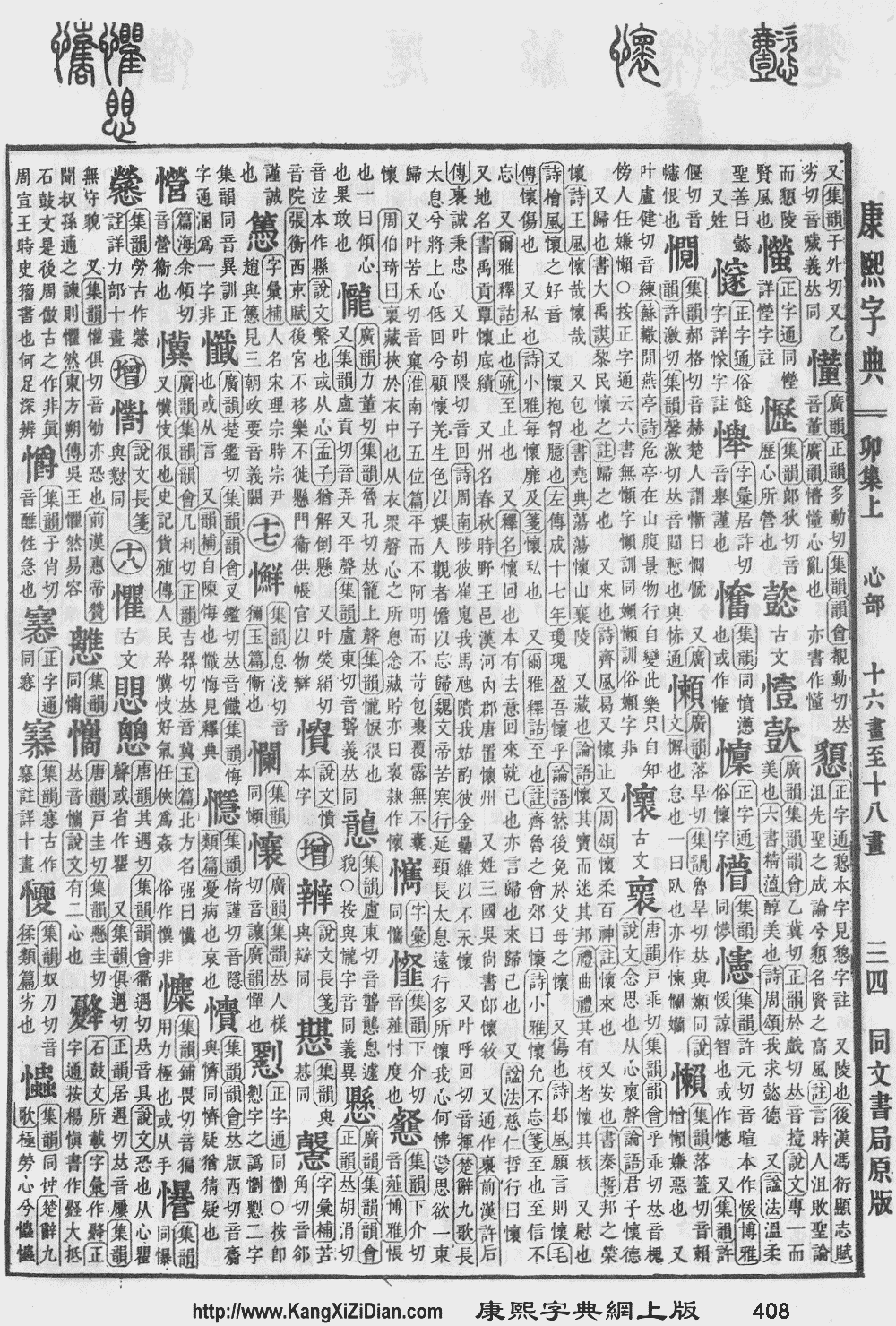
- KangXi: page 408, character 16
- Dai Kanwa Jiten: character 11455
- Dae Jaweon: page 749, character 17
- Hanyu Da Zidian (first edition): volume 4, page 2368, character 13
- Unihan data for U+61F6
- Unihan data for U+F90D
- Unihan data for U+2F8B1
Chinese
| trad. | 懶 | |
|---|---|---|
| simp. | 懒 | |
| 2nd round simp. | 𰑐 | |
| alternative forms | 嬾/𰌙 孏 ancient 㦨 ⿰忄阑 | |
Glyph origin
Characters in the same phonetic series (賴) (Zhengzhang, 2003)
Phono-semantic compound (形聲, OC *raːnʔ) : semantic 忄 (“heart”) + phonetic 賴 (OC *raːds).
Etymology 1
(This etymology is missing or incomplete. Please add to it, or discuss it at the Etymology scriptorium.)
Pronunciation
Definitions
懶
- lazy; indolent; slothful
- sluggish; drowsy
- (often with 得) too lazy to do something; not feeling like doing something
- 乾一罐的汽水 呼出嘆息 快樂懶說明 [Literary Cantonese, trad.]
- From: 2020, 林家謙 [Terence Lam], 一人之境 [Solitude]
- gon1 jat1 gun3 dik1 hei3 seoi2, fu1 ceot1 taan3 sik1, faai3 lok6 laan5 syut3 ming4 [Jyutping]
- [I] drink up a can of pop, breathe out a gasp, so happy [I] don't feel like explaining
干一罐的汽水 呼出叹息 快乐懒说明 [Literary Cantonese, simp.]
Synonyms
- (lazy):
Synonyms of 懶
Dialectal synonyms of 懶惰 (“lazy”) [map]
- (sluggish):
Compounds
Derived terms from 懶
|
Descendants
- → Proto-Tai: *ɡraːnꟲ² (“lazy”)
- Thai: คร้าน (kráan, “lazy”)
Japanese
Korean
Hanja
懶 (eum 라 (ra), South Korea 나 (na))
懶 (eum 란 (ran), South Korea 난 (nan))
- This term needs a translation to English. Please help out and add a translation, then remove the text
{{rfdef}}.
Vietnamese
This article is issued from Wiktionary. The text is licensed under Creative Commons - Attribution - Sharealike. Additional terms may apply for the media files.