拘
| ||||||||
Translingual
Han character
拘 (Kangxi radical 64, 手+5, 8 strokes, cangjie input 手心口 (QPR), four-corner 57020, composition ⿰扌句)
References
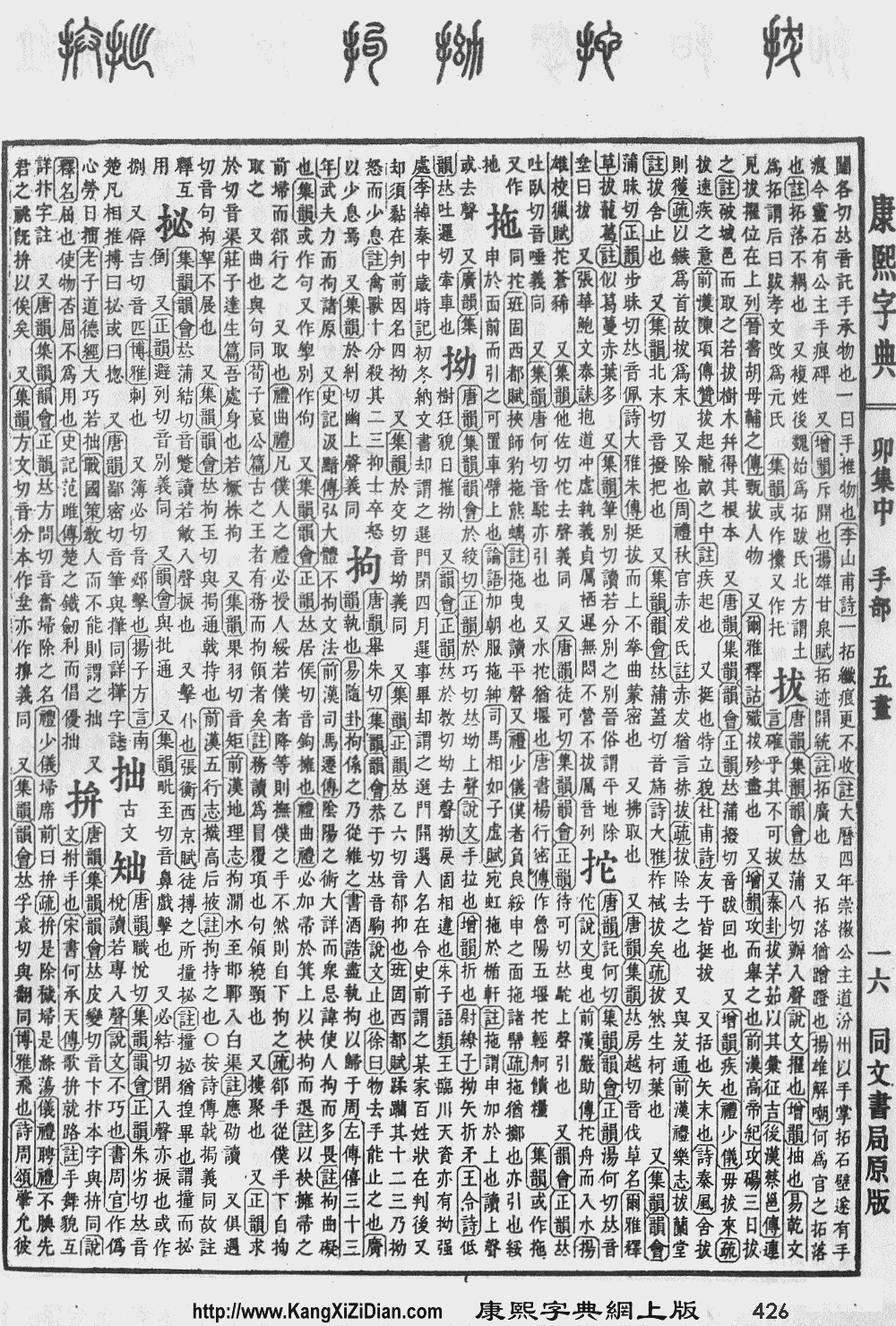
- KangXi: page 426, character 5
- Dai Kanwa Jiten: character 11963
- Dae Jaweon: page 774, character 7
- Hanyu Da Zidian (first edition): volume 3, page 1856, character 1
- Unihan data for U+62D8
Chinese
| simp. and trad. |
拘 | |
|---|---|---|
Glyph origin
| Historical forms of the character 拘 | ||
|---|---|---|
| Western Zhou | Shuowen Jiezi (compiled in Han) | Liushutong (compiled in Ming) |
| Bronze inscriptions | Small seal script | Transcribed ancient scripts |
 |
 |
 |
Characters in the same phonetic series (句) (Zhengzhang, 2003)
| Old Chinese | |
|---|---|
| 勾 | *koː, *koːs |
| 鉤 | *koː |
| 鴝 | *koː, *ɡo |
| 句 | *koː, *koːs, *kos, *ɡo |
| 夠 | *koː, *koːs, *kʰoː |
| 枸 | *koː, *koːʔ, *koʔ |
| 軥 | *koː, *koːs, *ɡo |
| 狗 | *koːʔ |
| 苟 | *koːʔ |
| 岣 | *koːʔ, *ko |
| 笱 | *koːʔ |
| 玽 | *koːʔ |
| 耇 | *koːʔ |
| 豿 | *koːʔ, *qʰroːɡ |
| 敂 | *koːʔ |
| 怐 | *koːs, *kʰoːs, *qʰoːs, *kos |
| 雊 | *koːs |
| 竘 | *kʰoːʔ, *kʰoʔ |
| 齁 | *qʰoː |
| 呴 | *qʰoːʔ, *qʰos |
| 蚼 | *qʰoːʔ, *ɡo |
| 豞 | *qʰoːs |
| 訽 | *qʰoːs, *ɡoːs |
| 佝 | *qʰoːs |
| 拘 | *ko |
| 駒 | *ko |
| 眗 | *ko |
| 跔 | *ko |
| 鮈 | *ko |
| 痀 | *ko |
| 蒟 | *koʔ, *kos |
| 絇 | *kos, *ɡo |
| 邭 | *kos |
| 劬 | *ɡo |
| 朐 | *ɡo |
| 鼩 | *ɡo |
| 斪 | *ɡo |
| 翑 | *ɡo |
| 葋 | *ɡo |
| 姁 | *ɡo, *qʰo, *qʰoʔ, *qʰos |
| 欨 | *qʰo, *qʰoʔ |
| 喣 | *qʰoʔ |
| 煦 | *qʰoʔ, *qʰos |
| 昫 | *qʰos |
Phono-semantic compound (形聲, OC *ko) : semantic 扌 + phonetic 句 (OC *koː, *koːs, *kos, *ɡo).
Pronunciation
Definitions
拘
Compounds
Japanese
Kanji
拘
- This term needs a translation to English. Please help out and add a translation, then remove the text
{{rfdef}}.
Vietnamese
This article is issued from Wiktionary. The text is licensed under Creative Commons - Attribution - Sharealike. Additional terms may apply for the media files.