鉤
| ||||||||
Translingual
Han character
鉤 (Kangxi radical 167, 金+5, 13 strokes, cangjie input 金心口 (CPR), four-corner 87120, composition ⿰釒句)
Derived characters
- 𦽋, 𥴴
Related characters
References
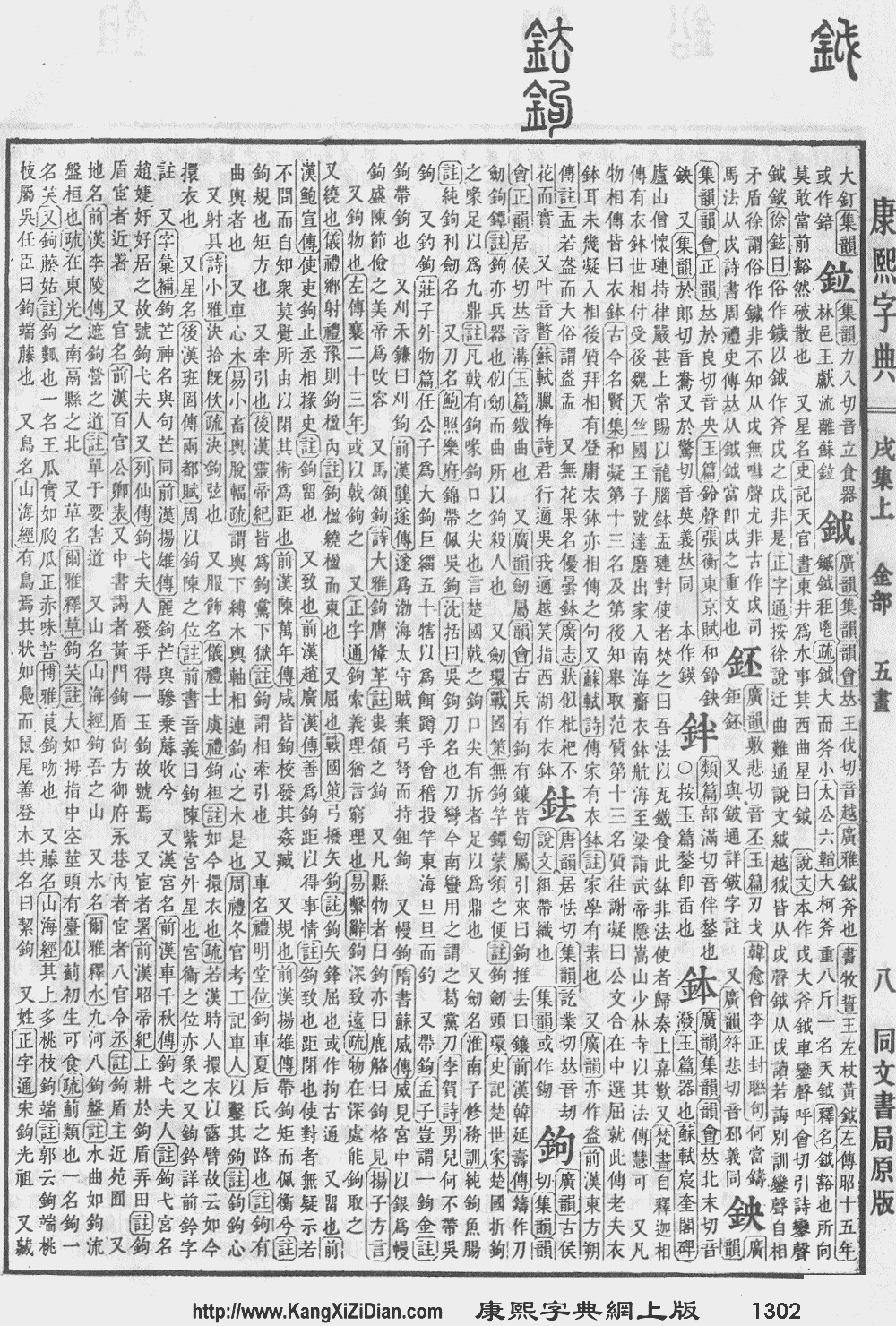
- KangXi: page 1302, character 8
- Dai Kanwa Jiten: character 40319
- Dae Jaweon: page 1804, character 3
- Hanyu Da Zidian (first edition): volume 6, page 4188, character 6
- Unihan data for U+9264
Chinese
| trad. | 鉤/鈎 | |
|---|---|---|
| simp. | 钩 | |
| 2nd round simp. | 勾 | |
| nonstandard simp. | 𰽭 | |
| alternative forms | 句 | |
Glyph origin
| Historical forms of the character 鉤 | ||
|---|---|---|
| Warring States | Shuowen Jiezi (compiled in Han) | Liushutong (compiled in Ming) |
| Chu slip and silk script | Small seal script | Transcribed ancient scripts |
 |
 |
 |
Characters in the same phonetic series (句) (Zhengzhang, 2003)
| Old Chinese | |
|---|---|
| 勾 | *koː, *koːs |
| 鉤 | *koː |
| 鴝 | *koː, *ɡo |
| 句 | *koː, *koːs, *kos, *ɡo |
| 夠 | *koː, *koːs, *kʰoː |
| 枸 | *koː, *koːʔ, *koʔ |
| 軥 | *koː, *koːs, *ɡo |
| 狗 | *koːʔ |
| 苟 | *koːʔ |
| 岣 | *koːʔ, *ko |
| 笱 | *koːʔ |
| 玽 | *koːʔ |
| 耇 | *koːʔ |
| 豿 | *koːʔ, *qʰroːɡ |
| 敂 | *koːʔ |
| 怐 | *koːs, *kʰoːs, *qʰoːs, *kos |
| 雊 | *koːs |
| 竘 | *kʰoːʔ, *kʰoʔ |
| 齁 | *qʰoː |
| 呴 | *qʰoːʔ, *qʰos |
| 蚼 | *qʰoːʔ, *ɡo |
| 豞 | *qʰoːs |
| 訽 | *qʰoːs, *ɡoːs |
| 佝 | *qʰoːs |
| 拘 | *ko |
| 駒 | *ko |
| 眗 | *ko |
| 跔 | *ko |
| 鮈 | *ko |
| 痀 | *ko |
| 蒟 | *koʔ, *kos |
| 絇 | *kos, *ɡo |
| 邭 | *kos |
| 劬 | *ɡo |
| 朐 | *ɡo |
| 鼩 | *ɡo |
| 斪 | *ɡo |
| 翑 | *ɡo |
| 葋 | *ɡo |
| 姁 | *ɡo, *qʰo, *qʰoʔ, *qʰos |
| 欨 | *qʰo, *qʰoʔ |
| 喣 | *qʰoʔ |
| 煦 | *qʰoʔ, *qʰos |
| 昫 | *qʰos |
Pronunciation
Definitions
鉤
- hook; barb
- 彼竊鉤者誅,竊國者為諸侯,諸侯之門,而仁義存焉,則是非竊仁義聖知邪? [Classical Chinese, trad.]
- From: Zhuangzi, circa 3rd – 2nd centuries BCE, translated based on James Legge's version
- Bǐ qiè gōu zhě zhū, qiè guó zhě wèi zhūhóu, zhūhóu zhī mén, ér rén yì cún yān, zé shì fēi qiè rén yì shèng zhì yé? [Pinyin]
- Here is one who steals a hook (for his girdle) - he is put to death for it: here is another who steals a state - he becomes its prince. But it is at the gates of the princes that we find benevolence and righteousness (most strongly) professed - is not this stealing benevolence and righteousness, sageness and wisdom?
彼窃钩者诛,窃国者为诸侯,诸侯之门,而仁义存焉,则是非窃仁义圣知邪? [Classical Chinese, simp.]
- sickle
- stroke with
- checkmark
- (Chinese calligraphy) a hook (such as in ㇠, ㇆, ㇚, or ㇟)
- (regional, card games) jack (J)
Synonyms
Dialectal synonyms of 鉤兒 (“jack (playing cards)”) [map]
| Variety | Location | Words |
|---|---|---|
| Mandarin | Beijing | 鉤兒 |
| Luoyang | 鉤, 十一 | |
| Zhengzhou | 鉤, 十一 | |
| Xi'an | 丁子 | |
| Ürümqi | 丁鉤兒 | |
| Wuhan | 鉤子, 鉤, 鉤鉤, 孫子 | |
| Guiyang | 鉤鉤, 鉤, 夾鉤 | |
| Liuzhou | 歐 | |
| Xuzhou | 丁鉤兒, 甲鉤兒 | |
| Yangzhou | 茄鉤, 傑鉤 | |
| Nanjing | 丁鉤 | |
| Cantonese | Guangzhou | 積 |
| Hong Kong | 積 | |
| Taishan | 積 | |
| Wuzhou | 積 | |
| Yulin | 鉤 | |
| Gan | Nanchang | 鉤 |
| Lichuan | 鉤子 | |
| Pingxiang | 鉤子, 鉤 | |
| Hakka | Yudu | 鉤子 |
| Huizhou | Jixi | 丁鉤 |
| Jin | Taiyuan | 鉤子 |
| Min Nan | Xiamen | 丁 |
| Shantou | 丁 | |
| Wu | Shanghai (Chongming) | 斜鉤 |
| Suzhou | 茄杠 |
Coordinate terms
Compounds
Derived terms from 鉤
Japanese
Kanji
鉤
- This term needs a translation to English. Please help out and add a translation, then remove the text
{{rfdef}}.
Etymology
| Kanji in this term |
|---|
| 鉤 |
| かぎ Hyōgaiji |
| kun’yomi |
(This etymology is missing or incomplete. Please add to it, or discuss it at the Etymology scriptorium.)
Korean
Hanja
鉤 • (gu) (hangeul 구, revised gu, McCune–Reischauer ku, Yale kwu)
- This term needs a translation to English. Please help out and add a translation, then remove the text
{{rfdef}}.
Vietnamese
This article is issued from Wiktionary. The text is licensed under Creative Commons - Attribution - Sharealike. Additional terms may apply for the media files.