洞
| ||||||||
| ||||||||
Translingual
Han character
| Stroke order | |||
|---|---|---|---|
 | |||
洞 (Kangxi radical 85, 水+6, 9 strokes, cangjie input 水月一口 (EBMR), four-corner 37120, composition ⿰氵同)
Derived characters
- 霘, 𪔦, 𢞉
References
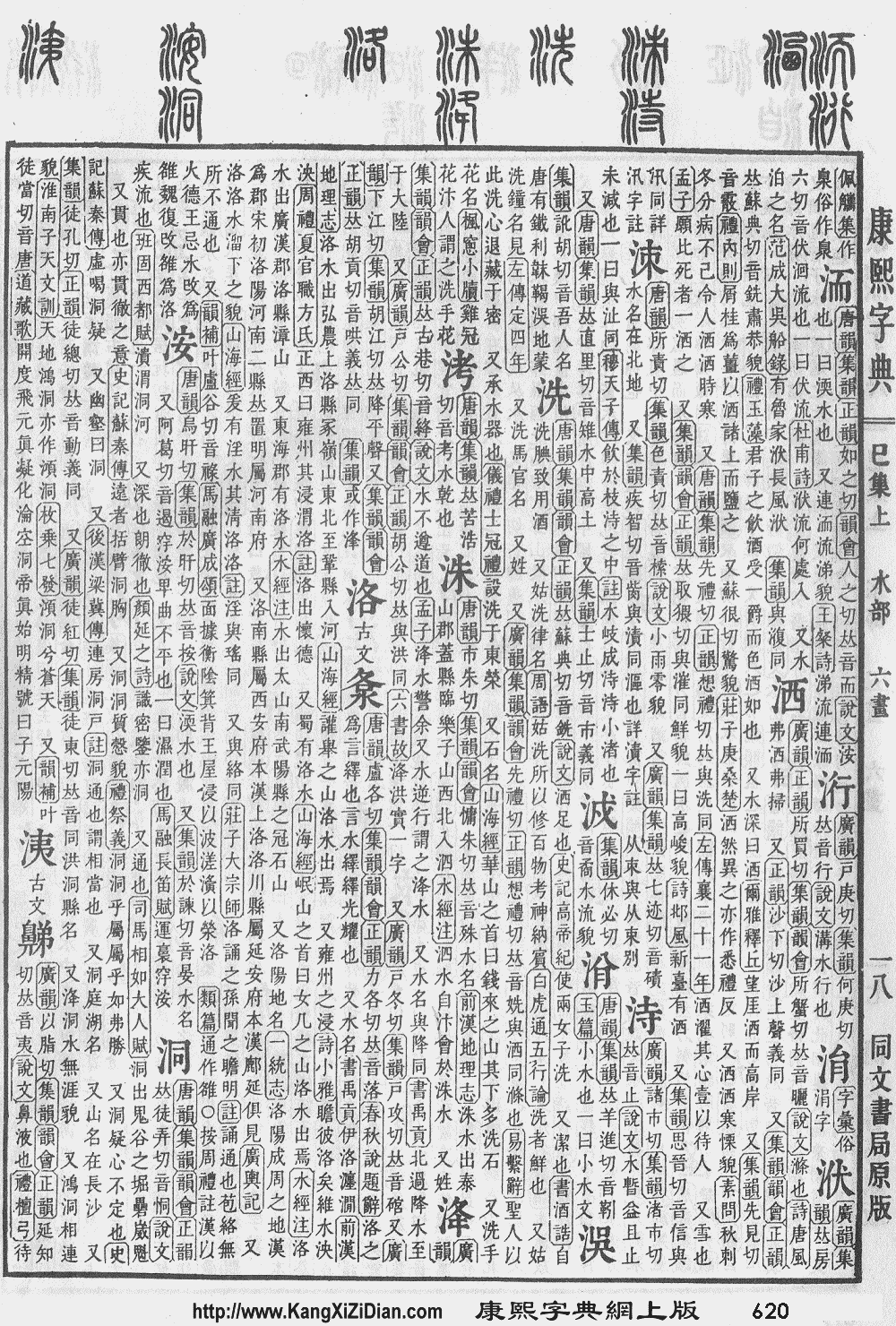
- KangXi: page 620, character 18
- Dai Kanwa Jiten: character 17386
- Dae Jaweon: page 1016, character 7
- Hanyu Da Zidian (first edition): volume 3, page 1607, character 3
- Unihan data for U+6D1E
- Unihan data for U+FA05
Chinese
| simp. and trad. |
洞 | |
|---|---|---|
Glyph origin
Characters in the same phonetic series (同) (Zhengzhang, 2003)
| Old Chinese | |
|---|---|
| 鮦 | *duʔ, *doːŋ, *doŋʔ |
| 侗 | *tʰoːŋ, *tʰoːŋʔ, *doːŋ |
| 恫 | *tʰoːŋ, *doːŋs |
| 痌 | *tʰoːŋ |
| 同 | *doːŋ |
| 仝 | *zlon, *doːŋ |
| 銅 | *doːŋ |
| 桐 | *doːŋ |
| 峒 | *doːŋ, *doːŋs |
| 硐 | *doːŋ, *doːŋʔ |
| 筒 | *doːŋ, *doːŋs |
| 洞 | *doːŋ, *doːŋs |
| 烔 | *doːŋ |
| 挏 | *doːŋ, *doːŋʔ |
| 酮 | *doːŋ, *doːŋʔ |
| 鲖 | |
| 眮 | *doːŋ, *doːŋʔ, *doːŋs |
| 衕 | *doːŋ, *doːŋs |
| 哃 | *doːŋ |
| 絧 | *doːŋ, *doːŋs |
| 姛 | *doːŋʔ |
| 詷 | *doːŋʔ, *doːŋs |
| 胴 | *doːŋs |
| 駧 | *doːŋs |
| 迵 | *doːŋs |
| 戙 | *doːŋs |
Phono-semantic compound (形聲, OC *doːŋ, *doːŋs) : semantic 水 (“water”) + phonetic 同 (OC *doːŋ).
Etymology
- “hole; cavity” > “penetrating; thorough; zero”
- From Proto-Sino-Tibetan *dwa(ː)ŋ (“hole; orifice; cave; pit; well”). Cognate with Burmese တွင်း (twang:), Tibetan དོང (dong, “deep hole; pit”) and Jingpho kha-thung (“well, pit”).
Pronunciation 1
Definitions
洞
- hole; cavity; cave
- (literary, or in compounds) thorough; penetrating
- the numeral zero (used in radio communications in aviation and by the military)
- dong, a submunicipal administrative division in North and South Korea
Synonyms
- (hole):
Dialectal synonyms of 孔 (“hole”) [map]
| Variety | Location | Words |
|---|---|---|
| Classical Chinese | 孔, 洞, 穴 | |
| Formal (Written Standard Chinese) | 孔, 洞, 孔洞, 空洞, 空穴 | |
| Mandarin | Beijing | 窟窿 |
| Jinan | 窟窿 | |
| Luoyang | 窟窿 | |
| Wanrong | 窟窿 | |
| Xi'an | 窟窿子, 窟窿 | |
| Wuhan | 窟窿, 窟眼, 洞洞, 洞 | |
| Chengdu | 窟窿, 洞洞, 洞 | |
| Liuzhou | 窿 | |
| Yangzhou | 洞, 窟窿 | |
| Nanjing | 窟窿 | |
| Hefei | 窟窿, 洞 | |
| Singapore | 洞 | |
| Cantonese | Guangzhou | 窿, 咕窿 |
| Hong Kong | 窿, 咕窿 | |
| Taishan | 孔 | |
| Yangjiang | 窿 | |
| Kuala Lumpur (Guangfu) | 窿 | |
| Singapore (Guangfu) | 窿 | |
| Gan | Nanchang | 洞 |
| Hakka | Meixian | 窿仔, 窿空仔 |
| Miaoli (N. Sixian) | 空 | |
| Pingtung (Neipu; S. Sixian) | 空 | |
| Hsinchu County (Zhudong; Hailu) | 空 | |
| Taichung (Dongshi; Dabu) | 空 | |
| Hsinchu County (Qionglin; Raoping) | 空 | |
| Yunlin (Lunbei; Zhao'an) | 空 | |
| Jin | Taiyuan | 窟窿, 窟子 |
| Min Bei | Jian'ou | 川 |
| Min Dong | Fuzhou | 空空 |
| Min Nan | Xiamen | 空, 空口 |
| Quanzhou | 空 | |
| Zhangzhou | 空口 | |
| Zhangzhou (Changtai) | 空 | |
| Taipei | 空 | |
| Penang (Hokkien) | 空 | |
| Singapore (Hokkien) | 空 | |
| Manila (Hokkien) | 空 | |
| Chaozhou | 空 | |
| Jieyang | 空, 洞 | |
| Haifeng | 空 | |
| Singapore (Teochew) | 空 | |
| Southern Pinghua | Nanning (Tingzi) | 窿 |
| Wu | Suzhou | 洞 |
| Wenzhou | 洞, 窟, 窟窿 | |
| Jinhua | 窟窿 | |
| Xiang | Changsha | 洞, 洞子 |
| Shuangfeng | 眼貢, 洞 | |
- (zero):
Dialectal synonyms of 零 (“zero”) [map]
Compounds
Derived terms from 洞
|
|
Pronunciation 2
Japanese
Readings
Korean
Etymology 1
From Middle Chinese 洞 (MC duŋH).
| Historical readings |
|---|
|
Pronunciation
- (SK Standard/Seoul) IPA(key): [to̞(ː)ŋ]
- Phonetic hangul: [동(ː)]
- Though still prescribed in Standard Korean, most speakers in both Koreas no longer distinguish vowel length.
Hanja
Wikisource 洞 (eumhun 골 동 (gol dong))
- Hanja form? of 동 (“hole; cavity; cave”).
- Hanja form? of 동 (“dong, a submunicipal administrative division in North and South Korea”).
Compounds
Etymology 2
From a corrupted or unorthodox reading.
Pronunciation
- (SK Standard/Seoul) IPA(key): [tʰo̞(ː)ŋ]
- Phonetic hangul: [통(ː)]
- Though still prescribed in Standard Korean, most speakers in both Koreas no longer distinguish vowel length.
Vietnamese
This article is issued from Wiktionary. The text is licensed under Creative Commons - Attribution - Sharealike. Additional terms may apply for the media files.