現
See also: 现
| ||||||||
Translingual
| Stroke order | |||
Japan_-_KanjiVG_stroke_order.svg.png.webp) _-_KanjiVG_stroke_order.svg.png.webp) | |||
Han character
現 (Kangxi radical 96, 玉+7, 11 strokes, cangjie input 一土月山山 (MGBUU), four-corner 16110, composition ⿰𤣩見)
Derived characters
- 𠻷, 𣎔, 𡠝
Related characters
References
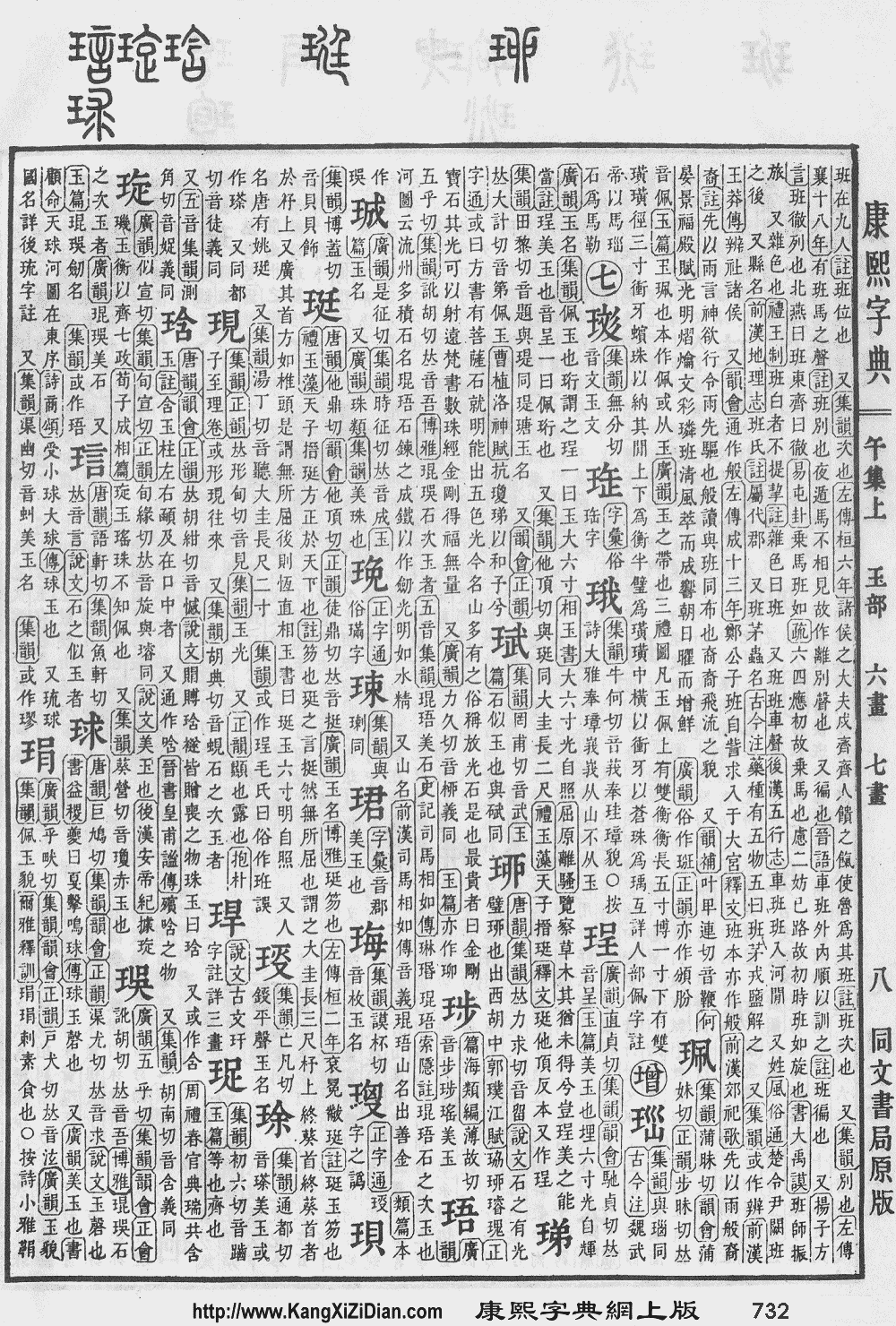
- KangXi: page 732, character 22
- Dai Kanwa Jiten: character 21004
- Dae Jaweon: page 1143, character 18
- Hanyu Da Zidian (first edition): volume 2, page 1116, character 3
- Unihan data for U+73FE
Chinese
| trad. | 現 | |
|---|---|---|
| simp. | 现 | |
| alternative forms | 見/见 | |
Glyph origin
Characters in the same phonetic series (見) (Zhengzhang, 2003)
Phono-semantic compound (形聲, OC *ɡeːns) : semantic 玉 (“jewel”) + phonetic 見 (OC *keːns, *ɡeːns).
Etymology
Stativized form of the transitive verb 見 (OC *keːns, “to see”), formed by a nasal prefix and expressing the sense "to be visible; to appear" (Mei, 2012).
Pronunciation
Definitions
現
- present; current
- to appear; to manifest; to become visible
- now
- 現我只想與祢同去 終此世 居於祢愛裡 [Literary Cantonese, trad.]
- From: 2020, 原始和聲 [Raw Harmony], lyrics by 李俊霆 [Matthew Li], 願盡我一生
- jin6 ngo5 zi2 soeng2 jyu5 nei5 tung4 heoi3, zung1 ci2 sai3, geoi1 jyu1 nei5 oi3 leoi5 [Jyutping]
- Now, I only want to go with You, dwelling in Your love this whole life
现我只想与祢同去 终此世 居于祢爱里 [Literary Cantonese, simp.]
- on the spot; then and there
Compounds
Derived terms from 現
|
|
|
Japanese
Readings
Compounds
Noun
現 • (utsutsu)
- reality or consciousness, as opposed to a dream state or unconsciousness
- 2003 January 27, Mashiba, Shin, “第八夜 合鏡(後編) [Night 8: Mirror within Mirror (Last Chapter)]”, in 夢喰見聞 [The Dream-Eating Inspector], volume 2 (fiction), Tokyo: Square Enix, page 7:
- さあ 眠れしばし現にお別れだ
- Sā nemure shibashi utsutsu ni owakare da
- Well then, say goodbye to reality for the time being, and go to sleep
- さあ 眠れしばし現にお別れだ
-
Derived terms
- 現を抜かす (utsutsu o nukasu)
Korean
Etymology
From Middle Chinese 現 (MC ɦenH).
| Historical readings |
|---|
|
Pronunciation
- (SK Standard/Seoul) IPA(key): [çɘ(ː)n]
- Phonetic hangul: [현(ː)]
- Though still prescribed in Standard Korean, most speakers in both Koreas no longer distinguish vowel length.
Compounds
Vietnamese
This article is issued from Wiktionary. The text is licensed under Creative Commons - Attribution - Sharealike. Additional terms may apply for the media files.