間

See also: 间, 閒, and 閑
間 U+9593, 間
CJK UNIFIED IDEOGRAPH-9593
← 閒
[U+9592]
CJK Unified Ideographs 閔 →
[U+9594]

Translingual

Stroke order
12 strokes

Han character

間 (Kangxi radical 169, 門+4, 12 strokes, cangjie input 日弓日 (ANA), four-corner 77607, composition ⿵門日)

Derived characters

References

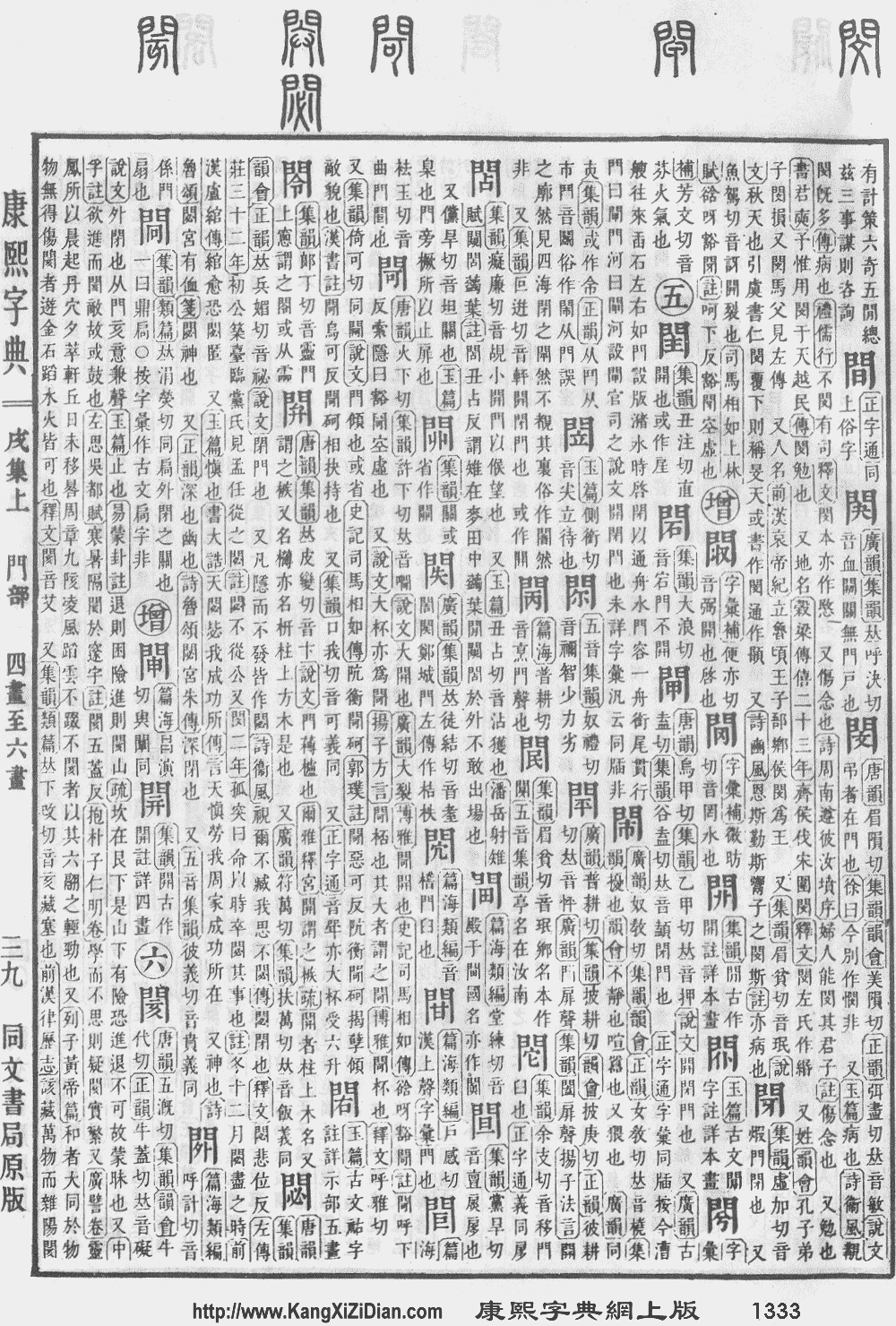
  • KangXi: page 1333, character 1
  • Dai Kanwa Jiten: character 41249
  • Dae Jaweon: page 1839, character 1
  • Hanyu Da Zidian (first edition): volume 7, page 4288, character 6
  • Unihan data for U+9593

Chinese

trad. 間
simp. 间
alternative forms 閒

Glyph origin

Historical forms of the character 間
Western Zhou Shuowen Jiezi (compiled in Han) Liushutong (compiled in Ming)
Bronze inscriptions Small seal script Transcribed ancient scripts

Ideogrammic compound (會意) : 門 (“door”) + 日 (“sun”). Originally 閒, moonlight (月) peeking through a door (門) – interstice; space.

Etymology

The two pronunciations are related, with Pronunciation 2 (間 (OC *kreːns)) being the exoactive of Pronunciation 1 (間 (OC *kreːn)).

Related to:

  • 隙 (OC *kʰraɡ, “crack; chink”), 澗 (OC *kreːns, *kraːns, “ravine; brook (between mountains)”) (Wang, 1982);
  • 閒 (OC *ɡreːn, “lazy; leisure”) (Karlgren, 1957; Baxter, 1992).

Externally, likely related to Mizo kâr (“space between; interval”), Burmese ကြား (kra:, “in-between; interval; interim”), အကြား (a.kra:, “gap; break”) (Schuessler, 2007).

Pronunciation 1


Note:
  • Xiamen, Quanzhou, Taiwan:
    • keng/kuiⁿ/kaiⁿ - vernacular (“room, classifier”);
    • kan - literary.
Note:
  • goin1/gain1 - vernacular (“room, classifier”) (gain1 - Jieyang, Chaoyang);
  • gang1 - literary.
  • Wu
    • (Shanghainese)
      • Wiktionary: 1ke; 1ji
      • Sinological IPA (key): /ke̞⁵³/, /t͡ɕi⁵³/
Note:
  • 1ke - vernacular;
  • 1ji - literary.
  • Xiang
    • (Changsha)
      • Wiktionary: gan1 / ga1
      • Sinological IPA (key): /kan³³/, /ka̠³³/
Note: ga1 - in 中間子.

Rime
Character 間
Reading # 1/2
Initial (聲) 見 (28)
Final (韻) 山 (73)
Tone (調) Level (Ø)
Openness (開合) Open
Division (等) II
Fanqie 古閑切
Baxter kean
Reconstructions
Zhengzhang
Shangfang
/kˠɛn/
Pan
Wuyun
/kᵚæn/
Shao
Rongfen
/kæn/
Edwin
Pulleyblank
/kəɨn/
Li
Rong
/kɛn/
Wang
Li
/kæn/
Bernard
Karlgren
/kăn/
Expected
Mandarin
Reflex
jiān
Expected
Cantonese
Reflex
gaan1
Baxter–Sagart system 1.1 (2014)
Character 間
Reading # 1/3
Modern
Beijing
(Pinyin)
jiān
Middle
Chinese
‹ kɛn ›
Old
Chinese
/*kˁre[n]/
English interval

Notes for Old Chinese notations in the Baxter–Sagart system:

* Parentheses "()" indicate uncertain presence;
* Square brackets "[]" indicate uncertain identity, e.g. *[t] as coda may in fact be *-t or *-p;
* Angle brackets "<>" indicate infix;
* Hyphen "-" indicates morpheme boundary;

* Period "." indicates syllable boundary.
Zhengzhang system (2003)
Character 間
Reading # 1/2
No. 6226
Phonetic
component
閒
Rime
group
元
Rime
subdivision
2
Corresponding
MC rime
閒
Old
Chinese
/*kreːn/
Notes 原作閒同說文

Definitions

間

  1. within a definite time period or place
    時間/时间  ―  shíjiān  ―  time, period
    晚間/晚间  ―  wǎnjiān  ―  evening, night
    世間/世间  ―  shìjiān  ―  world, earth
    空間/空间  ―  kōngjiān  ―  space
  2. among; between
    小鳥們在樹枝間唱歌。 [MSC, trad.]
    小鸟们在树枝间唱歌。 [MSC, simp.]
    Xiǎo niǎo men zài shùzhī jiān chàng gē. [Pinyin]
    The birds were singing among the branches of the tree.
    兩個公司間的談判非常成功。 [MSC, trad.]
    两个公司间的谈判非常成功。 [MSC, simp.]
    Liǎng ge gōngsī jiān de tánpàn fēicháng chénggōng. [Pinyin]
    The negotiations between the two companies were successful.
    兩點間直線最短。/两点间直线最短。  ―  Liǎng diǎn jiān zhíxiàn zuì duǎn.  ―  The shortest distance between two points is a straight line.
  3. a moment; a little while; instant
  4. room; chamber
    房間/房间  ―  fángjiān  ―  room
    衛生間/卫生间  ―  wèishēngjiān  ―  bathroom, toilet
    衣帽間/衣帽间  ―  yīmàojiān  ―  cloakroom
    雙人間/双人间  ―  shuāngrénjiān  ―  double room
  5. section of a room; lateral space between two pairs of pillars
  6. Classifier for smallest units of housing, such as rooms and shopfronts.
  7. (chiefly Cantonese) Classifier for buildings in general, including schools, banks, cinemas, hospitals, shops, factories.
  8. a surname
Synonyms

Compounds

Pronunciation 2


Note: gain3 - Jieyang, Chaoyang.

Rime
Character 間
Reading # 2/2
Initial (聲) 見 (28)
Final (韻) 山 (73)
Tone (調) Departing (H)
Openness (開合) Open
Division (等) II
Fanqie 古莧切
Baxter keanH
Reconstructions
Zhengzhang
Shangfang
/kˠɛnH/
Pan
Wuyun
/kᵚænH/
Shao
Rongfen
/kænH/
Edwin
Pulleyblank
/kəɨnH/
Li
Rong
/kɛnH/
Wang
Li
/kænH/
Bernard
Karlgren
/kănH/
Expected
Mandarin
Reflex
jiàn
Expected
Cantonese
Reflex
gaan3
Baxter–Sagart system 1.1 (2014)
Character 間
Reading # 2/3
Modern
Beijing
(Pinyin)
jiān
Middle
Chinese
‹ kɛn ›
Old
Chinese
/*kˁre[n]/
English 間關 sound of a chariot"s linchpin (Ode 218.1)

Notes for Old Chinese notations in the Baxter–Sagart system:

* Parentheses "()" indicate uncertain presence;
* Square brackets "[]" indicate uncertain identity, e.g. *[t] as coda may in fact be *-t or *-p;
* Angle brackets "<>" indicate infix;
* Hyphen "-" indicates morpheme boundary;

* Period "." indicates syllable boundary.
Zhengzhang system (2003)
Character 間
Reading # 2/2
No. 6228
Phonetic
component
閒
Rime
group
元
Rime
subdivision
2
Corresponding
MC rime
襇
Old
Chinese
/*kreːns/
Notes 閒後起字體

Definitions

間

  1. opening; gap; break
  2. estrangement; alienation; hostility
  3. spy; secret agent
  4. to keep away from; to keep apart
  5. to separate; to partition
  6. to alternate; to do something alternately
  7. to be mixed up with; to be intermingled
  8. to sow discord
  9. to blame; to reproach
  10. intermittently; sometimes
  11. in secret; clandestinely

Compounds

Pronunciation 3


Definitions

間

  1. (obsolete) Variant pronunciation of the classifier sense.
  2. (obsolete) Used in place names.

References

Japanese

Shinjitai

間

Kyūjitai

閒
Ryakuji for 間, based on ryakuji for 門; compare also 開.

Kanji

間

(grade 2 “Kyōiku” kanji, shinjitai kanji, kyūjitai form 閒)

Readings

Compounds

Etymology 1

Kanji in this term
間
あいだ
Grade: 2
kun’yomi
For pronunciation and definitions of 間 – see the following entry.
【あいだ】
[noun] a space
[noun] a while; an interval; (when followed by に) meanwhile
[noun] between
[noun] during
(This term, 間, is an alternative spelling of the above term.)

Etymology 2

Kanji in this term
間
ま
Grade: 2
kun’yomi
For pronunciation and definitions of 間 – see the following entry.
【ま】H
[noun] 間: space; room
(This term, 間, is an alternative spelling of the above term.)

Etymology 3

Kanji in this term
間
あい
Grade: 2
kun’yomi
For pronunciation and definitions of 間 – see the following entry.
【あい】
[noun] (literary or dialectal) interval of time or space; time; during; between; leisure
[noun] relation; relationship; terms (between people)
[noun] Short for 間狂言 (aikyōgen).
[noun] Short for 間駒 (aigoma).
[noun] Short for 間の手 (ai no te).
(This term, 間, is an alternative spelling of the above term.)

Etymology 4

Kanji in this term
間
かん
Grade: 2
on’yomi

From Middle Chinese 間/间 (kɛn, “interval”).

Pronunciation

Affix

間(かん) • (kan) 

  1. space; interval; among; between
  2. extent; scope
  3. hidden; invisible
  4. Alternative spelling of 閑 (kan, “free time”)

Noun

間(かん) • (kan) 

  1. interval

Suffix

間(かん) • (-kan) 

  1. suffixes some expressions of time to tell duration rather than time or date
    二(に)時(じ) ― ni-ji ― two (o'clock)
    二(に)時(じ)間(かん) ― ni-jikan ― two hours
    二(に)時(じ)五(ご)分(ふん) ― ni-ji go-fun ― five past two
    五(ご)分(ふん)(間(かん)) ― go-fun(kan) ― five minutes
    二(ふつ)日(か) ― futsuka ― the 2nd (day of the month)
    二(ふつ)日(か)(間(かん)) ― futsuka(kan) ― two days

Etymology 5

Kanji in this term
間
はざま
Grade: 2
kun’yomi
For pronunciation and definitions of 間 – see the following entry.
【狭間はざま】
[noun] interval; gap; space between
[noun] arrowslit
[suffix] (in place names) interstice; passage between
[suffix] (in place names) gorge, valley; ravine
Alternative spellings
迫間, 間
(This term, 間, is an alternative spelling of the above term.)

References

  1. 2006, 大辞林 (Daijirin), Third Edition (in Japanese), Tōkyō: Sanseidō, →ISBN
  2. 1998, NHK日本語発音アクセント辞典 (NHK Japanese Pronunciation Accent Dictionary) (in Japanese), Tōkyō: NHK, →ISBN

Korean

Hanja

間 (eumhun 사이 간 (sai gan))

  1. Hanja form? of 간 (“between”).

Vietnamese

Han character

間: Hán Nôm readings: gian, dán, gián

  1. This term needs a translation to English. Please help out and add a translation, then remove the text {{rfdef}}.

References

This article is issued from Wiktionary. The text is licensed under Creative Commons - Attribution - Sharealike. Additional terms may apply for the media files.