賣
| ||||||||
Translingual
| Traditional | 賣 |
|---|---|
| Shinjitai | 売 |
| Simplified | 卖 |
Han character
賣 (Kangxi radical 154, 貝+8, 15 strokes, cangjie input 土田中金 (GWLC), four-corner 40806, composition ⿱士買)
References
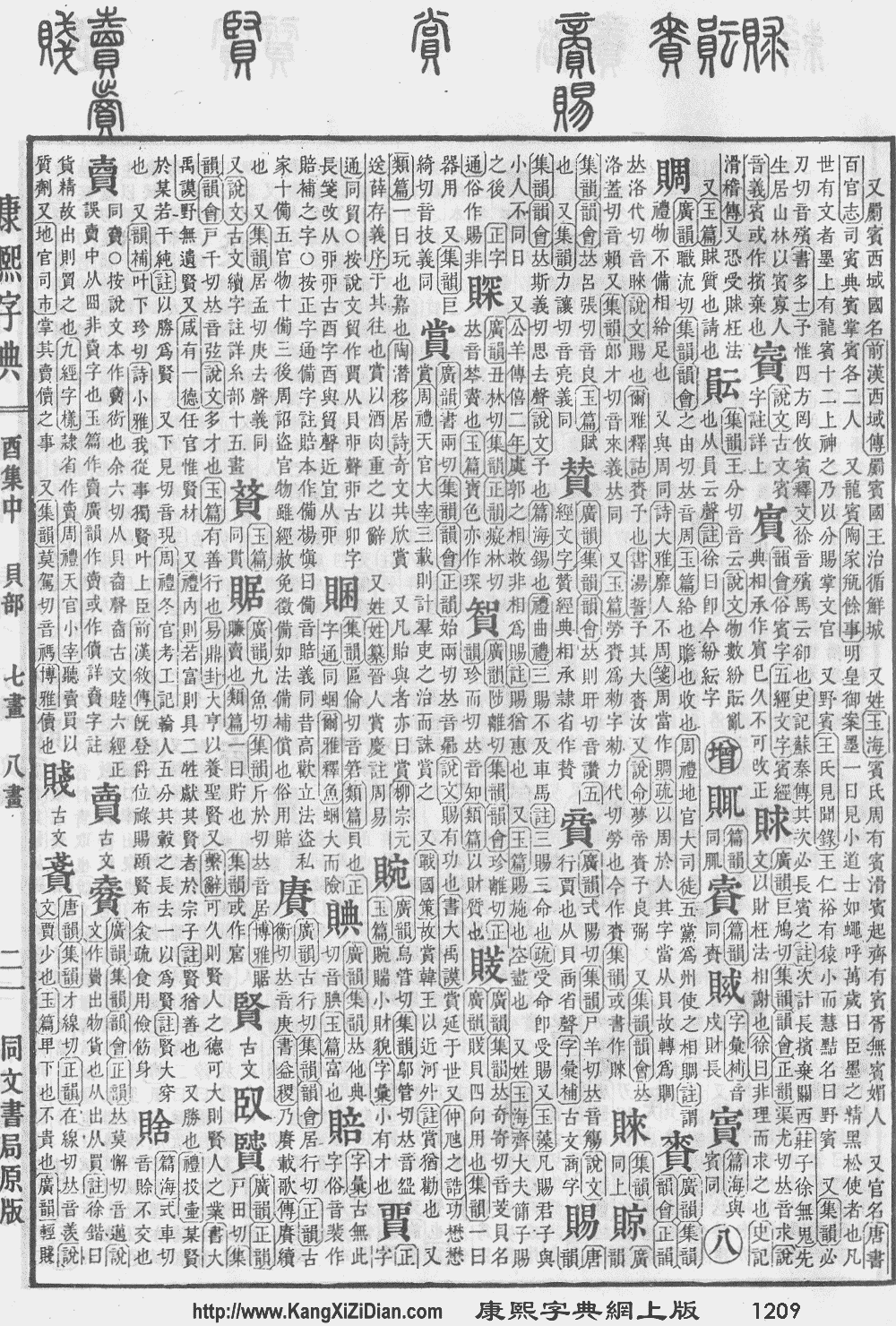
- KangXi: page 1209, character 33
- Dai Kanwa Jiten: character 36825
- Dae Jaweon: page 1675, character 2
- Hanyu Da Zidian (first edition): volume 6, page 3645, character 7
- Unihan data for U+8CE3
Chinese
| trad. | 賣 | |
|---|---|---|
| simp. | 卖 | |
| alternative forms | 𧷓 𧷵 ‡ 𧷨 ‡ | |
Glyph origin
| Historical forms of the character 賣 | |
|---|---|
| Shuowen Jiezi (compiled in Han) | Liushutong (compiled in Ming) |
| Small seal script | Transcribed ancient scripts |
 |
 |
Characters in the same phonetic series (買) (Zhengzhang, 2003)
Originally 𧷓, an ideogrammic compound (會意) and phono-semantic compound (形聲, OC *mreːs) : semantic 出 (“go out”) + phonetic 買 (OC *mreːʔ, “buy”).
出, which indicates exoactive semantics (Sagart, 1999), was eventually reduced to the etymologically unrelated 士.
Etymology
Exoactive of 買 (OC *mreːʔ, “to buy”) (Sagart, 1995; Schuessler, 2007; Baxter and Sagart, 2014), from Proto-Sino-Tibetan *g/m/s-laj ~ *r/s-lej ~ *b-rej (“to buy; to barter”); see there for more.
Pronunciation
Definitions
賣
- to sell
- to betray; to sell out
- 出賣/出卖 ― chūmài ― to betray
- 賣國/卖国 ― màiguó ― to betray one's country
- 賣友求榮/卖友求荣 ― màiyǒuqiúróng ― to betray someone to obtain promotion
- 杵臼謬曰:「小人哉程嬰!昔下宮之難不能死,與我謀匿趙氏孤兒,今又賣我。縱不能立,而忍賣之乎!」 [Classical Chinese, trad.]
- From: The Records of the Grand Historian, by Sima Qian, c. 91 BCE
- Chǔjiù miù yuē: “Xiǎorén zāi Chéng Yīng! Xī Xiàgōng zhī nàn bùnéng sǐ, yǔ wǒ móu nì Zhào Shì gū'ér, jīn yòu mài wǒ. Zòng bùnéng lì, ér rěn mài zhī hū!” [Pinyin]
- (please add an English translation of this example)
杵臼谬曰:“小人哉程婴!昔下宫之难不能死,与我谋匿赵氏孤儿,今又卖我。纵不能立,而忍卖之乎!” [Classical Chinese, simp.]- 這三個沒有骨頭的東西!他們把礦上的工人賣了。哼,你們這些不要臉的董事長,你們的錢這次又靈了。 [MSC, trad.]
- From: 1933, Cao Yu, 《雷雨》 [Thunderstorm]
- Zhè sān ge méiyǒu gǔtou de dōngxi! Tāmen bǎ kuàng shàng de gōngrén mài le. Hēng, nǐmen zhèxiē bùyàoliǎn de dǒngshìcháng, nǐmen de qián zhècì yòu líng le. [Pinyin]
- (please add an English translation of this example)
这三个没有骨头的东西!他们把矿上的工人卖了。哼,你们这些不要脸的董事长,你们的钱这次又灵了。 [MSC, simp.]
- to spare no effort; to do one's best
- to show off
- (Cantonese, of the media) to publish (a piece of news)
Synonyms
- (to sell):
Compounds
Derived terms from 賣
|
|
|
Descendants
- → Proto-Hmong-Mien: *mɛjH (“to sell”)
References
- “賣”, in 漢語多功能字庫 (Multi-function Chinese Character Database), 香港中文大學 (the Chinese University of Hong Kong), 2014–
- Dictionary of Chinese Character Variants (教育部異體字字典), A03968
- “Entry #11424”, in 臺灣閩南語常用詞辭典 [Dictionary of Frequently-Used Taiwan Minnan] (in Chinese and Min Nan), Ministry of Education, R.O.C., 2011.
Japanese
| 売 | |
| 賣 |
Kanji
賣
(“Jinmeiyō” kanji used for names, kyūjitai kanji, shinjitai form 売)
- This term needs a translation to English. Please help out and add a translation, then remove the text
{{rfdef}}.
Vietnamese
References
- Trần (1999).
- Hồ (1976).
This article is issued from Wiktionary. The text is licensed under Creative Commons - Attribution - Sharealike. Additional terms may apply for the media files.