甄
| ||||||||
Translingual
Han character
甄 (Kangxi radical 98, 瓦+9, 13 strokes, cangjie input 一土一女弓 (MGMVN) or X一土一女 (XMGMV), four-corner 11117, composition ⿰垔瓦)
References
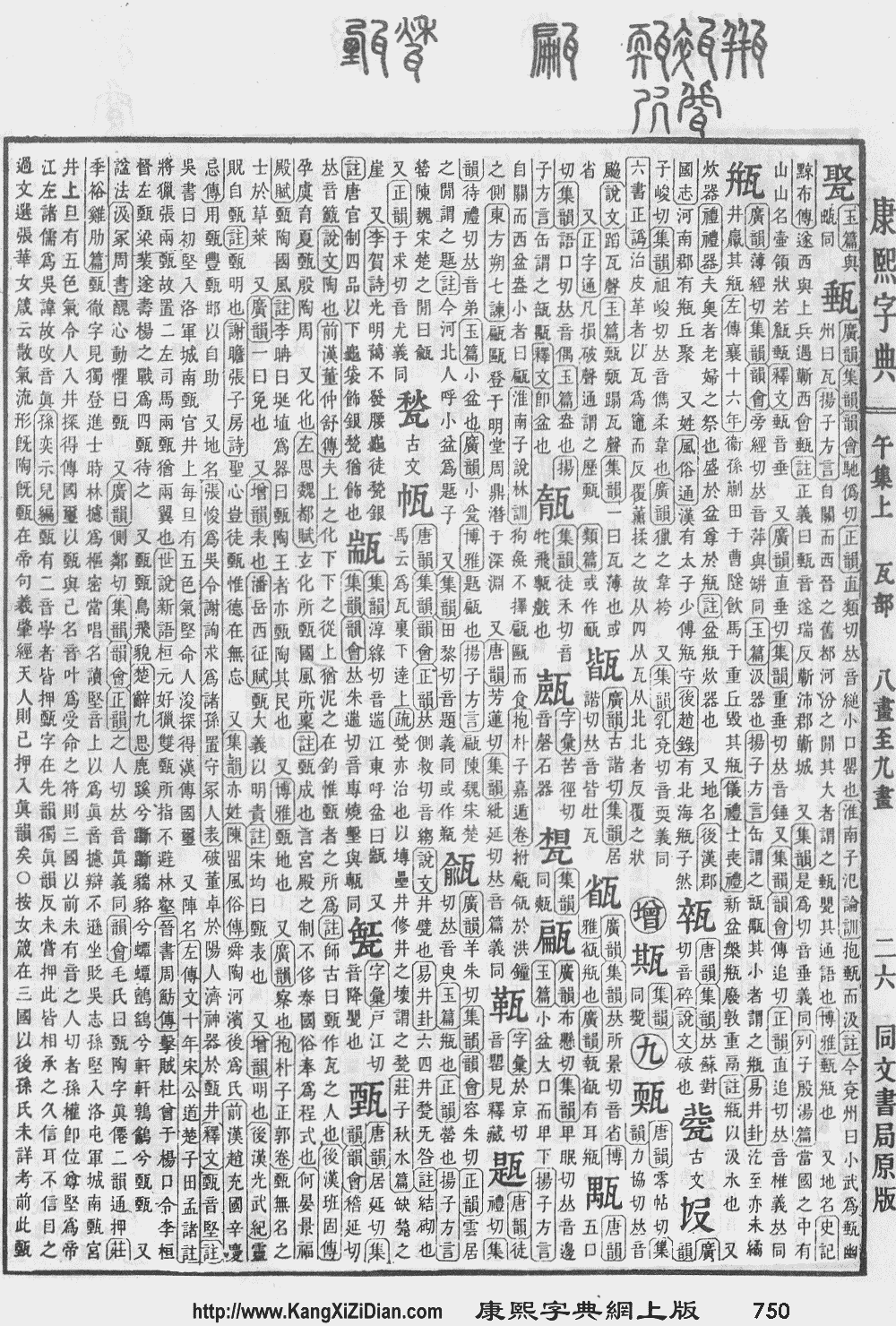
- KangXi: page 750, character 23
- Dai Kanwa Jiten: character 21557
- Dae Jaweon: page 1158, character 36
- Hanyu Da Zidian (first edition): volume 2, page 1427, character 14
- Unihan data for U+7504
Chinese
| trad. | 甄 | |
|---|---|---|
| simp. # | 甄 | |
Glyph origin
Characters in the same phonetic series (垔) (Zhengzhang, 2003)
Phono-semantic compound (形聲, OC *ken, *kin) : phonetic 垔 (OC *qin) + semantic 瓦.
Etymology
(This etymology is missing or incomplete. Please add to it, or discuss it at the Etymology scriptorium.)
Pronunciation
Definitions
甄
- to make pottery
- potter's wheel
- to examine; to distinguish; to select the best
- a surname
Compounds
Derived terms from 甄
|
References
- “甄”, in 漢語多功能字庫 (Multi-function Chinese Character Database), 香港中文大學 (the Chinese University of Hong Kong), 2014–
- “Query for 甄”, in 臺灣閩南語常用詞辭典 [Dictionary of Frequently-Used Taiwan Minnan], Ministry of Education, R.O.C., 2011.
- 《粵音韻彙》與《李氏中文字典》粵語注音考異
Japanese
Readings
Etymology 1
| Kanji in this term |
|---|
| 甄 |
| けん Hyōgaiji |
| on’yomi |
Ultimately from Middle Chinese 甄 (MC t͡ɕiɪn, kiᴇn).
Pronunciation
- IPA(key): [kẽ̞ɴ]
Usage notes
Only appears in compounds.
Compounds
Etymology 2
| Kanji in this term |
|---|
| 甄 |
| すえ Hyōgaiji |
| kun’yomi |
Rare alternative spelling for 陶 (sue).
| For pronunciation and definitions of 甄 – see the following entry. | ||
| ||
| (This term, 甄, is an alternative (rare) spelling of the above term.) |
Korean
Vietnamese
This article is issued from Wiktionary. The text is licensed under Creative Commons - Attribution - Sharealike. Additional terms may apply for the media files.