畝
| ||||||||
Translingual
Han character
畝 (Kangxi radical 102, 田+5, 10 strokes, cangjie input 卜田弓人 (YWNO), four-corner 07680, composition ⿰亩久)
References
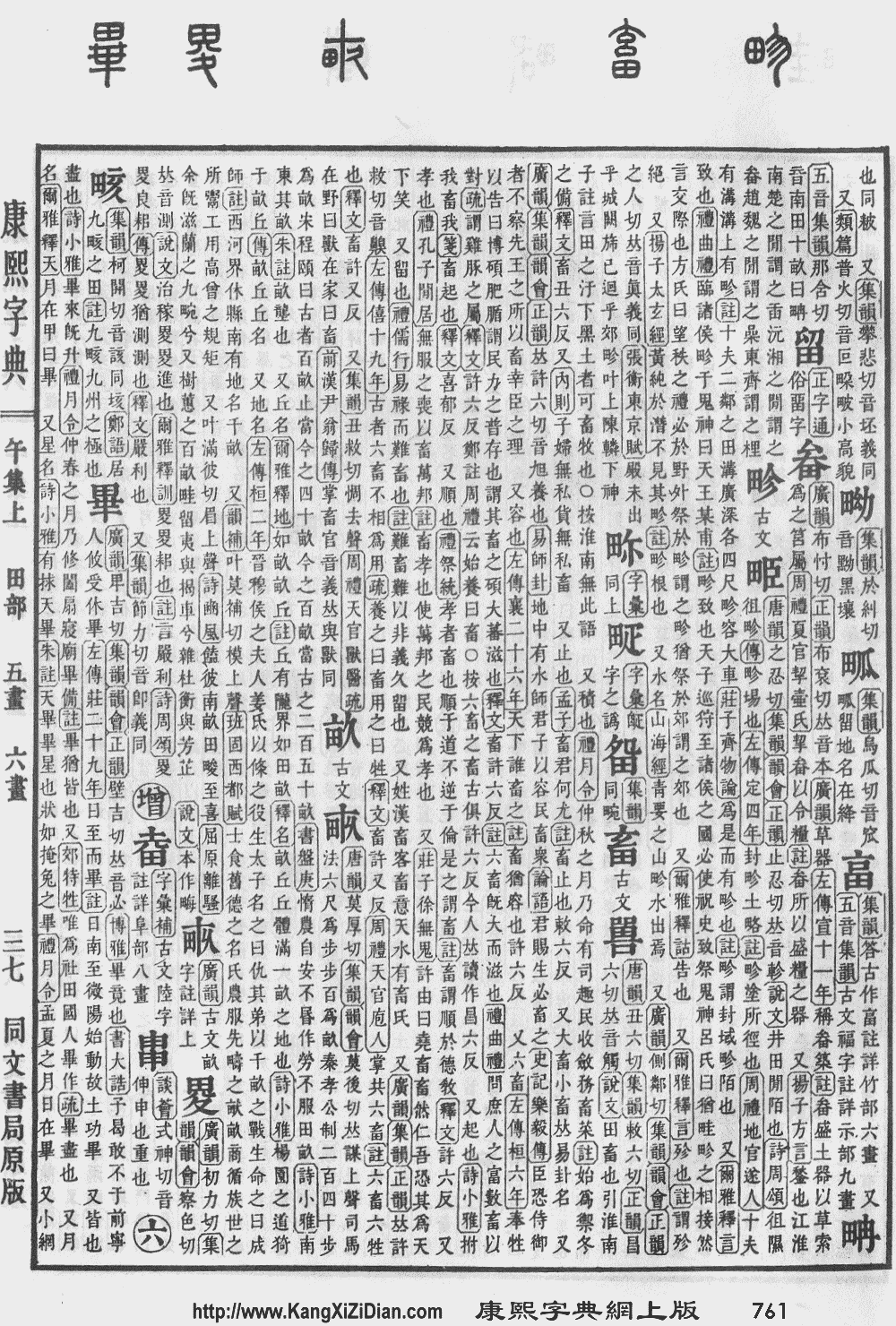
- KangXi: page 761, character 14
- Dai Kanwa Jiten: character 21815
- Dae Jaweon: page 1171, character 6
- Hanyu Da Zidian (first edition): volume 4, page 2538, character 3
- Unihan data for U+755D
Chinese
| trad. | 畝 | |
|---|---|---|
| simp. | 亩 | |
| alternative forms | 畞 𤱑 畒 畆 畮 | |
Glyph origin
Composed of 田 (tián, “cropland”) + 十 (shí, “ten”) + 久 (jiǔ, “longlasting”).
The 十 (shí) + 久 (jiǔ) has been a shape change from earlier 每 (OC *mɯːʔ). (Lin Yiguang)
Etymology
Possibly Sino-Tibetan. Compare Tibetan རྨོ (rmo), རྨོས (rmos, “to plow”), རྨོད (rmod, “plowing”), རྨོན་པ (rmon pa, “plow-ox”), Karbi [Term?] (-mò, “classifier for strips of fields”) (Bodman, 1980; Baxter, 1992; Schuessler, 2007).
Schuessler (2007) also suggests a connection to an Austroasiatic root, whence Old Khmer cval (“to enter; to penetrate; (of animals) to copulate”), Khmu [script needed] (cmɔɔl, “to plant (rice) with a digging stick”), [script needed] (crmɔɔl, “digging stick”) (cf. Ferlus, 1987). The semantic development would be “digging stick” > “plowing” > “mu”. He also connects this to 牡 (OC *mɯwʔ, “male animal”); see there for more.
Pronunciation
Definitions
畝
- mu (a Chinese measuring unit currently equivalent to 666 and 2/3 meters squared in Mainland China)
- (Classical Chinese) cropland
- 曰:「老人老,孤人孤,病者養,死者葬,男子畝,婦人桑,之謂思。」 [Classical Chinese, trad.]
- From: Yang Xiong, Fa Yan (Exemplary Sayings), 9 CE
- Yuē: “Lǎorén lǎo, gūrén gū, bìngzhě yǎng, sǐzhě zàng, nánzǐ mǔ, fùrén sāng, zhī wèi sī.” [Pinyin]
- Yangzi said: Treat the elderly as elderly, treat orphans as orphans; nourish the sick and bury the dead; let men tend their croplands and let women tend the mulberry trees —you will be referred to as "cherished."
曰:“老人老,孤人孤,病者养,死者葬,男子亩,妇人桑,之谓思。” [Classical Chinese, simp.]
Compounds
Further reading
 Chinese units of measurement on Wikipedia.Wikipedia
Japanese
Kanji
- This term needs a translation to English. Please help out and add a translation, then remove the text
{{rfdef}}.
Etymology 1
| Kanji in this term |
|---|
| 畝 |
| うね Grade: S |
| kun’yomi |
| For pronunciation and definitions of 畝 – see the following entry. | ||
| ||
| (This term, 畝, is an alternative spelling of the above term.) |
Etymology 2
| Kanji in this term |
|---|
| 畝 |
| せ Grade: S |
| kun’yomi |
| For pronunciation and definitions of 畝 – see the following entry. | ||
| ||
| (This term, 畝, is an alternative spelling of the above term.) |
Etymology 3
| Kanji in this term |
|---|
| 畝 |
| ほ Grade: S |
| kan’yōon |
Korean
Etymology
From Middle Chinese 畝 (MC məuX). Recorded as Middle Korean 畒/모〯 (mwǒ) (Yale: mwo) in Hunmong Jahoe (訓蒙字會 / 훈몽자회), 1527.