養
See also: 养
| ||||||||
Translingual
Han character
養 (Kangxi radical 184, 食+6, 15 strokes, cangjie input 廿人戈日女 (TOIAV), four-corner 80732, composition ⿱𦍌食)
References
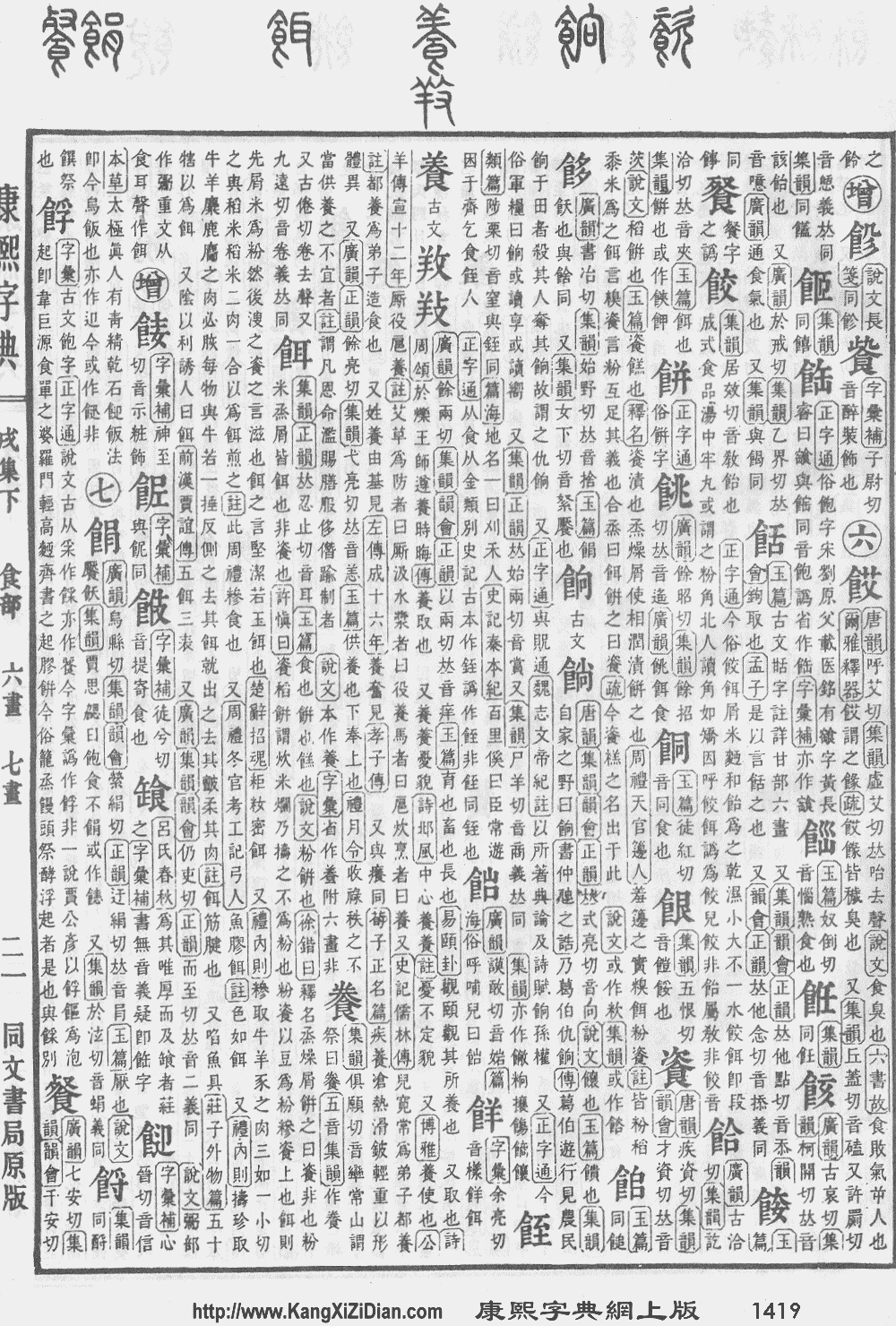
- KangXi: page 1419, character 26
- Dai Kanwa Jiten: character 44144
- Dae Jaweon: page 1943, character 31
- Hanyu Da Zidian (first edition): volume 7, page 4452, character 8
- Unihan data for U+990A
Chinese
| trad. | 養 | |
|---|---|---|
| simp. | 养 | |
| alternative forms | 䍩 𢼝 𢽁 𩛬 | |
Glyph origin
Characters in the same phonetic series (養) (Zhengzhang, 2003)
Ideogrammic compound (會意) and phono-semantic compound (形聲, OC *laŋʔ, *laŋs) : phonetic 羊 (OC *laŋ, “sheep”) + semantic 食 (“to feed”).
Etymology
From Proto-Sino-Tibetan *s-klawŋ (“to guard; to tend cattle; to graze; to be at leisure”), whence Tibetan སྐྱོང (skyong, “to keep; to nurture”) (STEDT).
Pronunciation 1
Definitions
養
- to raise; to rear
- to support; to provide for; to bring up
- to give birth to
- to rest; to convalesce
- to maintain
- 養路/养路 ― yǎnglù ― to maintain a road or railway
- to cultivate; to form
- to let one's hair grow
- to support; to help
- (in compounds) foster; adoptive
- accomplishment; cultivation
- 81st tetragram of the Taixuanjing; "fostering" (𝍖)
Synonyms
Dialectal synonyms of 養 (“to raise; to rear (animals)”) [map]
Dialectal synonyms of 養 (“to raise; to provide for (people)”) [map]
| Variety | Location | Words |
|---|---|---|
| Formal (Written Standard Chinese) | 養 | |
| Mandarin | Taiwan | 養 |
| Jinan | 養 | |
| Wanrong | 養 | |
| Nanjing | 養 | |
| Singapore | 養 | |
| Cantonese | Hong Kong | 養 |
| Singapore (Guangfu) | 養 | |
| Gan | Nanchang | 養 |
| Pingxiang | 養 | |
| Huizhou | Jixi | 養 |
| Jin | Taiyuan | 養 |
| Min Dong | Fuzhou | 養 |
| Min Nan | Xiamen | 飼 |
| Xiamen (Tong'an) | 飼 | |
| Quanzhou | 飼 | |
| Yongchun | 飼 | |
| Zhangzhou | 飼 | |
| Tainan | 飼 | |
| Singapore (Hokkien) | 飼 | |
| Chaozhou | 飼 | |
| Singapore (Teochew) | 飼 | |
| Wenchang | 飼 | |
| Haikou | 飼 | |
| Qionghai | 飼 | |
| Wu | Shanghai | 養 |
| Danyang | 養 | |
| Hangzhou | 養 | |
Descendants
- → Proto-Tai: *liəŋꟲ (“to raise”)
- Thai: เลี้ยง (líiang, “to raise, to bring up”)
Pronunciation 2
Compounds
Derived terms from 養
|
|
|
References
- “養”, in 漢語多功能字庫 (Multi-function Chinese Character Database), 香港中文大學 (the Chinese University of Hong Kong), 2014–
Japanese
| Shinjitai | 養 | |
| Kyūjitai [1] |
養󠄁 養+ 󠄁?(Adobe-Japan1) |
 |
| 養󠄄 養+ 󠄄?(Hanyo-Denshi) (Moji_Joho) | ||
| The displayed kanji may be different from the image due to your environment. See here for details. | ||
Kanji
養
- This term needs a translation to English. Please help out and add a translation, then remove the text
{{rfdef}}.
Readings
Pronunciation
- IPA(key): [jo̞ː]
Vietnamese
This article is issued from Wiktionary. The text is licensed under Creative Commons - Attribution - Sharealike. Additional terms may apply for the media files.