皺
See also: 皱
| ||||||||
Translingual
Han character
皺 (Kangxi radical 107, 皮+10, 15 strokes, cangjie input 心山木竹水 (PUDHE), four-corner 24447, composition ⿰芻皮)
Derived characters
- 𥶈
References
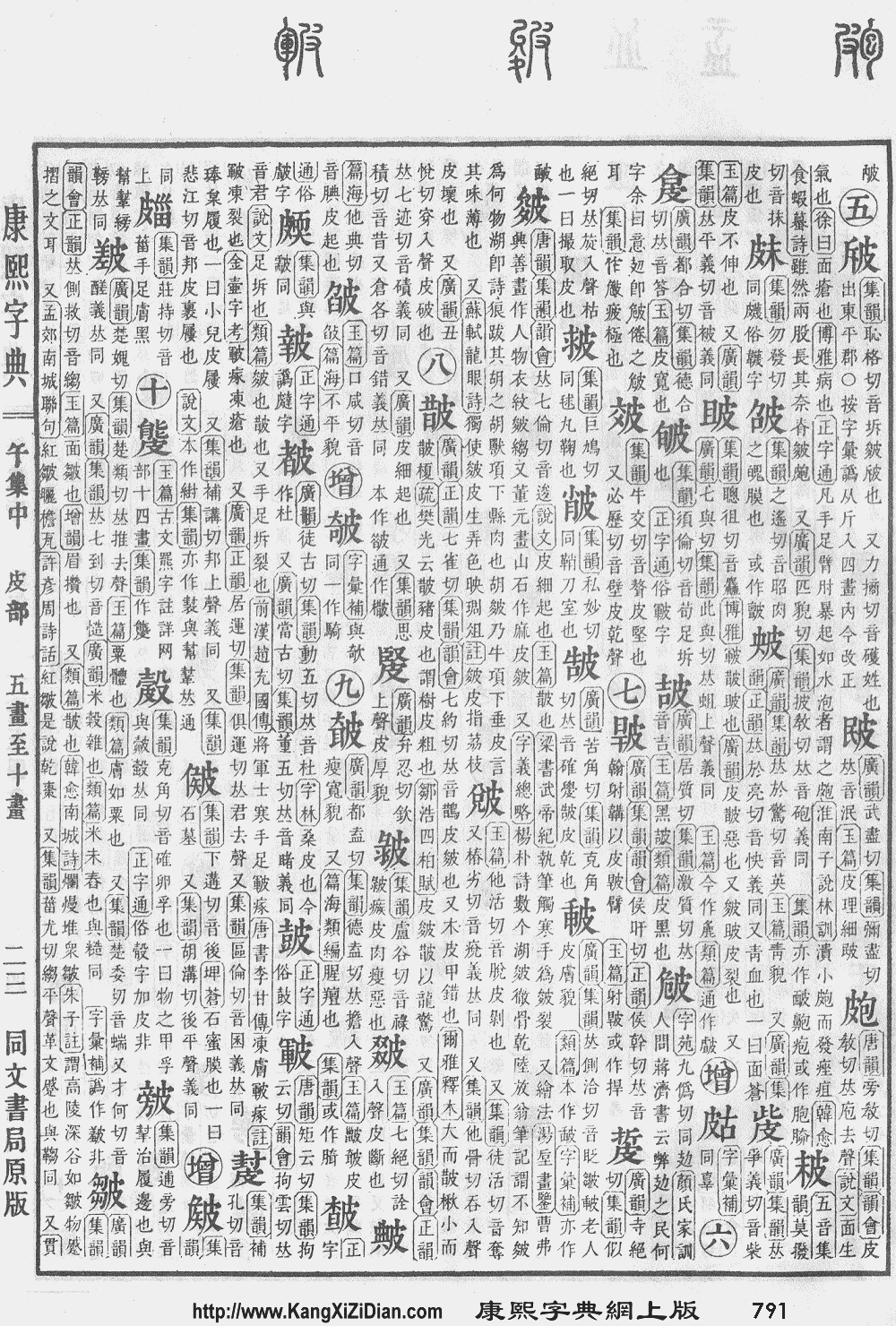
- KangXi: page 791, character 46
- Dai Kanwa Jiten: character 22899
- Dae Jaweon: page 1207, character 3
- Hanyu Da Zidian (first edition): volume 4, page 2757, character 17
- Unihan data for U+76BA
Chinese
| trad. | 皺 | |
|---|---|---|
| simp. | 皱 | |
| alternative forms | 𤿿 𤿥 𩌄 𩋓 𩊥 | |
Glyph origin
Characters in the same phonetic series (芻) (Zhengzhang, 2003)
Phono-semantic compound (形聲, OC *ʔsrus) : phonetic 芻 (OC *sʰro) + semantic 皮.
Pronunciation
Definitions
皺
Compounds
References
- “皺”, in 漢語多功能字庫 (Multi-function Chinese Character Database), 香港中文大學 (the Chinese University of Hong Kong), 2014–
Japanese
Readings
Compounds
Compounds
- 皺曲 (shūkyoku)
- 皺襞 (shūheki)
Etymology 1
| Kanji in this term |
|---|
| 皺 |
| さび Hyōgaiji |
| kun’yomi |
Origins unclear. Possibly related to 錆 (sabi, “rust, oxidation”), from the way the surface of something changes.
Noun
皺 • (sabi)
Derived terms
Derived terms
- 大皺 (ōsabi)
- 小皺 (kosabi)
- 皺烏帽子 (sabi eboshi)
- 柳皺 (yanagisabi)
- 横皺 (yokosabi)
- 横皺の烏帽子 (yokosabi no eboshi)
Etymology 2
| Kanji in this term |
|---|
| 皺 |
| しぼ Hyōgaiji |
| kun’yomi |
Probably from stem shiwo of classical verb shiworu, modern shioru (萎る, 撓る: “to make something loosen, to make something wither and wrinkle”). Probably cognate with shiwa below.
Noun
皺 • (shibo)
- a pattern of cracks and wrinkles on the surface of an 烏帽子 (eboshi, “traditional Japanese formal black hat”) formed as the black lacquer dries
- a pattern of puckers and bulges in a cloth, caused by the warp and woof of the material
- a similar pattern of puckers and bulges formed on the surface of paper or leather
Derived terms
Derived terms
- 皺紙 (shibogami)
- 皺丸太 (shibomaruta)
- 竹皺 (takeshibo)
Etymology 3
| Kanji in this term |
|---|
| 皺 |
| しわ Hyōgaiji |
| kun’yomi |
Probably from stem shiwa of verb shiwaru (撓る: “to sag, as something elastic that has lost its bounce”). Probably cognate with shibo above.
Alternative forms
Noun
皺 • (shiwa)
Derived terms
Derived terms
- 雄陽皺 (ohijiwa)
- 小皺 (kojiwa)
- 皺紙 (shiwagami)
- 皺くちゃ (shiwakucha)
- 皺皺 (shiwashiwa)
- 皺伸ばし (shiwanobashi)
- 皺腹 (shiwabara)
- 皺ぶ (shiwabu)
- 皺む (shiwamu)
- 皺める (shiwameru)
- 皺寄せ (shiwayose)
- 畳み皺 (tatamijiwa)
- 縦皺 (tatejiwa)
- 縮緬皺 (chirimenjiwa)
- 防皺 (bōshiwa)
- 防皺加工 (bōshiwa kakō)
- 雌陽皺 (mehijiwa)
- 笑い皺 (waraijiwa)
Idioms
Idioms
- 皺伸ぶ (shiwa nobu), 皺が伸びる (shiwa ga nobiru): “one's wrinkles slacken” → to become light-hearted in old age
- 皺を伸ばす (shiwa o nobasu): “to slacken one's wrinkles” → to relax, to take a breather, to let it all hang out; to smooth out wrinkles, such as by ironing
Korean
Hanja
皺 • (chu) (hangeul 추, revised chu, McCune–Reischauer ch'u, Yale chwu)
- This term needs a translation to English. Please help out and add a translation, then remove the text
{{rfdef}}.
Vietnamese
This article is issued from Wiktionary. The text is licensed under Creative Commons - Attribution - Sharealike. Additional terms may apply for the media files.