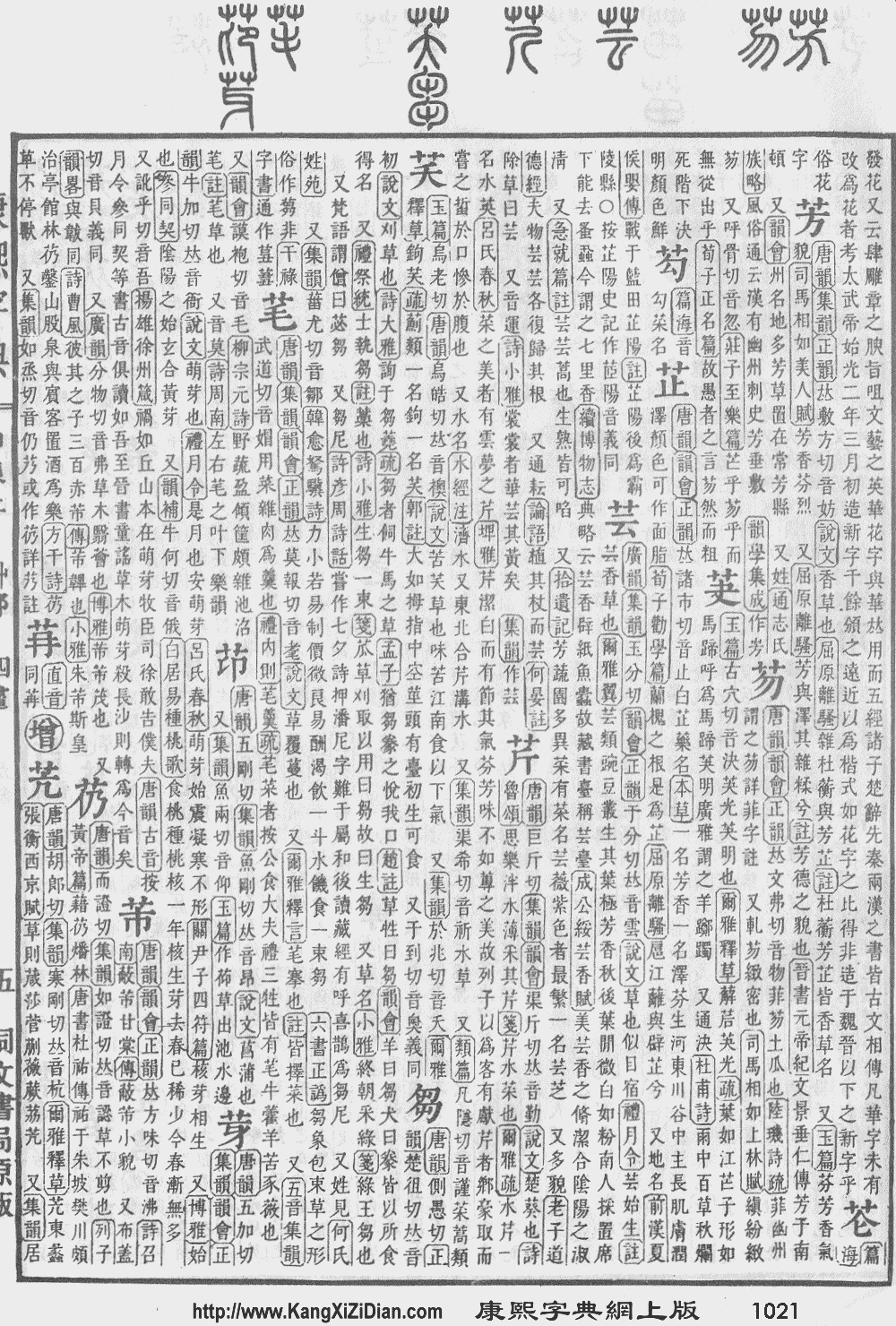
芻

See also: 刍
芻 U+82BB, 芻
CJK UNIFIED IDEOGRAPH-82BB
← 芺
[U+82BA]
CJK Unified Ideographs 芼 →
[U+82BC]

Translingual

Han character

芻 (Kangxi radical 140, 艸+4, 10 strokes, cangjie input 心山心山 (PUPU), four-corner 27427, composition ⿱⿹勹屮⿹勹屮)

Derived characters

References

  • KangXi: page 1021, character 10
  • Dai Kanwa Jiten: character 30744
  • Dae Jaweon: page 1480, character 9
  • Hanyu Da Zidian (first edition): volume 1, page 260, character 1
  • Unihan data for U+82BB

Chinese

trad. 芻
simp. 刍
alternative forms 蒭/𫇴
𦷝
𠣧
𦱪
𦮊

Glyph origin

Historical forms of the character 芻
Shang Western Zhou Warring States Shuowen Jiezi (compiled in Han) Liushutong (compiled in Ming)
Oracle bone script Bronze inscriptions Chu slip and silk script Small seal script Transcribed ancient scripts

Pronunciation


Rime
Character 芻
Reading # 1/1
Initial (聲) 初 (19)
Final (韻) 虞 (24)
Tone (調) Level (Ø)
Openness (開合) Closed
Division (等) III
Fanqie 測隅切
Reconstructions
Zhengzhang
Shangfang
/t͡ʃʰɨo/
Pan
Wuyun
/ʈ͡ʂʰio/
Shao
Rongfen
/t͡ʃʰio/
Edwin
Pulleyblank
/ʈ͡ʂʰuə̆/
Li
Rong
/t͡ʃʰio/
Wang
Li
/t͡ʃʰĭu/
Bernard
Karlgren
/ʈ͡ʂʰi̯u/
Expected
Mandarin
Reflex
chū
Expected
Cantonese
Reflex
co1
Baxter–Sagart system 1.1 (2014)
Character 芻
Reading # 1/1
Modern
Beijing
(Pinyin)
chú
Middle
Chinese
‹ tsrhju ›
Old
Chinese
/*[tsʰ]ro/
English grass for fuel or fodder

Notes for Old Chinese notations in the Baxter–Sagart system:

* Parentheses "()" indicate uncertain presence;
* Square brackets "[]" indicate uncertain identity, e.g. *[t] as coda may in fact be *-t or *-p;
* Angle brackets "<>" indicate infix;
* Hyphen "-" indicates morpheme boundary;

* Period "." indicates syllable boundary.
Zhengzhang system (2003)
Character 芻
Reading # 1/1
No. 1607
Phonetic
component
芻
Rime
group
侯
Rime
subdivision
0
Corresponding
MC rime
芻
Old
Chinese
/*sʰro/

Definitions

芻

  1. to cut grass; to mow
  2. hay; fodder
  3. livestock
  4. to raise; to rear

Compounds

  • 乾芻/干刍
  • 反芻/反刍 (fǎnchú)
  • 反芻胃/反刍胃
  • 反裘負芻/反裘负刍
  • 土龍芻狗/土龙刍狗
  • 徐穉置芻/徐穉置刍
  • 束芻/束刍
  • 生芻/生刍
  • 生芻致祭/生刍致祭
  • 白飯青芻/白饭青刍
  • 瞽言芻議/瞽言刍议
  • 石龍芻/石龙刍
  • 芻像/刍像
  • 芻牧/刍牧
  • 芻狗/刍狗 (chúgǒu)
  • 芻秣/刍秣 (chúmò)
  • 芻稿/刍稿
  • 芻糧/刍粮
  • 芻菽/刍菽
  • 芻蕘/刍荛
  • 芻言/刍言
  • 芻議/刍议 (chúyì)
  • 芻豆/刍豆
  • 芻豢/刍豢 (chúhuàn)
  • 芻靈/刍灵
  • 苾芻/苾刍 (bìchú)
  • 詢於芻蕘/询于刍荛
  • 飛米轉芻/飞米转刍
  • 飛芻輓粒/飞刍挽粒
  • 飛芻輓粟/飞刍挽粟
  • 飛芻輓糧/飞刍挽粮
  • 飛芻轉餉/飞刍转饷

Japanese

Kanji

芻

(uncommon “Hyōgai” kanji)

  1. This term needs a translation to English. Please help out and add a translation, then remove the text {{rfdef}}.

Readings

Compounds

Korean

Hanja

芻 (eum 추 (chu))

  1. This term needs a translation to English. Please help out and add a translation, then remove the text {{rfdef}}.

Vietnamese

Han character

芻: Hán Nôm readings: so

  1. This term needs a translation to English. Please help out and add a translation, then remove the text {{rfdef}}.
This article is issued from Wiktionary. The text is licensed under Creative Commons - Attribution - Sharealike. Additional terms may apply for the media files.