盜

See also: 盗
盜 U+76DC, 盜
CJK UNIFIED IDEOGRAPH-76DC
← 盛
[U+76DB]
CJK Unified Ideographs 盝 →
[U+76DD]

Translingual

Japanese 盗
Simplified 盗
Traditional 盜

Han character

盜 (Kangxi radical 108, 皿+7, 12 strokes, cangjie input 水人月廿 (EOBT), four-corner 37107, composition ⿱㳄皿)

Descendants

References

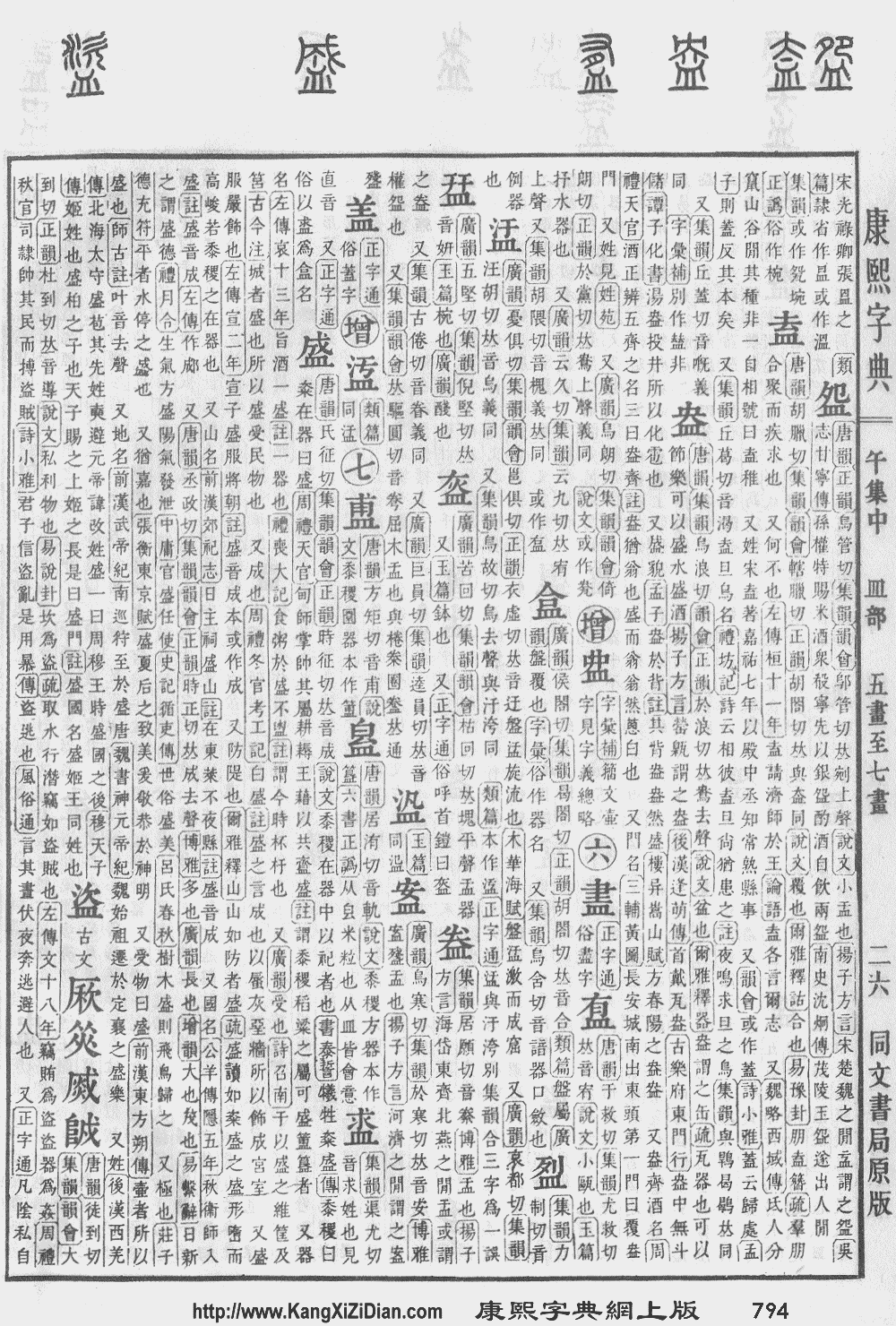
  • KangXi: page 794, character 21
  • Dai Kanwa Jiten: character 23006
  • Hanyu Da Zidian (first edition): volume 4, page 2564, character 13
  • Unihan data for U+76DC

Chinese

trad. 盜
simp. 盗
alternative forms
 
𠉭
𠩼
𤋆
𤑂
𨹇
𠉭
𠩼
𤋆
𤑂
𨹇
𨹒
𠪁

Glyph origin

Ideogrammic compound (會意) : 㳄 (“spitting man”) + 皿 (“dish”) – a man spitting into a dish, an oath among thieves.

Pronunciation


Rime
Character 盜
Reading # 1/1
Initial (聲) 定 (7)
Final (韻) 豪 (89)
Tone (調) Departing (H)
Openness (開合) Open
Division (等) I
Fanqie 徒到切
Reconstructions
Zhengzhang
Shangfang
/dɑuH/
Pan
Wuyun
/dɑuH/
Shao
Rongfen
/dɑuH/
Edwin
Pulleyblank
/dawH/
Li
Rong
/dɑuH/
Wang
Li
/dɑuH/
Bernard
Karlgren
/dʱɑuH/
Expected
Mandarin
Reflex
dào
Expected
Cantonese
Reflex
dou6
Baxter–Sagart system 1.1 (2014)
Character 盜
Reading # 1/1
Modern
Beijing
(Pinyin)
dào
Middle
Chinese
‹ dawH ›
Old
Chinese
/*[d]ˁaw(k)-s/
English steal

Notes for Old Chinese notations in the Baxter–Sagart system:

* Parentheses "()" indicate uncertain presence;
* Square brackets "[]" indicate uncertain identity, e.g. *[t] as coda may in fact be *-t or *-p;
* Angle brackets "<>" indicate infix;
* Hyphen "-" indicates morpheme boundary;

* Period "." indicates syllable boundary.
Zhengzhang system (2003)
Character 盜
Reading # 1/1
No. 2164
Phonetic
component
盜
Rime
group
宵
Rime
subdivision
1
Corresponding
MC rime
導
Old
Chinese
/*daːws/

Definitions

盜

  1. (transitive) to steal
    盜竊/盗窃  ―  dàoqiè  ―  to steal
    盜案/盗案  ―  dào'àn  ―  theft
    大量財物被盜。/大量财物被盗。  ―  Dàliàng cáiwù bèi dào.  ―  A large amount of property was stolen.
  2. ⁜ illegally
    盜掘/盗掘  ―  dàojué  ―  to dig illegally
    盜獵/盗猎  ―  dàoliè  ―  to hunt illegally
    盜伐/盗伐  ―  dàofá  ―  to cut down (trees) illegally
  3. ⁜ thief; robber
    大盜/大盗  ―  dàdào  ―  robber that commits large robberies or many robberies in an unrestrained manner
    盜跖/盗跖  ―  Dào Zhí  ―  Robber Zhi (a legendary figure or fictional character)
    海盜/海盗  ―  hǎidào  ―  pirate
    開門揖盜/开门揖盗  ―  kāiményīdào  ―  to introduce bad people and bring disaster upon oneself

Synonyms

  • (to steal):
  • (thief):

Compounds

References

Japanese

Shinjitai

盗

Kyūjitai

盜

Kanji

盜

(“Jinmeiyō” kanji used for names, kyūjitai kanji, shinjitai form 盗)

  1. This term needs a translation to English. Please help out and add a translation, then remove the text {{rfdef}}.

Readings

  • On (unclassified): とう (tō)
  • Kun: ぬすむ (nusumu, 盜む)

Korean

Etymology

From Middle Chinese 盜 (MC dɑuH).

Historical readings

Pronunciation

Hanja

Wikisource 盜 (eumhun 도둑 도 (doduk do))

  1. Hanja form? of 도 (“thief”).

Compounds

References

  • 국제퇴계학회 대구경북지부 (國際退溪學會 大邱慶北支部) (2007). Digital Hanja Dictionary, 전자사전/電子字典.

Vietnamese

Han character

盜: Hán Nôm readings: đạo

  1. This term needs a translation to English. Please help out and add a translation, then remove the text {{rfdef}}.
This article is issued from Wiktionary. The text is licensed under Creative Commons - Attribution - Sharealike. Additional terms may apply for the media files.