盛
| ||||||||
 | ||||||||
Translingual
Han character
盛 (Kangxi radical 108, 皿+6, 11 strokes, cangjie input 戈尸月廿 (ISBT), four-corner 53107, composition ⿱成皿)
References
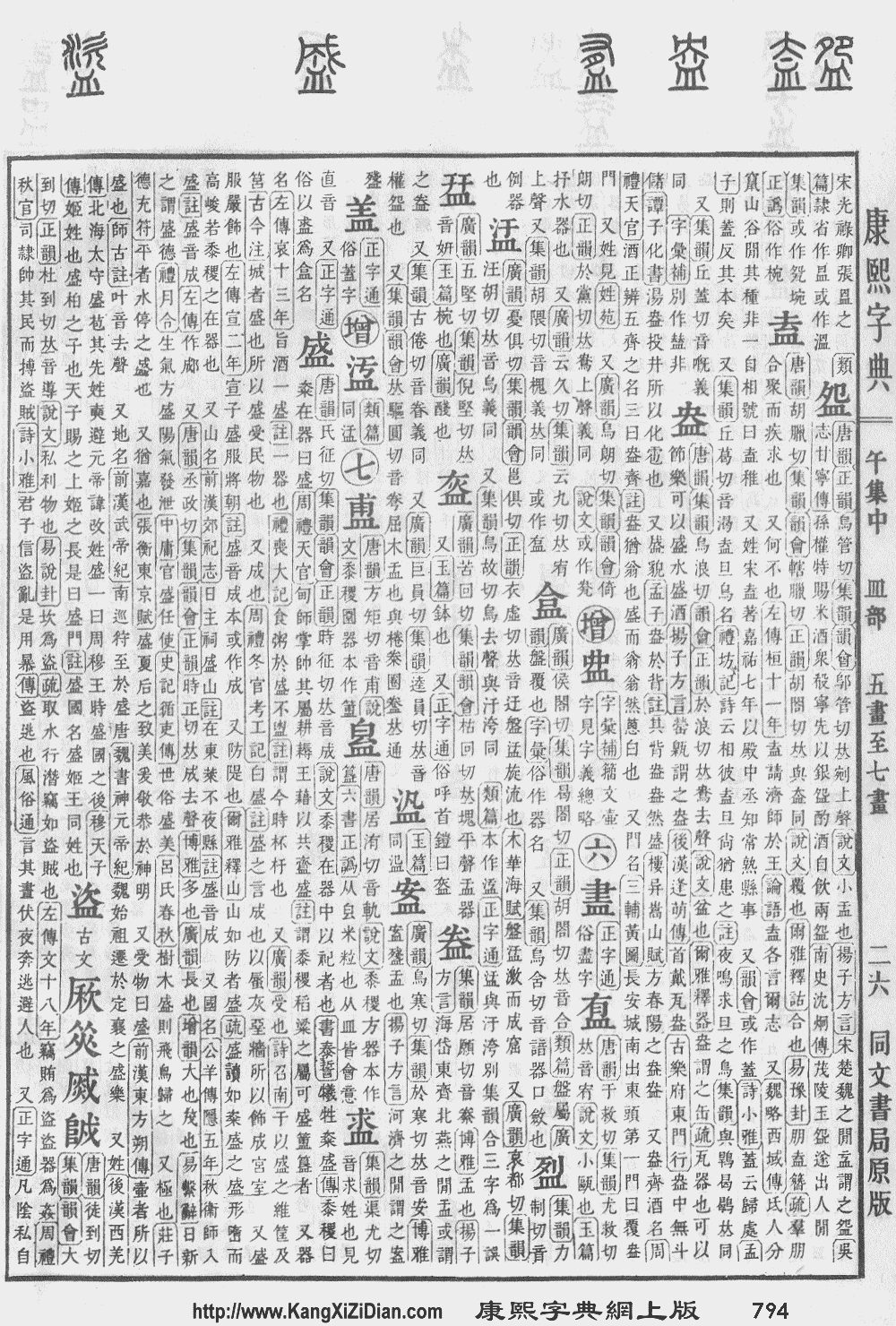
- KangXi: page 794, character 20
- Dai Kanwa Jiten: character 23001
- Hanyu Da Zidian (first edition): volume 4, page 2562, character 4
- Unihan data for U+76DB
- Unihan data for U+FAA7
Chinese
| simp. and trad. |
盛 | |
|---|---|---|
Glyph origin
| Historical forms of the character 盛 | |||
|---|---|---|---|
| Western Zhou | Warring States | Shuowen Jiezi (compiled in Han) | Liushutong (compiled in Ming) |
| Bronze inscriptions | Chu slip and silk script | Small seal script | Transcribed ancient scripts |
 |
 |
 |
 |
Characters in the same phonetic series (成) (Zhengzhang, 2003)
Phono-semantic compound (形聲, OC *djeŋ, *djeŋs) : phonetic 成 (OC *djeŋ) + semantic 皿.
Etymology
Cognate with 成 (OC *djeŋ, “to complete”), 城 (OC *djeŋ, “city wall; city”) (Schuessler, 2007). See 成 for more.
Pronunciation 2 is the exopassive of pronunciation 1, literally meaning "to be filled". (Ibid.)
Pronunciation 1
Pronunciation 2
Definitions
盛
- flourishing; prosperous
- abundant; growing; plentiful
- great; large; huge
- popular; widespread
- deep; profound
- vigorous; strong; intense
- sparing no effort; trying one's best
- (Cantonese) and so on; and what not; etc.
- 今晚又有表演睇又有大餐食又盛,節目真係安排得幾好。 [Cantonese, trad.]
- gam1 maan5-1 jau6 jau5 biu2 jin2 tai2 jau6 jau5 daai6 caan1 sik6 jau6 sing6, zit3 muk6 zan1 hai6 on1 paai4 dak1 gei2 hou2. [Jyutping]
- Tonight, there are performances to see, a big meal to eat, and what not; everything was well planned.
今晚又有表演睇又有大餐食又盛,节目真系安排得几好。 [Cantonese, simp.]
- 38th tetragram of the Taixuanjing; "fullness" (𝌫)
- a surname
- 盛世才 ― Shèng Shìcái ― Sheng Shicai (Chinese warlord who ruled Xinjiang from 1933 to 1944)
Compounds
Derived terms from 盛
|
|
|
Japanese
| Shinjitai | 盛 |  |
| Kyūjitai [1][2] |
盛󠄁 盛+ 󠄁?(Adobe-Japan1) |
 |
| 盛󠄃 盛+ 󠄃?(Hanyo-Denshi) (Moji_Joho) | ||
| The displayed kanji may be different from the image due to your environment. See here for details. | ||
Compounds
- 泡盛 (awamori)
Readings
From Middle Chinese 盛 (MC d͡ʑiᴇŋ); compare Mandarin 盛 (chéng):
- Go-on: じょう (jō, Jōyō †)←じやう (zyau, historical)
- Kan-on: せい (sei, Jōyō)←せい (sei, historical)
From Middle Chinese 盛 (MC d͡ʑiᴇŋH); compare Mandarin 盛 (shèng):
- Go-on: じょう (jō, Jōyō †)←じやう (zyau, historical)
- Kan-on: せい (sei, Jōyō)←せい (sei, historical)
From native Japanese roots:
References
- “盛”, in 漢字ぺディア (Kanjipedia) (in Japanese), 日本漢字能力検定協会, 2015—2023
- 1914, 漢和大辭書 (Kanwa Dai Jisho, “The Great Kanji-Japanese Dictionary”) (in Japanese), page 1500 (paper), page 801 (digital), Tōkyō: 興文社 (Kōbunsha)
Vietnamese
This article is issued from Wiktionary. The text is licensed under Creative Commons - Attribution - Sharealike. Additional terms may apply for the media files.