竷

竷 U+7AF7, 竷
CJK UNIFIED IDEOGRAPH-7AF7
← 競
[U+7AF6]
CJK Unified Ideographs 竸 →
[U+7AF8]

Translingual

Han character

竷 (Kangxi radical 117, 立+15, 20 strokes, cangjie input 卜十竹水水 (YJHEE), four-corner 08447, composition ⿰章⿱夅夂)

References

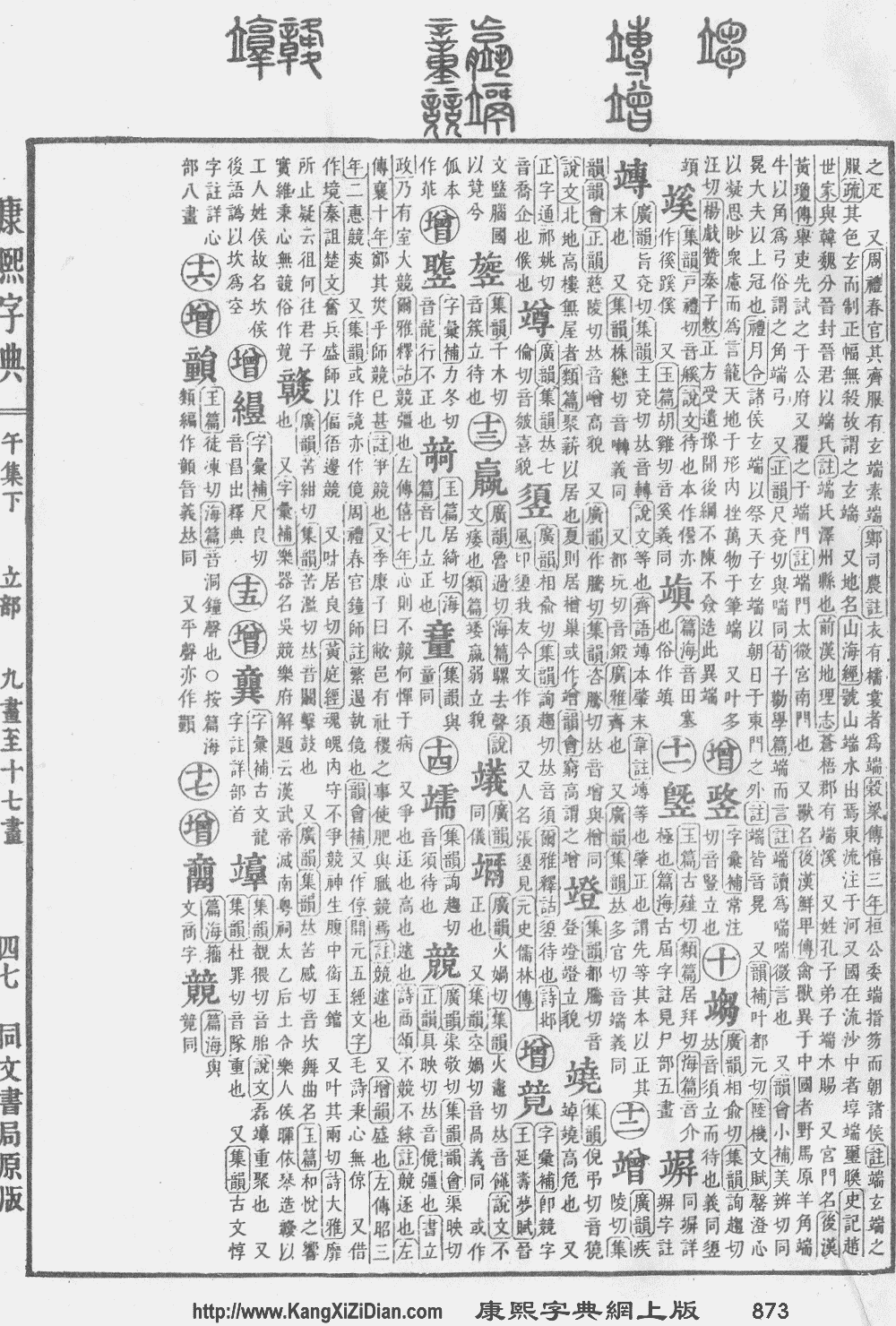
  • KangXi: page 873, character 23
  • Dai Kanwa Jiten: character 25834
  • Dae Jaweon: page 1304, character 23
  • Hanyu Da Zidian (first edition): volume 4, page 2716, character 24
  • Unihan data for U+7AF7

Chinese

trad. 竷
simp. # 竷

Glyph origin

Historical forms of the character 竷
Shuowen Jiezi (compiled in Han)
Small seal script

Pronunciation


Rime
Character 竷 竷
Reading # 1/2 2/2
Initial (聲) 溪 (29) 溪 (29)
Final (韻) 覃 (159) 覃 (159)
Tone (調) Rising (X) Departing (H)
Openness (開合) Open Open
Division (等) I I
Fanqie 苦感切 苦紺切
Reconstructions
Zhengzhang
Shangfang
/kʰʌmX/ /kʰʌmH/
Pan
Wuyun
/kʰəmX/ /kʰəmH/
Shao
Rongfen
/kʰɒmX/ /kʰɒmH/
Edwin
Pulleyblank
/kʰəmX/ /kʰəmH/
Li
Rong
/kʰᴀmX/ /kʰᴀmH/
Wang
Li
/kʰɒmX/ /kʰɒmH/
Bernard
Karlgren
/kʰămX/ /kʰămH/
Expected
Mandarin
Reflex
kǎn kàn
Expected
Cantonese
Reflex
ham2 ham3
Baxter–Sagart system 1.1 (2014)
Character 竷
Reading # 1/1
Modern
Beijing
(Pinyin)
kǎn
Middle
Chinese
‹ khomX ›
Old
Chinese
/*[k]ʰomʔ/
English (booming sound?)

Notes for Old Chinese notations in the Baxter–Sagart system:

* Parentheses "()" indicate uncertain presence;
* Square brackets "[]" indicate uncertain identity, e.g. *[t] as coda may in fact be *-t or *-p;
* Angle brackets "<>" indicate infix;
* Hyphen "-" indicates morpheme boundary;

* Period "." indicates syllable boundary.
Zhengzhang system (2003)
Character 竷
Reading # 1/1
No. 6275
Phonetic
component
夅
Rime
group
侵
Rime
subdivision
3
Corresponding
MC rime
勘
Old
Chinese
/*kʰluːms/
Notes 詩作坎

Definitions

竷

  1. This term needs a translation to English. Please help out and add a translation, then remove the text {{rfdef}}.
This article is issued from Wiktionary. The text is licensed under Creative Commons - Attribution - Sharealike. Additional terms may apply for the media files.