篚
| ||||||||
Translingual
Han character
篚 (Kangxi radical 118, 竹+10, 16 strokes, cangjie input 竹尸中卜 (HSLY), four-corner 88711, composition ⿱𥫗匪)
- round or oval covered-baskets with short legs
Derived characters
- 𢸿
References
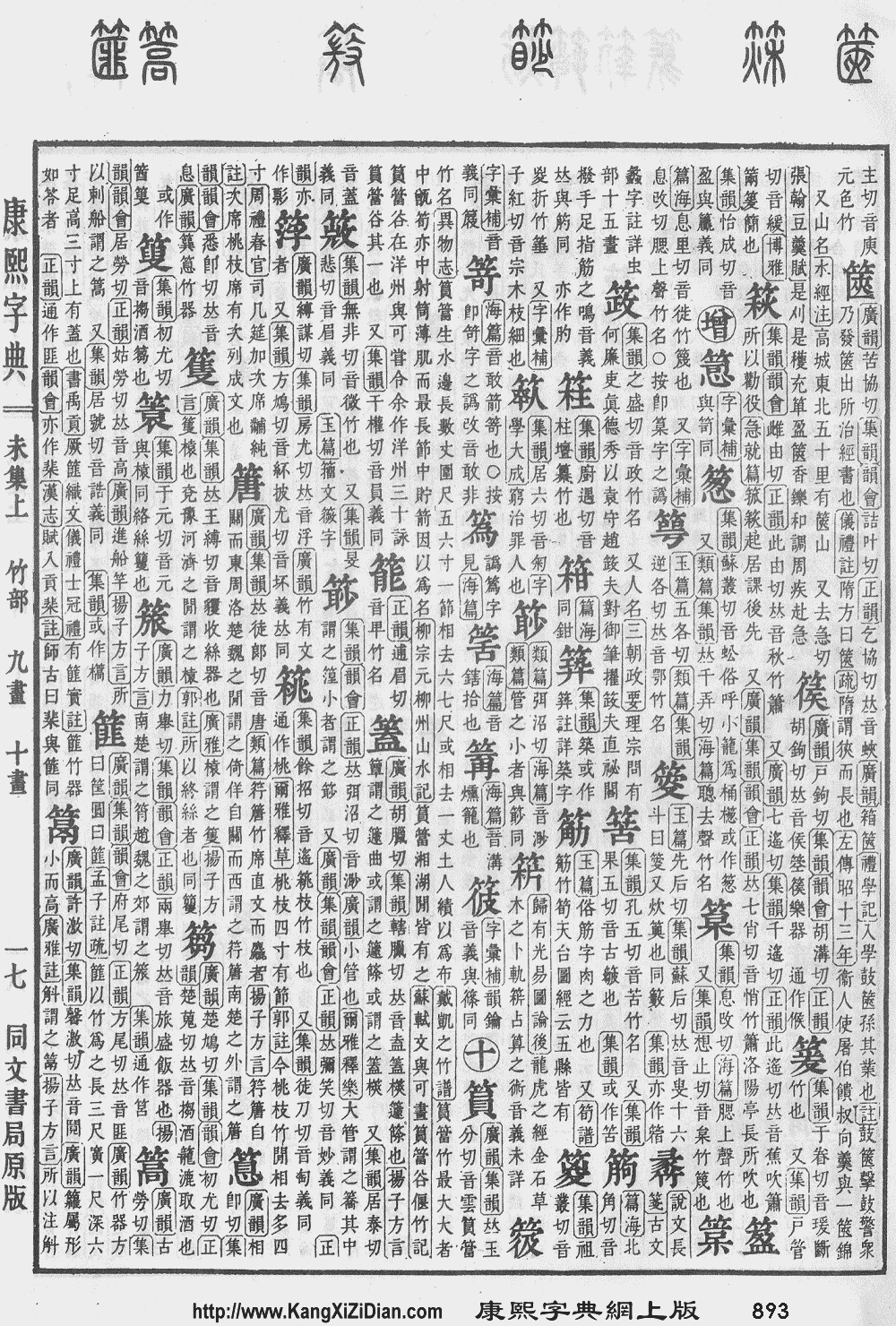
- KangXi: page 893, character 45
- Dai Kanwa Jiten: character 26314
- Dae Jaweon: page 1321, character 5
- Hanyu Da Zidian (first edition): volume 5, page 2997, character 5
- Unihan data for U+7BDA
Chinese
| trad. | 篚 | |
|---|---|---|
| simp. # | 篚 | |
| alternative forms | 匪 | |
Glyph origin
Characters in the same phonetic series (非) (Zhengzhang, 2003)
| Old Chinese | |
|---|---|
| 啡 | *pʰɯːlʔ |
| 排 | *brɯːl |
| 俳 | *brɯːl |
| 輫 | *brɯːl, *buːl |
| 悲 | *prɯl |
| 棑 | *breː, *brɯːls |
| 輩 | *puːls |
| 裴 | *buːl, *bɯl |
| 徘 | *buːl |
| 琲 | *buːlʔ |
| 痱 | *buːlʔ, *pɯds, *bɯl, *bɯls |
| 非 | *pɯl |
| 扉 | *pɯl |
| 緋 | *pɯl |
| 猆 | *pɯl |
| 斐 | *pɯl, *pʰɯlʔ |
| 馡 | *pɯl |
| 騑 | *pɯl, *pʰɯl |
| 誹 | *pɯl, *pɯlʔ, *pɯls |
| 餥 | *pɯl, *pɯlʔ |
| 匪 | *pɯlʔ |
| 棐 | *pɯlʔ |
| 蜚 | *pɯlʔ, *bɯls |
| 篚 | *pɯlʔ |
| 榧 | *pɯlʔ |
| 鯡 | *pɯls |
| 霏 | *pʰɯl |
| 菲 | *pʰɯl, *pʰɯlʔ, *bɯls |
| 婔 | *pʰɯl |
| 裶 | *pʰɯl |
| 悱 | *pʰɯlʔ |
| 奜 | *pʰɯlʔ |
| 腓 | *bɯl, *bɯls |
| 陫 | *bɯlʔ |
| 屝 | *bɯls |
| 厞 | *bɯls |
| 翡 | *bɯls |
Pronunciation
Definitions
篚
Compounds
|
|
|
Japanese
Kanji
篚
- This term needs a translation to English. Please help out and add a translation, then remove the text
{{rfdef}}.
This article is issued from Wiktionary. The text is licensed under Creative Commons - Attribution - Sharealike. Additional terms may apply for the media files.