尾

尾 U+5C3E, 尾
CJK UNIFIED IDEOGRAPH-5C3E
← 尽
[U+5C3D]
CJK Unified Ideographs 尿 →
[U+5C3F]

Translingual

Han character

尾 (Kangxi radical 44, 尸+4, 7 strokes, cangjie input 尸竹手山 (SHQU), four-corner 77214, composition ⿸尸毛)

References

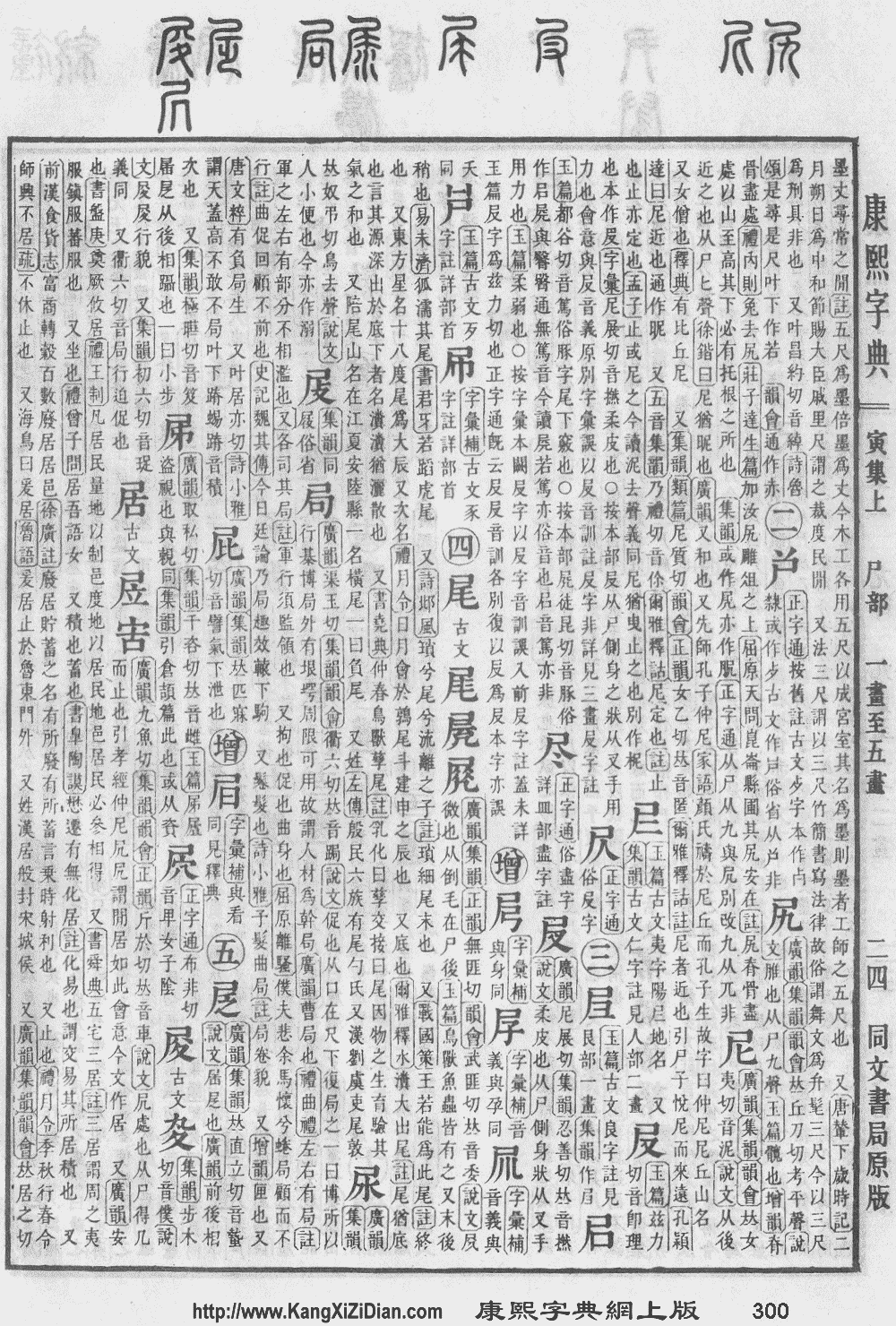
  • KangXi: page 300, character 16
  • Dai Kanwa Jiten: character 7650
  • Dae Jaweon: page 596, character 12
  • Hanyu Da Zidian (first edition): volume 2, page 966, character 16
  • Unihan data for U+5C3E

Chinese

simp. and trad.
尾
alternative forms
 
㞑
𡱕
𡱓
𡲵
𡱲
㞑
𡱕
𡱓
𡲵
𡱲
屘 Cantonese mei5‐1

Glyph origin

Ideogrammic compound (會意) : 尸 (“person”) + 毛 (“hair; feather”).

Etymology

From Proto-Sino-Tibetan *r-maj ~ m-raj (“tail; penis”) (STEDT). Cognate with Mizo mei (“tail”), Tibetan རྨེད (rmed, “tail; crupper of straddle”), Chepang मेः (meʔ, “tail”), Burmese အမြီး (a.mri:, “tail”).

Pronunciation


Note: mei5-1 - "last".
Note:
  • bé/bér/bóe - vernacular;
  • bí - literary.
Note: mai2 - alternative pronunciation for dialectal usage.
  • Wu
    • (Shanghainese)
      • Wiktionary: 3vi; 3mi; 3nyi
      • Sinological IPA (key): /v̥i²³/, /mi²³/, /n̠ʲi²³/
  • Xiang
    • (Changsha)
      • Wiktionary: uei3
      • Sinological IPA (key): /ue̞i⁴¹/

Rime
Character 尾
Reading # 1/1
Initial (聲) 明 (4)
Final (韻) 微 (21)
Tone (調) Rising (X)
Openness (開合) Closed
Division (等) III
Fanqie 無匪切
Baxter mjw+jX
Reconstructions
Zhengzhang
Shangfang
/mʉiX/
Pan
Wuyun
/mʷɨiX/
Shao
Rongfen
/miuəiX/
Edwin
Pulleyblank
/mujX/
Li
Rong
/miuəiX/
Wang
Li
/mĭwəiX/
Bernard
Karlgren
/mwe̯iX/
Expected
Mandarin
Reflex
wěi
Expected
Cantonese
Reflex
mei5
Baxter–Sagart system 1.1 (2014)
Character 尾
Reading # 1/1
Modern
Beijing
(Pinyin)
wěi
Middle
Chinese
‹ mjɨjX ›
Old
Chinese
/*[m]əjʔ/
English tail

Notes for Old Chinese notations in the Baxter–Sagart system:

* Parentheses "()" indicate uncertain presence;
* Square brackets "[]" indicate uncertain identity, e.g. *[t] as coda may in fact be *-t or *-p;
* Angle brackets "<>" indicate infix;
* Hyphen "-" indicates morpheme boundary;

* Period "." indicates syllable boundary.
Zhengzhang system (2003)
Character 尾
Reading # 1/1
No. 12882
Phonetic
component
尾
Rime
group
微
Rime
subdivision
1
Corresponding
MC rime
尾
Old
Chinese
/*mɯlʔ/

Definitions

尾

  1. tail (Classifier: 條/条 c; 支 mn)
  2. end
  3. last; final
  4. Classifier for fish, snakes, shrimps, etc. ⇒ all nouns using this classifier

Synonyms

  • (tail):
  • (classifier for fish):

Compounds

References

Japanese

Kanji

尾

(common “Jōyō” kanji)

Readings

Etymology 1

Kanji in this term
尾
お
Grade: S
kun’yomi

/wo/ → /o/.

Pronunciation

Noun

尾(お) • (o) ←を (wo)?

  1. a tail
  2. the foot of a mountain
  3. the end of something
Synonyms
Derived terms

Etymology 2

Kanji in this term
尾
び
Grade: S
on’yomi

Middle Chinese 尾 (mʉiX)

Pronunciation

Affix

尾(び) • (bi) 

  1. tail
Derived terms

Counter

尾(び) • (-bi) 

  1. fish, shrimp

Proper noun

尾(び) • (Bi) 

  1. (Chinese astronomy) Tail
Synonyms

References

  1. 2006, 大辞林 (Daijirin), Third Edition (in Japanese), Tōkyō: Sanseidō, →ISBN
  2. 1998, NHK日本語発音アクセント辞典 (NHK Japanese Pronunciation Accent Dictionary) (in Japanese), Tōkyō: NHK, →ISBN

Korean

Hanja

尾 (eumhun 꼬리 미 (kkori mi))

  1. Hanja form? of 미 (“tail, extremity”).
  2. Hanja form? of 미 (“end, stern”).

Vietnamese

Han character

尾: Hán Nôm readings: vĩ, vãi, vả, vã, vải, nhân

  1. This term needs a translation to English. Please help out and add a translation, then remove the text {{rfdef}}.
This article is issued from Wiktionary. The text is licensed under Creative Commons - Attribution - Sharealike. Additional terms may apply for the media files.