坐
See also: 座
| ||||||||
Translingual
| Stroke order | |||
|---|---|---|---|
 | |||
Han character
坐 (Kangxi radical 32, 土+4, 7 strokes, cangjie input 人人土 (OOG), four-corner 88104, composition ⿻土从 or ⿱𠦏一)
Derived characters
Further reading
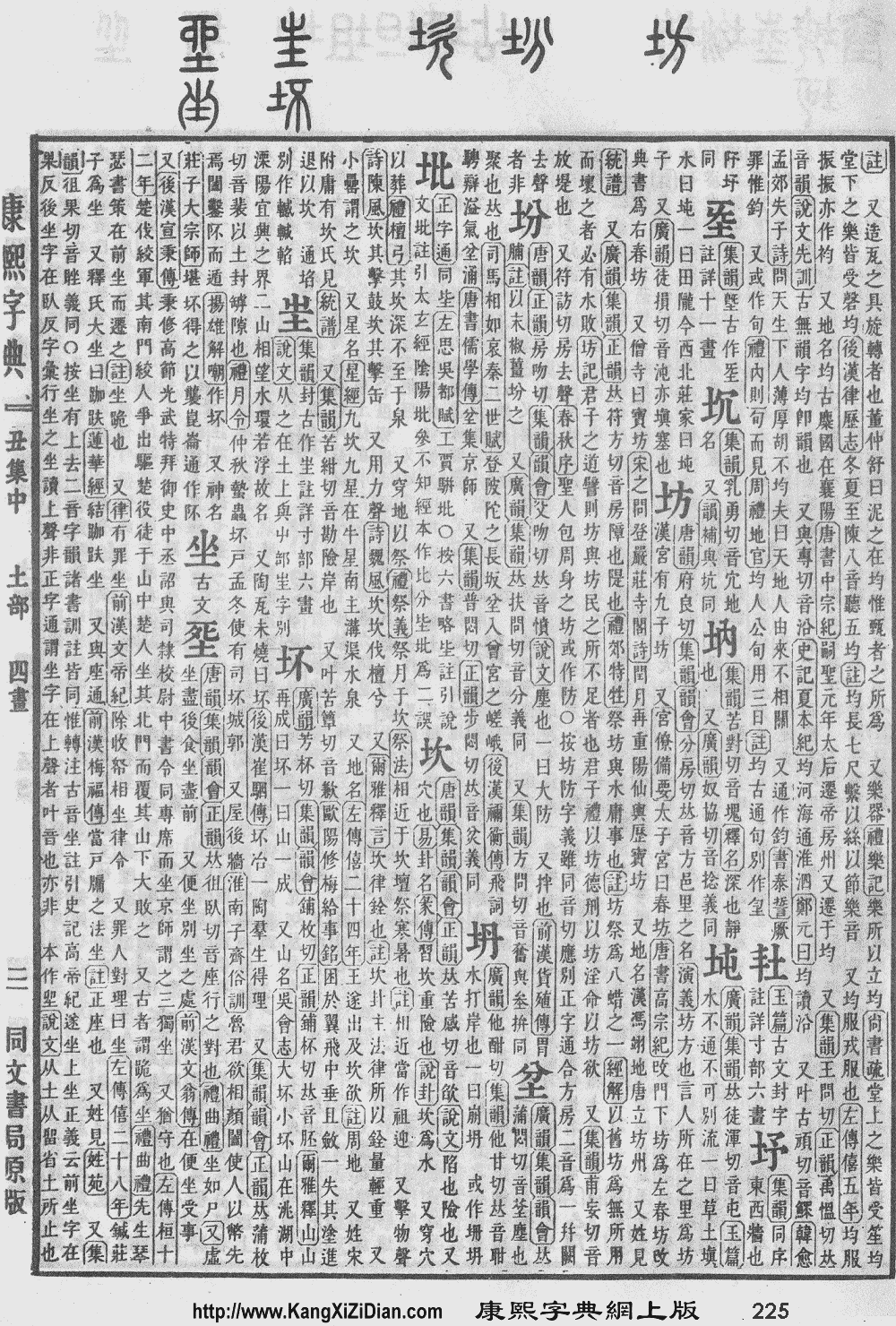
- KangXi: page 225, character 15
- Dai Kanwa Jiten: character 4931
- Dae Jaweon: page 460, character 6
- Hanyu Da Zidian (first edition): volume 1, page 423, character 12
- Unihan data for U+5750
Chinese
Etymology 1
| simp. and trad. |
坐 | |
|---|---|---|
| alternative forms | ||
Cognate with Japhug amdzɯ (Zhang, Jacques, and Lai, 2019).
Pronunciation
Definitions
坐
- to sit; to take a seat
- 坐下 ― zuòxià ― to sit down
- 請坐!/请坐! [Hokkien] ― Chhiáⁿ chē! [Pe̍h-ōe-jī] ― Please take a seat!
- to go by; to travel by; to ride
- to bear fruit
- (literary) because of; on the ground of
- to be in charge of; to manage
- to uphold; to fight until the end without giving up
- † to be convicted (of a crime)
See also
- 上 (shàng, “to board”)
Descendants
- → Ai-Cham: zai⁶
Compounds
Derived terms from 坐
|
|
|
Pronunciation
Usage notes
- This form was also proposed in the second round of simplification.
References
- “坐”, in 漢語多功能字庫 (Multi-function Chinese Character Database), 香港中文大學 (the Chinese University of Hong Kong), 2014–
- “Entry #3036”, in 臺灣閩南語常用詞辭典 [Dictionary of Frequently-Used Taiwan Minnan] (in Chinese and Min Nan), Ministry of Education, R.O.C., 2011.
Japanese
Readings
Usage notes
In modern Japanese, 坐 is mostly replaced by 座, due to the deprecation of non-tōyō kanji caused by the Japanese script reform.
Compounds
Compounds
- 坐愛 (zāi)
- 坐位 (zai, “seat; posing of sitting; sitting sex position”)
- 坐椅 (zai)
- 坐暗 (zain)
- 坐隠 (zain)
- 坐右 (zau)
- 坐筵 (zaen)
- 坐下 (zaka)
- 坐衙 (zaga)
- 坐臥 (zaga)
- 坐懐 (zakai)
- 坐客 (zakaku)
- 坐学 (zagaku)
- 坐看 (zakan)
- 坐間 (zakan)
- 坐棺 (zakan)
- 坐感 (zakan)
- 坐観 (zakan)
- 坐起 (zaki)
- 坐窺 (zaki)
- 坐騎 (zaki)
- 坐客 (zakyaku)
- 坐給 (zakyū)
- 坐挙 (zakyo)
- 坐魚 (zagyo)
- 坐漁 (zagyo)
- 坐業 (zagyō)
- 坐具 (zagu)
- 坐隅 (zagū)
- 坐曛 (zakun)
- 坐繫 (zakei)
- 坐芸 (zagei)
- 坐睨 (zagei)
- 坐月 (zagetsu)
- 坐見 (zaken)
- 坐賈 (zako)
- 坐語 (zago)
- 坐誤 (zago)
- 坐行 (zakō)
- 坐更 (zakō)
- 坐耗 (zakō)
- 坐高 (zakō)
- 坐克 (zakoku)
- 坐哭 (zakoku)
- 坐獄 (zagoku)
- 坐骨 (zakotsu)
- 坐作 (zasa)
- 坐催 (zasai)
- 坐剤 (zazai)
- 坐罪 (zazai)
- 坐作 (zasaku)
- 坐参 (zasan)
- 坐死 (zashi)
- 坐思 (zashi)
- 坐視 (zashi)
- 坐尸 (zashi)
- 坐次 (zaji)
- 坐事 (zaji)
- 坐侍 (zaji)
- 坐失 (zashitsu)
- 坐車 (zasha)
- 坐者 (zasha)
- 坐射 (zasha)
- 坐収 (zashū)
- 坐洲 (zashū)
- 坐処 (zasho)
- 坐商 (zashō)
- 坐誦 (zashō)
- 坐礁 (zashō)
- 坐上 (zajō)
- 坐状 (zajō)
- 坐乗 (zajō)
- 坐食 (zashoku)
- 坐職 (zashoku)
- 坐蓐 (zajoku)
- 坐薪 (zashin)
- 坐洲 (zasu)
- 坐睡 (zasui)
- 坐井 (zasei)
- 坐蛻 (zazei)
- 坐席 (zaseki)
- 坐拙 (zasetsu)
- 坐船 (zasen)
- 坐選 (zasen)
- 坐前 (zazen)
- 坐禅 (zazen)
- 坐草 (zasō)
- 坐倉 (zasō)
- 坐曹 (zasō)
- 坐像 (zazō)
- 坐贓 (zazō)
- 坐卓 (zataku)
- 坐謫 (zataku)
- 坐脱 (zadatsu)
- 坐談 (zadan)
- 坐致 (zachi)
- 坐馳 (zachi)
- 坐地 (zachi)
- 坐痴 (zachi)
- 坐中 (zachū)
- 坐釣 (zachō)
- 坐定 (zatei)
- 坐適 (zateki)
- 坐頭 (zatō)
- 坐榻 (zatō)
- 坐堂 (zadō)
- 坐読 (zadoku)
- 坐墩 (zaton)
- 坐年 (zanen)
- 坐念 (zanen)
- 坐馬 (zaba)
- 坐婆 (zaba)
- 坐拝 (zahai)
- 坐廃 (zahai)
- 坐煩 (zahan)
- 坐板 (zaban)
- 坐痺 (zahi)
- 坐髀 (zahi)
- 坐寐 (zabi)
- 坐誣 (zafu)
- 坐伏 (zafuku)
- 坐辟 (zaheki)
- 坐弁 (zaben)
- 坐補 (zaho)
- 坐舗 (zaho)
- 坐法 (zahō)
- 坐忘 (zabō)
- 坐傍 (zabō)
- 坐免 (zamen)
- 坐面 (zamen)
- 坐薬 (zayaku)
- 坐右 (zayū)
- 坐擁 (zayō)
- 坐抑 (zayō)
- 坐浴 (zayoku)
- 坐来 (zarai)
- 坐落 (zaraku)
- 坐釐 (zari)
- 坐立 (zaritsu)
- 坐流 (zaryū)
- 坐累 (zarui)
- 坐礼 (zarei)
- 坐列 (zaretsu)
- 坐論 (zaron)
- 安坐 (anza)
- 倚坐 (iza)
- 円坐 (enza)
- 宴坐 (enza)
- 縁坐 (enza)
- 穏坐 (onza)
- 擱坐 (kakuza)
- 閑坐 (kanza)
- 環坐 (kanza)
- 危坐 (kiza)
- 芰坐 (kiza)
- 起坐 (kiza)
- 跪坐 (kiza)
- 箕坐 (kiza)
- 却坐 (kyakuza)
- 久坐 (kyūza)
- 居坐 (kyoza)
- 挙坐 (kyoza)
- 虚坐 (kyoza)
- 踞坐 (kyoza)
- 御坐 (gyoza)
- 匡坐 (kyōza)
- 恭坐 (kyōza)
- 禁坐 (kinza)
- 空坐 (kūza)
- 偶坐 (gūza), 耦坐 (gūza)
- 隅坐 (gūza)
- 堅坐 (kenza)
- 孤坐 (koza)
- 胡坐 (koza)
- 後坐 (goza)
- 尻坐 (kōza)
- 兀坐 (kotsuza)
- 雑坐 (zatsuza)
- 尸坐 (shiza)
- 四坐 (shiza)
- 廁坐 (shiza)
- 侍坐 (jiza)
- 首坐 (shuza)
- 愁坐 (shūza)
- 従坐 (jūza)
- 上坐 (jōza)
- 食坐 (shokuza)
- 神坐 (shinza)
- 深坐 (shinza)
- 寝坐 (shinza)
- 酔坐 (suiza)
- 随坐 (zuiza)
- 正坐 (seiza)
- 清坐 (seiza)
- 盛坐 (seiza)
- 静坐 (seiza)
- 禅坐 (zenza)
- 促坐 (sokuza)
- 対坐 (taiza)
- 端坐 (tanza)
- 団坐 (danza)
- 中坐 (chūza)
- 鼎坐 (teiza)
- 独坐 (dokuza)
- 罵坐 (baza)
- 反坐 (hanza)
- 晩坐 (banza)
- 盤坐 (banza)
- 趺坐 (fuza)
- 並坐 (heiza)
- 別坐 (betsuza)
- 便坐 (benza)
- 末坐 (matsuza)
- 満坐 (manza)
- 密坐 (mitsuza)
- 黙坐 (mokuza)
- 夜坐 (yaza)
- 幽坐 (yūza)
- 離坐 (riza)
- 列坐 (retsuza)
- 連坐 (renza)
- 露坐 (roza)
Vietnamese
Han character
坐: Hán Việt readings: tọa/toạ
坐: Nôm readings: ngồi, tòa/toà, tọa/toạ
- This term needs a translation to English. Please help out and add a translation, then remove the text
{{rfdef}}.
References
This article is issued from Wiktionary. The text is licensed under Creative Commons - Attribution - Sharealike. Additional terms may apply for the media files.