糞

See also: 粪
糞 U+7CDE, 糞
CJK UNIFIED IDEOGRAPH-7CDE
← 糝
[U+7CDD]
CJK Unified Ideographs 糟 →
[U+7CDF]

Translingual

Han character

糞 (Kangxi radical 119, 米+11, 17 strokes, cangjie input 火木田廿金 (FDWTC), four-corner 90801, composition ⿱米異)

Derived characters

References

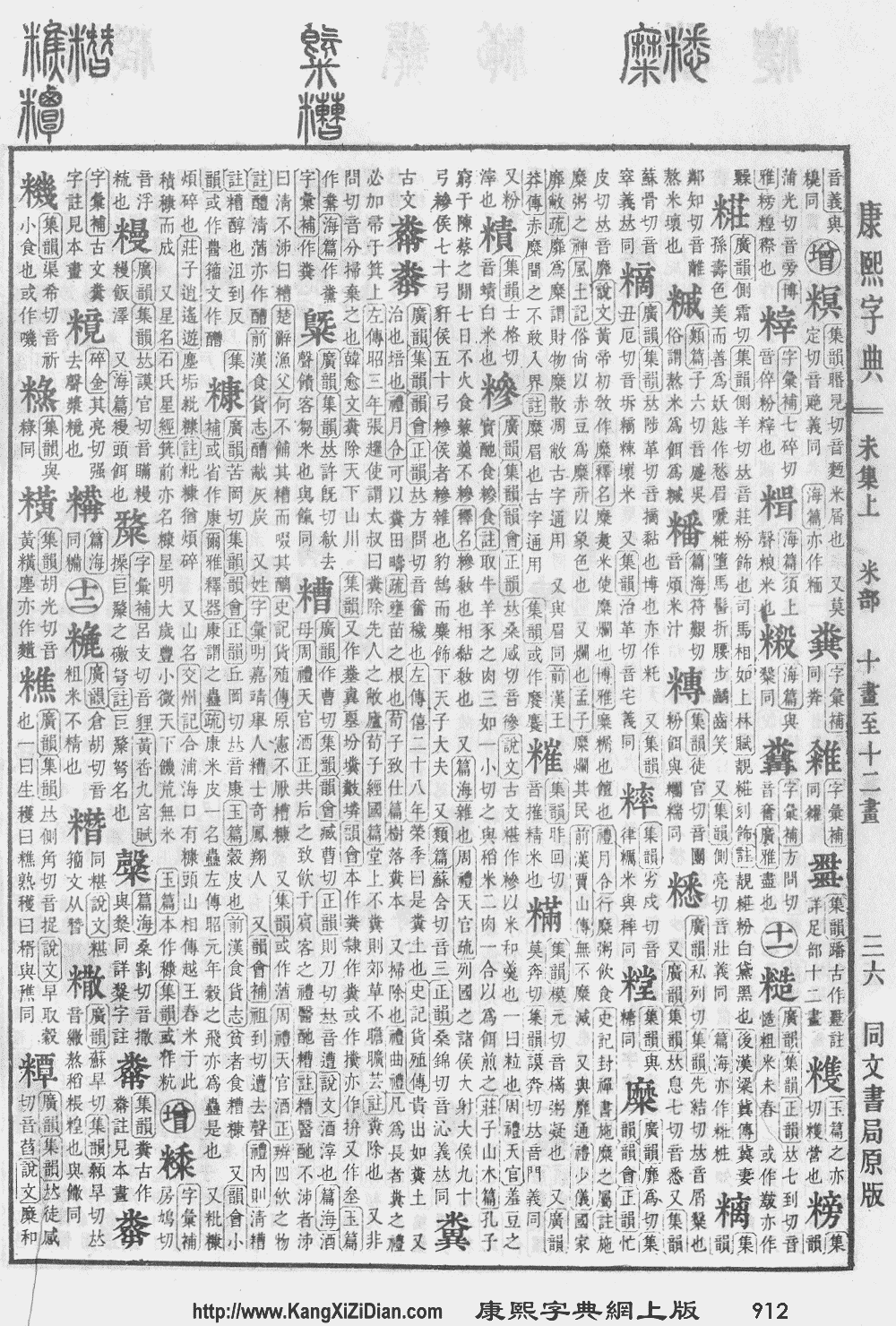
  • KangXi: page 912, character 26
  • Dai Kanwa Jiten: character 27102
  • Dae Jaweon: page 1339, character 20
  • Hanyu Da Zidian (first edition): volume 5, page 3158, character 7
  • Unihan data for U+7CDE

Chinese

trad. 糞
simp. 粪
alternative forms
 
𨤝
𥻔
𥽒
𨤘
𥻰
𨤝
𥻔
𥽒
𨤘
𥻰
𥻪
𡐢
𥼇
𥼈
𥹻
𢍨
𥻎
𤲲
𡊅 partial
𡊄 partial

Glyph origin

Oracle bone: pictogram (象形) : 3 dots + 𠀠 + 廾 + optional 帚 (zhǒu).

Small seal: pictogram (象形) : 釆 + 𠦒 + 廾.

The current glyph is from the small seal script.

Etymology

From Proto-Sino-Tibetan *brun (“excrement”) (STEDT). Cognate with Tibetan བྲུན (brun, “dung”).

Pronunciation


Note:
  • pùn - vernacular;
  • hùn - literary.

Rime
Character 糞
Reading # 1/1
Initial (聲) 幫 (1)
Final (韻) 文 (59)
Tone (調) Departing (H)
Openness (開合) Closed
Division (等) III
Fanqie 方問切
Reconstructions
Zhengzhang
Shangfang
/pɨunH/
Pan
Wuyun
/piunH/
Shao
Rongfen
/piuənH/
Edwin
Pulleyblank
/punH/
Li
Rong
/piuənH/
Wang
Li
/pĭuənH/
Bernard
Karlgren
/pi̯uənH/
Expected
Mandarin
Reflex
fèn
Expected
Cantonese
Reflex
fan3
Baxter–Sagart system 1.1 (2014)
Character 糞
Reading # 1/1
Modern
Beijing
(Pinyin)
fèn
Middle
Chinese
‹ pjunH ›
Old
Chinese
/*p[u]r-s/
English manure, dirt

Notes for Old Chinese notations in the Baxter–Sagart system:

* Parentheses "()" indicate uncertain presence;
* Square brackets "[]" indicate uncertain identity, e.g. *[t] as coda may in fact be *-t or *-p;
* Angle brackets "<>" indicate infix;
* Hyphen "-" indicates morpheme boundary;

* Period "." indicates syllable boundary.
Zhengzhang system (2003)
Character 糞
Reading # 1/1
No. 3197
Phonetic
component
糞
Rime
group
文
Rime
subdivision
1
Corresponding
MC rime
糞
Old
Chinese
/*pɯns/

Definitions

糞

  1. excrement; faeces; dung
  2. manure
  3. (literary, or in compounds) to apply manure to
  4. (literary, or in compounds) to clear away

Synonyms

  • (excrement):
  • (to apply manure to):

See also

Compounds

References

Japanese

Kanji

糞

(uncommon “Hyōgai” kanji)

Readings

  • Go-on: ふん (fun)
  • Kan-on: ふん (fun)
  • Kun: くそ (kuso, 糞); ばば (baba, 糞)

Etymology 1

Kanji in this term
糞
くそ
Hyōgaiji
kun’yomi
Alternative spelling
屎

From Old Japanese.[1]

Cognate with 臭い (kusai, “stinky, smelly”), 腐る (kusaru, “to rot, to become stinky”).[1]

Pronunciation

Noun

糞(くそ) • (kuso) 

  1. (colloquial) feces, excrement
  2. (by extension) shit, crap, garbage, trash
Derived terms
Idioms
  • 糞(くそ)の役(やく)にも立(た)たぬ (kuso no yaku ni mo tatanu): “not even good for shit” (see 役(やく)に立(た)つ (yaku ni tatsu): “to be useful, to play a role”)

Interjection

糞(くそ) • (kuso) 

  1. (swear word) shit, crap
Usage notes

This is not considered as profane as the English glosses. For instance, a child of five using the Japanese interjection kuso would be unremarkable, whereas it would be very socially inappropriate for a child of five to use the English interjection shit.

Prefix

糞(くそ) • (kuso-) 

  1. (derogatory) pejorative prefix
    糞(くそ)爺(じじ)い
    kusojijī
    damn geezer

Suffix

糞(くそ) • (-kuso) 

  1. crappy, for shit: a derogatory emphasizing suffix.
    下手(へた)糞(くそ)
    hetakuso
    crappy (bad at something), to be shit at doing something
    襤褸(ぼろ)糞(くそ)
    borokuso
    broken down for shit, raggedy-ass

Etymology 2

Kanji in this term
糞
ふん
Hyōgaiji
on’yomi

/pun/ → /fun/

From Middle Chinese 糞 (pjunH).

Pronunciation

Noun

糞(ふん) • (fun) 

  1. droppings, dung
    ふれあい動(どう)物(ぶつ)園(えん)のモルモットが受(う)けるストレスを糞(ふん)中(ちゅう)コルチコステロンによって推(すい)定(てい)する試(こころ)み
    fureai dōbutsuen no morumotto ga ukeru sutoresu o funchū koruchikosuteron ni yotte suitei suru kokoromi
    Non-invasive monitoring of stress via fecal corticosterone levels in guinea pigs on public display
Usage notes
  • This noun specifically refers to the excrement of non-human animals; for human excrement, the term 大便 (daiben) is used.
  • This term may be spelled as フン due to the complexity of the kanji 糞.

Etymology 3

Kanji in this term
糞
ばば
Hyōgaiji
kun’yomi
Alternative spelling
屎

Appears to derive from baby talk.[1][2] Compare English poopoo and Mandarin 㞎㞎 (bǎba, bǎba).

Pronunciation

Noun

糞(ばば) • (baba) 

  1. (childish) poopoo, poop, dookie
  2. (childish) something unclean
Derived terms

References

  1. 1988, 国語大辞典(新装版) (Kokugo Dai Jiten, Revised Edition) (in Japanese), Tōkyō: Shogakukan
  2. 2006, 大辞林 (Daijirin), Third Edition (in Japanese), Tōkyō: Sanseidō, →ISBN
  3. 1998, NHK日本語発音アクセント辞典 (NHK Japanese Pronunciation Accent Dictionary) (in Japanese), Tōkyō: NHK, →ISBN

Korean

Hanja

糞 (eumhun 똥 분 (ttong bun))

  1. Hanja form? of 분 (“dung”).

Vietnamese

Han character

糞: Hán Nôm readings: phẩn, phân

  1. This term needs a translation to English. Please help out and add a translation, then remove the text {{rfdef}}.
This article is issued from Wiktionary. The text is licensed under Creative Commons - Attribution - Sharealike. Additional terms may apply for the media files.