腹
| ||||||||
Translingual
Han character
腹 (Kangxi radical 130, 肉+9, 13 strokes, cangjie input 月人日水 (BOAE), four-corner 78247, composition ⿰月复)
References
- KangXi: page 990, character 2
- Dai Kanwa Jiten: character 29722
- Dae Jaweon: page 1442, character 8
- Hanyu Da Zidian (first edition): volume 3, page 2097, character 1
- Unihan data for U+8179
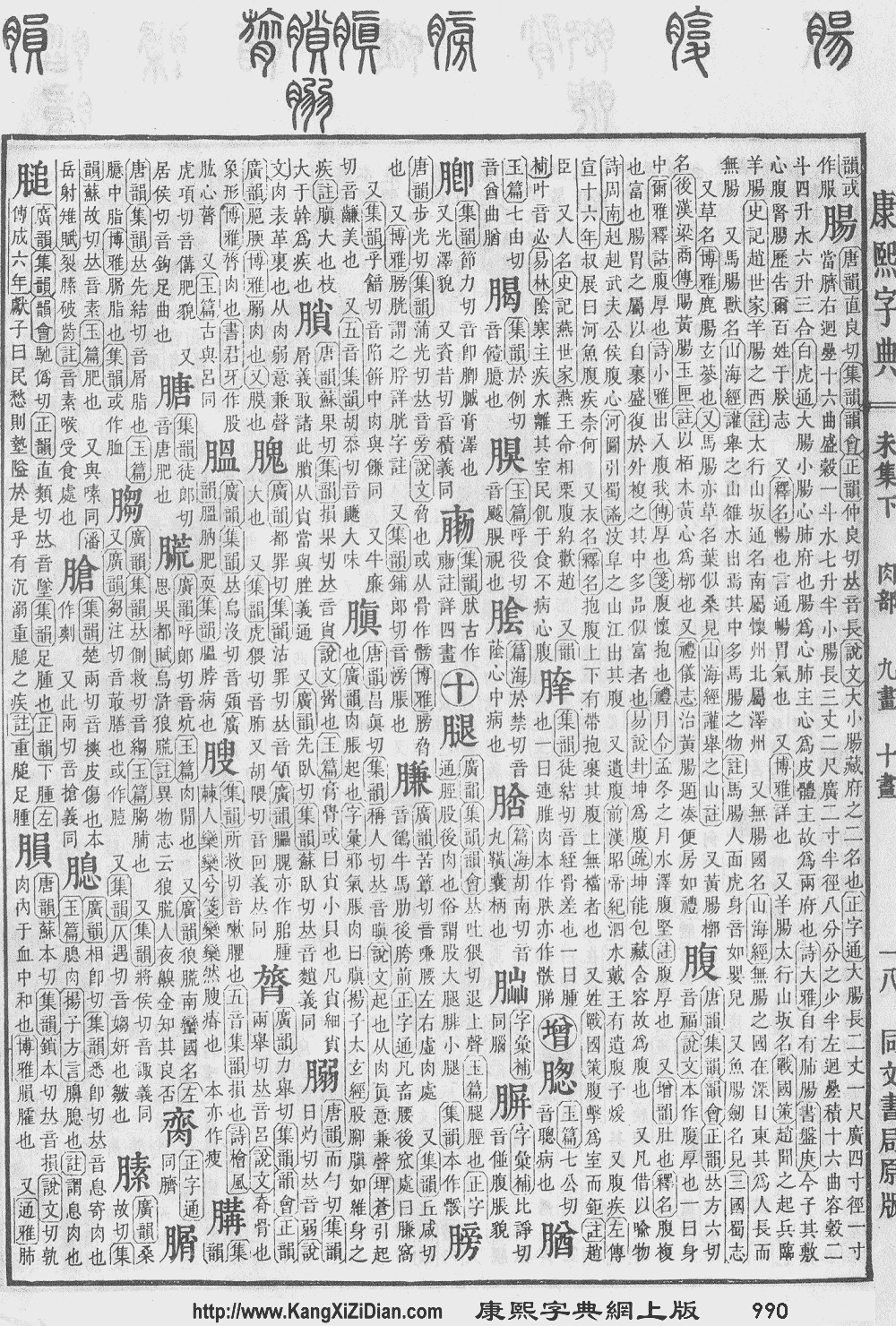
Chinese
| trad. | 腹 | |
|---|---|---|
| simp. # | 腹 | |
Glyph origin
| Historical forms of the character 腹 | ||
|---|---|---|
| Warring States | Shuowen Jiezi (compiled in Han) | Liushutong (compiled in Ming) |
| Chu slip and silk script | Small seal script | Transcribed ancient scripts |
 |
 |
 |
Phono-semantic compound (形聲, OC *puɡ) : semantic 肉 (“meat; flesh”) + phonetic 复 (OC *buɡ) – a part of the body.
Etymology
From Proto-Sino-Tibetan *d-puːk (“belly; vitals; hollow object; cave”); cognate with 𥨍 (“cave”), Tibetan ཕུགས (phugs, “innermost parts”), Burmese ဗိုက် (buik, “belly; pregnancy”), Chepang तुक् (“belly; stomach”), Proto-Bodo-Garo *bi(ʔ)-buk (“guts”), Cogtse Situ [Term?] (tə-pōk, “belly”), Brag-bar Situ [Term?] (tə-vōk, “belly”), Proto-Tani *puk (“heart”) (STEDT; Schuessler, 2007; Zhang, Jacques, and Lai, 2019).
Also compare Austroasiatic words: Proto-Mon-Khmer *bo()k (“belly”), Khmer ពោះ (pŭəh, “belly”) (Shorto, 2006; Schuessler, 2007).
Pronunciation
Definitions
腹
Synonyms
Compounds
|
|
|
Japanese
Compounds
- 一腹 (ippuku): one litter; one clutch (of eggs)
- 割腹 (kappuku): disembowelment
- 空腹 (kūfuku): hunger
- 山腹 (sanpuku): mountainside
- 私腹 (shifuku): his own profit
- 切腹 (seppuku): harakiri
- 鱈腹 (tarafuku): to one's heart's content
- 腹腔 (fukukū): abdominal cavity
- 腹話術 (fukuwajutsu): ventriloquism
- 腹筋 (fukkin): abdominal muscles
- 満腹 (manpuku): a glut
| Kanji in this term |
|---|
| 腹 |
| はら Grade: 6 |
| kun’yomi |
Derived terms
Korean
Etymology
From Middle Chinese 腹 (MC pɨuk̚). Recorded as Middle Korean 복〮 (pwók) (Yale: pwok) in Hunmong Jahoe (訓蒙字會 / 훈몽자회), 1527.
Compounds
- 복근 (腹筋, bokgeun)
- 복부 (腹部, bokbu)
- 복막 (腹膜, bongmak)
- 복수 (腹水, boksu)
- 복배 (腹背, bokbae)
- 복강 (腹腔, bokgang)
- 복장 (腹臟, bokjang)
- 복절 (腹節, bokjeol)
- 복안 (腹案, bogan)
- 복비 (腹誹, bokbi)
- 복벽 (腹壁, bokbyeok)
- 복심 (腹心, boksim)
- 공복 (空腹, gongbok)
- 심복 (心腹, simbok)
- 복통 (腹痛, boktong)
- 복화술 (腹話術, bokhwasul)
- 복상사 (腹上死, boksangsa)
- 복식호흡 (腹式呼吸, boksikhoheup)