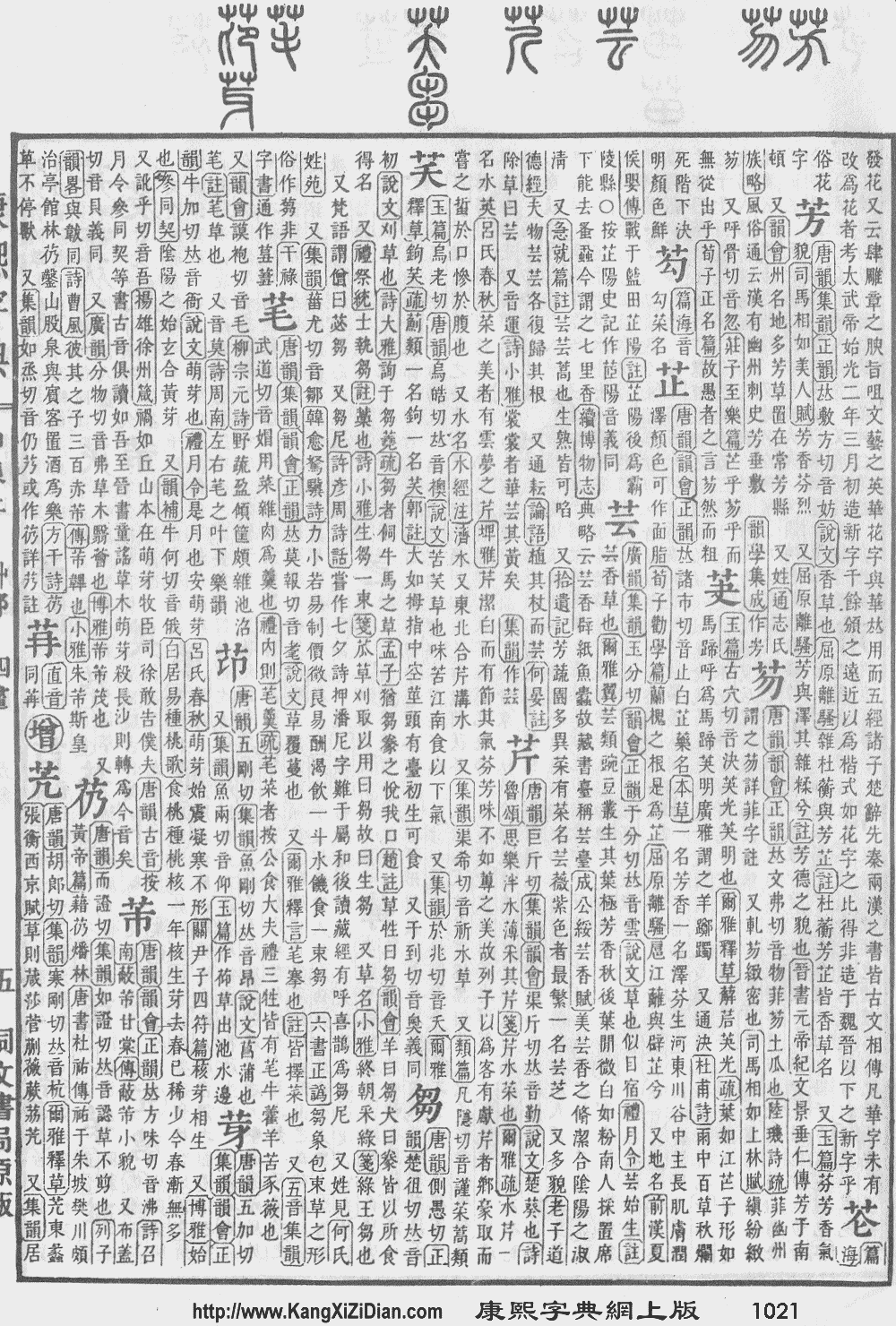
芽

芽 U+82BD, 芽
CJK UNIFIED IDEOGRAPH-82BD
← 芼
[U+82BC]
CJK Unified Ideographs 芾 →
[U+82BE]

芽 U+2F995, 芽
CJK COMPATIBILITY IDEOGRAPH-2F995
← 芳
[U+2F994]
CJK Compatibility Ideographs Supplement 苦 →
[U+2F996]

Translingual

Han character

芽 (Kangxi radical 140, 艸+4 in Chinese, 艸+5 in Japanese, 7 strokes in Chinese, 8 strokes in Japanese, cangjie input 廿一女竹 (TMVH), four-corner 44241, composition ⿱艹牙)

References

Chinese

trad. 芽
simp. # 芽

Glyph origin

Phono-semantic compound (形聲, OC *ŋraː) : semantic 艹 (“grass”) + phonetic 牙 (OC *ŋraː).

Etymology

Cognate with 牙 (OC *ŋraː, “tooth”) (Schuessler, 2007).

Pronunciation


Note:
  • gê/gêe - vernacular;
  • gâ - literary.

Rime
Character 芽
Reading # 1/1
Initial (聲) 疑 (31)
Final (韻) 麻 (98)
Tone (調) Level (Ø)
Openness (開合) Open
Division (等) II
Fanqie 五加切
Reconstructions
Zhengzhang
Shangfang
/ŋˠa/
Pan
Wuyun
/ŋᵚa/
Shao
Rongfen
/ŋa/
Edwin
Pulleyblank
/ŋaɨ/
Li
Rong
/ŋa/
Wang
Li
/ŋa/
Bernard
Karlgren
/ŋa/
Expected
Mandarin
Reflex
yá
Expected
Cantonese
Reflex
ngaa4
Baxter–Sagart system 1.1 (2014)
Character 芽
Reading # 1/1
Modern
Beijing
(Pinyin)
yá
Middle
Chinese
‹ ngæ ›
Old
Chinese
/*m-ɢˁ<r>a/
English shoot, sprout

Notes for Old Chinese notations in the Baxter–Sagart system:

* Parentheses "()" indicate uncertain presence;
* Square brackets "[]" indicate uncertain identity, e.g. *[t] as coda may in fact be *-t or *-p;
* Angle brackets "<>" indicate infix;
* Hyphen "-" indicates morpheme boundary;

* Period "." indicates syllable boundary.
Zhengzhang system (2003)
Character 芽
Reading # 1/1
No. 14178
Phonetic
component
牙
Rime
group
魚
Rime
subdivision
0
Corresponding
MC rime
牙
Old
Chinese
/*ŋraː/

Definitions

芽

  1. bud; shoot; sprout
  2. bud-shaped thing

Compounds

  • 胚芽米
  • 胚芽鞘
  • 胞芽
  • 胞芽杯
  • 腋芽
  • 芽孢 (yábāo)
  • 芽接法
  • 芽眼
  • 芽茶 (yáchá)
  • 芽菜 (yácài, “bean sprout”)
  • 芽豆 (yádòu)
  • 芽韭
  • 茶芽
  • 萌芽 (méngyá)
  • 裸芽

References

Japanese

Shinjitai 芽
Kyūjitai
[1]

芽
&#x2f995;
or
芽+&#xFE00;?
芽󠄀
芽+&#xE0100;?
(Adobe-Japan1)
芽󠄄
芽+&#xE0104;?
(Hanyo-Denshi)
(Moji_Joho)
The displayed kanji may be different from the image due to your environment.
See here for details.

Kanji

芽

(grade 4 “Kyōiku” kanji)

  1. bud, sprout, shoot

Readings

Compounds

Etymology 1

Kanji in this term
芽
め
Grade: 4
kun’yomi
For pronunciation and definitions of 芽 – see the following entry.
【め】H
[noun] [from 712] 芽: bud, sprout, shoot
[noun] [from 1922] 芽: the germ of an idea, an inkling
[noun] [date unknown] 芽: (biology) a bird embryo: more specifically, as found on the yolk of an egg, the blastodisk, the germinal disk, the embryonic disk
(This term, 芽, is an alternative spelling of the above term.)

Etymology 2

Kanji in this term
芽
が
Grade: 4
on’yomi

From Middle Chinese 芽 (MC ŋˠa).

Pronunciation

  • IPA(key): [ɡa̠]

Affix

芽(が) • (ga) 

  1. bud; sprout; shoot

References

  1. 1914, 漢和大辭書 (Kanwa Dai Jisho, “The Great Kanji-Japanese Dictionary”) (in Japanese), page 1805 (paper), page 954 (digital), Tōkyō: 興文社 (Kōbunsha)

Korean

Hanja

芽 • (a) (hangeul 아, revised a, McCune–Reischauer a, Yale a)

  1. This term needs a translation to English. Please help out and add a translation, then remove the text {{rfdef}}.

Tày

Noun

芽 (transliteration needed)

  1. Nôm form of nhả (“grass”).

References

  • Lục Văn Pảo; Hoàng Tuấn Nam (2003), Hoàng Triều Ân, editor, Từ điển chữ Nôm Tày [A Dictionary of (chữ) Nôm Tày]‎ (in Vietnamese), Hanoi: Nhà xuất bản Khoa học Xã hội

Vietnamese

Han character

芽: Hán Nôm readings: nha

  1. This term needs a translation to English. Please help out and add a translation, then remove the text {{rfdef}}.
This article is issued from Wiktionary. The text is licensed under Creative Commons - Attribution - Sharealike. Additional terms may apply for the media files.