葯
| ||||||||
Translingual
Han character
葯 (Kangxi radical 140, 艸+9, 13 strokes in traditional Chinese and Korean, 12 strokes in mainland China and Japanese, cangjie input 廿女火戈 (TVFI), four-corner 44927, composition ⿱艹約)
Related characters
- 藥 (Orthodox traditional form of 葯 when it is used as a variant form - See etymology 2)
- 药 (Simplified form of 藥 in mainland China)
References
- KangXi: page 1046, character 12
- Dai Kanwa Jiten: character 31451
- Dae Jaweon: page 1507, character 13
- Hanyu Da Zidian (first edition): volume 5, page 3259, character 9
- Unihan data for U+846F
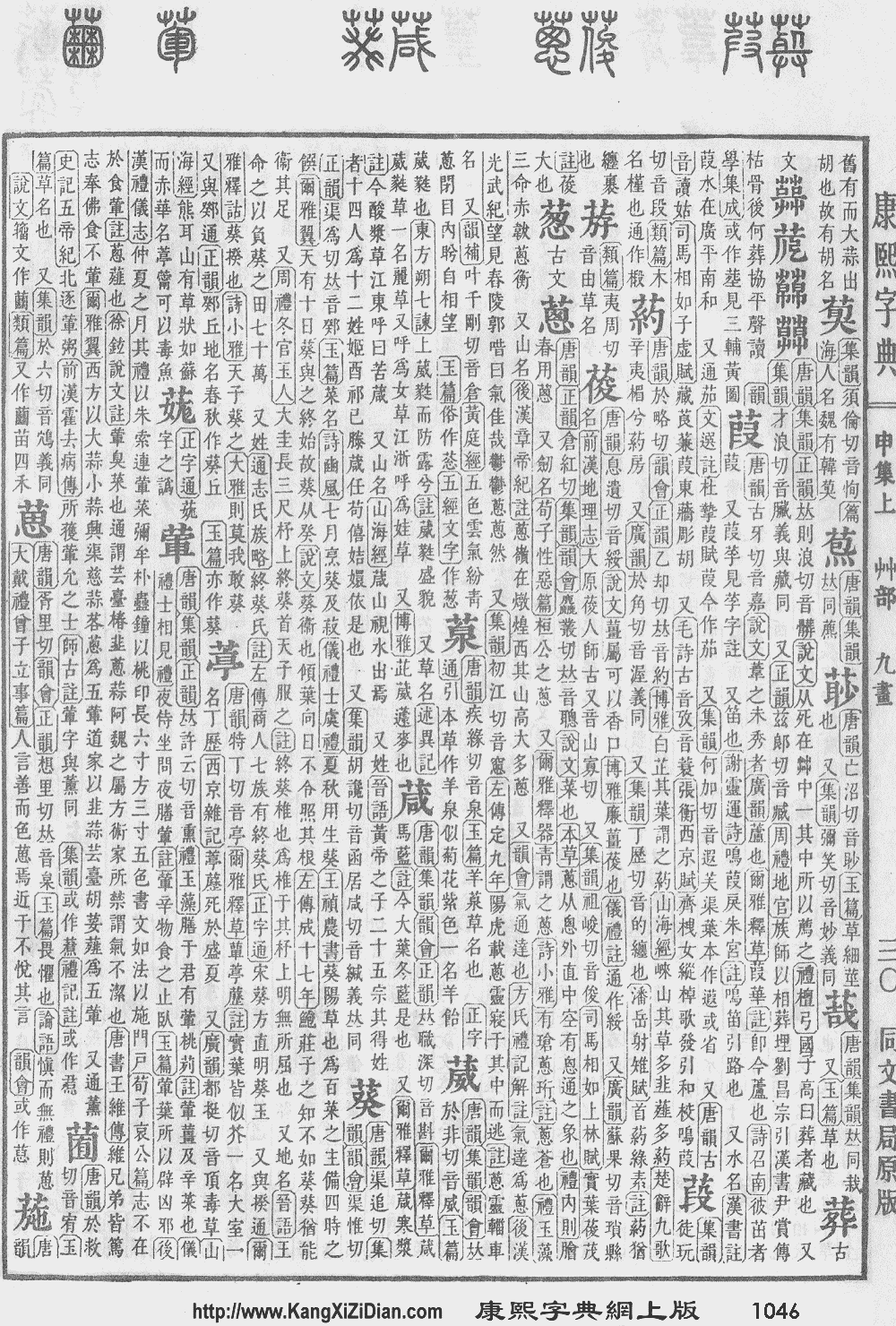
Chinese
Glyph origin
| Old Chinese | |
|---|---|
| 豹 | *preːwɢs |
| 趵 | *preːwɢs, *preːwɢ |
| 尥 | *breːw, *b·reːwɢs |
| 箹 | *ʔreːwɢs, *ʔreːwɢ |
| 杓 | *plew, *pʰlew, *bljewɢ, *pleːwɢ |
| 約 | *ʔlewɢs, *ʔlewɢ |
| 扚 | *pleːwʔ, *pleːwɢ |
| 釣 | *pleːwɢs |
| 瘹 | *teːwɢs |
| 芍 | *ɡleːwʔ, *spʰlewɢ, *pl'ewɢ, *bljewɢ, *pleːwɢ |
| 酌 | *pljewɢ |
| 灼 | *pljewɢ |
| 勺 | *pljewɢ, *bljewɢ |
| 彴 | *pljewɢ |
| 犳 | *pljewɢ |
| 妁 | *pljewɢ, *bljewɢ |
| 汋 | *bljewɢ, *sbreːwɢ |
| 仢 | *bljewɢ |
| 葯 | *qlewɢ, *qreːwɢ |
| 礿 | *lewɢ |
| 肑 | *preːwɢ, *pleːwɢ |
| 瓝 | *breːwɢ |
| 的 | *pleːwɢ |
| 靮 | *pleːwɢ |
| 馰 | *pleːwɢ |
| 玓 | *pleːwɢ |
| 魡 | *pleːwɢ |
Phono-semantic compound (形聲, OC *qlewɢ, *qreːwɢ) : semantic 艸 (“plant”) + phonetic 約 (OC *ʔlewɢs, *ʔlewɢ).
Pronunciation
See also
- 白芷 (báizhǐ, “Angelica dahurica”)
Glyph origin
One of the 324 simplified characters introduced by the Republic of China (Kuomintang government) in 1935 as a simplified form of 藥/药 but was later retracted in 1936. Prior to that 葯 and 藥/药 were two homonyms that were not related with one another.
In the 1956 Chinese Character Simplification Scheme by the People's Republic of China, 葯 was once again listed as a simplified form of 藥/药 which was succeeded by 药 based on the radical simplification of 糹/纟 (sīzìpáng) to 纟.
Definitions
| For pronunciation and definitions of 葯 – see 藥 (“medicine; drug; pharmaceutical; substance used for a particular purpose; etc.”). (This character, 葯, is the former (1935–1936) ROC simplified, former (1964-1986) first-round simplified, former (1969–1976) Singaporean simplified, and variant form of 藥.) |
Notes:
|
Usage notes
Japanese
Kanji
- This term needs a translation to English. Please help out and add a translation, then remove the text
{{rfdef}}.
Readings
Korean
Vietnamese
Han character
葯: Hán Nôm readings: dược, ước
- This term needs a translation to English. Please help out and add a translation, then remove the text
{{rfdef}}.