薟
See also: 莶
| ||||||||
Translingual
Han character
薟 (Kangxi radical 140, 艸+13, 19 strokes, cangjie input 廿人一人 (TOMO), four-corner 44886, composition ⿱艹僉)
References
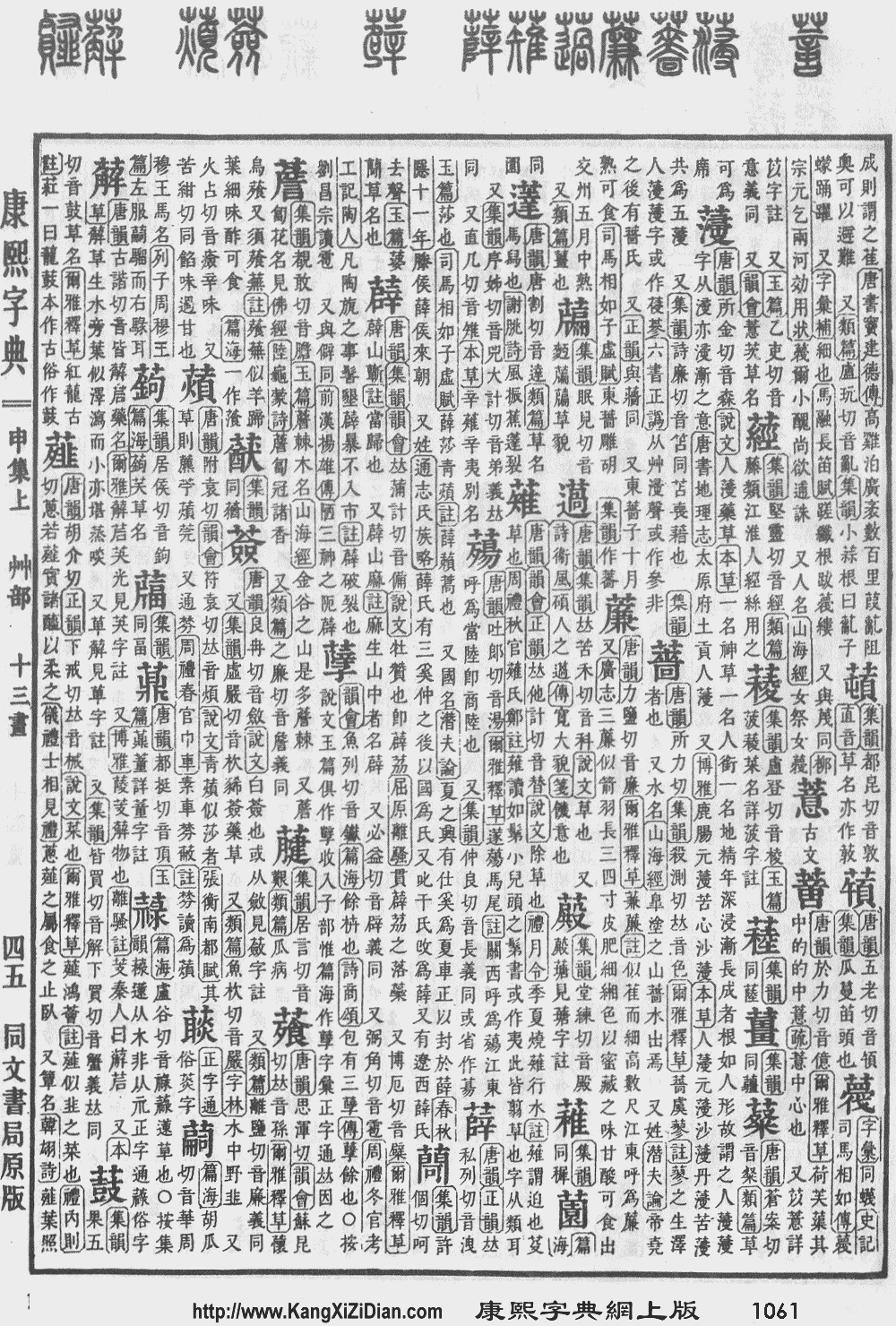
- KangXi: page 1061, character 30
- Dai Kanwa Jiten: character 32131
- Dae Jaweon: page 1525, character 25
- Hanyu Da Zidian (first edition): volume 5, page 3303, character 15
- Unihan data for U+859F
Chinese
Glyph origin
| Historical forms of the character 薟 |
|---|
| Shuowen Jiezi (compiled in Han) |
| Small seal script |
 |
Characters in the same phonetic series (僉) (Zhengzhang, 2003)
| Old Chinese | |
|---|---|
| 厱 | *raːm, *kʰreːm, *kʰlam |
| 歛 | *qʰlaːm |
| 臉 | *ɡ·reːmʔ, *skʰlam, *kramʔ |
| 醶 | *ɡr·reːmʔ, *skʰraːmʔ |
| 鹼 | *kreːmʔ, *skʰlam |
| 薟 | *ɡ·ram, *ɡ·ramʔ, *qʰram |
| 匳 | *ɡ·ram |
| 獫 | *ɡ·ram, *ɡ·ramʔ, *ɡ·rams, *qʰramʔ |
| 蘞 | *ɡ·ram, *ɡ·ramʔ, *qʰlam |
| 籢 | *ɡ·ram |
| 斂 | *ɡ·ramʔ, *ɡ·rams |
| 瀲 | *ɡ·ramʔ, *ɡ·rams |
| 撿 | *ɡ·ramʔ, *kramʔ |
| 羷 | *ɡ·ramʔ |
| 殮 | *ɡ·rams |
| 簽 | *skʰlam |
| 僉 | *skʰlam |
| 憸 | *skʰlam, *skʰlamʔ, *sqʰlam, *qʰramʔ |
| 譣 | *skʰlam, *qʰramʔ |
| 檢 | *kramʔ |
| 瞼 | *kramʔ |
| 儉 | *ɡramʔ |
| 顩 | *ŋramʔ, *rlɯmʔ, *kʰrɯmʔ |
| 嬐 | *ŋramʔ |
| 嶮 | *ŋramʔ, *hŋramʔ |
| 噞 | *ŋramʔ, *ŋrams |
| 驗 | *ŋrams |
| 險 | *qʰramʔ |
| 劒 | *kams |
| 劍 | *kams |
| 𩏩 | *qʰam |
Phono-semantic compound (形聲, OC *ɡ·ram, *ɡ·ramʔ, *qʰram) : semantic 艸 (“grass”) + phonetic 僉 (OC *skʰlam)
Etymology 1
| For pronunciation and definitions of 薟 – see 蘞 (“wild vine, vitis pentaphylla”). (This character, 薟, is a variant form of 蘞.) |
Pronunciation
Definitions
薟
Synonyms
Dialectal synonyms of 辣 (“spicy”) [map]
Descendants
- → English: hiam
References
- Dictionary of Chinese Character Variants (教育部異體字字典), C11965
- “Entry #12382”, in 臺灣閩南語常用詞辭典 [Dictionary of Frequently-Used Taiwan Minnan] (in Chinese and Min Nan), Ministry of Education, R.O.C., 2011.
- “薟”, in 漢語多功能字庫 (Multi-function Chinese Character Database), 香港中文大學 (the Chinese University of Hong Kong), 2014–
Japanese
Kanji
薟
- This term needs a translation to English. Please help out and add a translation, then remove the text
{{rfdef}}.
This article is issued from Wiktionary. The text is licensed under Creative Commons - Attribution - Sharealike. Additional terms may apply for the media files.