險
| ||||||||
Translingual
| Traditional | 險 |
|---|---|
| Shinjitai | 険 |
| Simplified | 险 |
Han character
險 (Kangxi radical 170, 阜+13, 16 strokes, cangjie input 弓中人一人 (NLOMO), four-corner 78286, composition ⿰阝僉)
Derived characters
- 𧂹
Related characters
- 険 (Japanese shinjitai)
- 险 (Simplified Chinese)
References
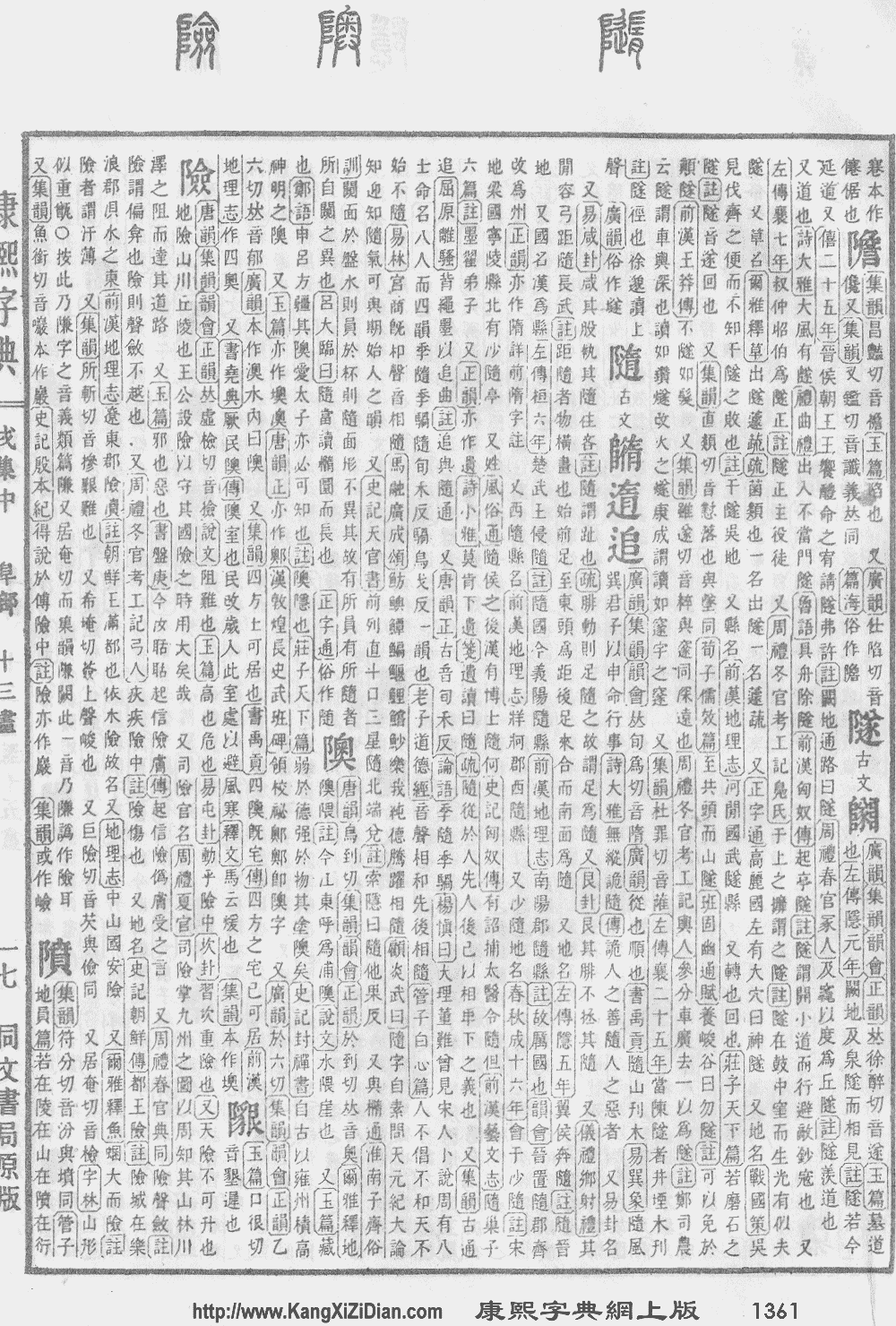
- KangXi: page 1361, character 10
- Dai Kanwa Jiten: character 41874
- Dae Jaweon: page 1865, character 3
- Hanyu Da Zidian (first edition): volume 6, page 4160, character 8
- Unihan data for U+96AA
Chinese
| trad. | 險 | |
|---|---|---|
| simp. | 险 | |
| alternative forms | 礆/硷 | |
Glyph origin
| Historical forms of the character 險 | |
|---|---|
| Shuowen Jiezi (compiled in Han) | Liushutong (compiled in Ming) |
| Small seal script | Transcribed ancient scripts |
 |
 |
Characters in the same phonetic series (僉) (Zhengzhang, 2003)
| Old Chinese | |
|---|---|
| 厱 | *raːm, *kʰreːm, *kʰlam |
| 歛 | *qʰlaːm |
| 臉 | *ɡ·reːmʔ, *skʰlam, *kramʔ |
| 醶 | *ɡr·reːmʔ, *skʰraːmʔ |
| 鹼 | *kreːmʔ, *skʰlam |
| 薟 | *ɡ·ram, *ɡ·ramʔ, *qʰram |
| 匳 | *ɡ·ram |
| 獫 | *ɡ·ram, *ɡ·ramʔ, *ɡ·rams, *qʰramʔ |
| 蘞 | *ɡ·ram, *ɡ·ramʔ, *qʰlam |
| 籢 | *ɡ·ram |
| 斂 | *ɡ·ramʔ, *ɡ·rams |
| 瀲 | *ɡ·ramʔ, *ɡ·rams |
| 撿 | *ɡ·ramʔ, *kramʔ |
| 羷 | *ɡ·ramʔ |
| 殮 | *ɡ·rams |
| 簽 | *skʰlam |
| 僉 | *skʰlam |
| 憸 | *skʰlam, *skʰlamʔ, *sqʰlam, *qʰramʔ |
| 譣 | *skʰlam, *qʰramʔ |
| 檢 | *kramʔ |
| 瞼 | *kramʔ |
| 儉 | *ɡramʔ |
| 顩 | *ŋramʔ, *rlɯmʔ, *kʰrɯmʔ |
| 嬐 | *ŋramʔ |
| 嶮 | *ŋramʔ, *hŋramʔ |
| 噞 | *ŋramʔ, *ŋrams |
| 驗 | *ŋrams |
| 險 | *qʰramʔ |
| 劒 | *kams |
| 劍 | *kams |
| 𩏩 | *qʰam |
Phono-semantic compound (形聲, OC *qʰramʔ) : semantic 阝 + phonetic 僉 (OC *skʰlam).
Pronunciation
Definitions
險
- (of terrain) difficult and treacherous
- (now in compounds) narrow pass; treacherous place; strategic point
- (now dialectal or in compounds) danger; hazard; peril; risk
- 冒險/冒险 ― màoxiǎn ― to take a risk
- 脫險/脱险 ― tuōxiǎn ― to escape danger
- 避過呢場險 [Guangzhou Cantonese, trad.]
- From: 2002, 李榮 (Li Rong), chief editor, 《現代漢語方言大詞典》 [Great Dictionary of Modern Chinese Dialects], Nanjing: Jiangsu Education Publishing House, →ISBN, page 5595
- bei6 gwo3 nei1 coeng4 him2 [Jyutping]
- (please add an English translation of this example)
避过呢场险 [Guangzhou Cantonese, simp.]
- 故君子居易以俟命,小人行險以徼幸。 [Classical Chinese, trad.]
- From: The Book of Rites, c. 4th – 2nd century BCE
- Gù jūnzǐ jūyì yǐ sìmìng, xiǎorén xíngxiǎn yǐ jiàoxìng. [Pinyin]
- Thus it is that the superior man is quiet and calm, waiting for the appointments of Heaven, while the mean man walks in dangerous paths, looking for lucky occurrences.
故君子居易以俟命,小人行险以徼幸。 [Classical Chinese, simp.]
- dangerous; hazardous
- 驚險/惊险 ― jīngxiǎn ― breathtaking
- 險得滯 [Guangzhou Cantonese, trad.]
- From: 2002, 李榮 (Li Rong), chief editor, 《現代漢語方言大詞典》 [Great Dictionary of Modern Chinese Dialects], Nanjing: Jiangsu Education Publishing House, →ISBN, page 5595
- him2 dak1 zai6 [Jyutping]
- too dangerous
险得滞 [Guangzhou Cantonese, simp.]
- (now dialectal or in compounds) sinister; vicious
- (of bad things) almost; nearly
- (in compounds) Short for 保險/保险 (bǎoxiǎn, “insurance”).
Synonyms
- (almost):
Synonyms of 險
Compounds
Derived terms from 險
|
|
|
Descendants
References
- “險”, in 漢語多功能字庫 (Multi-function Chinese Character Database), 香港中文大學 (the Chinese University of Hong Kong), 2014–
Japanese
| 険 | |
| 險 |
Kanji
險
(“Jinmeiyō” kanji used for names, kyūjitai kanji, shinjitai form 険)
- This term needs a translation to English. Please help out and add a translation, then remove the text
{{rfdef}}.
Korean
Hanja
險 • (heom) (hangeul 험, revised heom, McCune–Reischauer hŏm, Yale hem)
- This term needs a translation to English. Please help out and add a translation, then remove the text
{{rfdef}}.
Vietnamese
Han character
險: Hán Việt readings: hiểm[1][2][3][4][5][6]
險: Nôm readings: hiểm[1], hẻm[7], hiếm[2][7], hĩm[3]
References
- Nguyễn (2014).
- Nguyễn et al. (2009).
- Trần (2004).
- Trần (1999).
- Nguyễn (1974).
- Thiều Chửu (1942).
- Hồ (1976).
This article is issued from Wiktionary. The text is licensed under Creative Commons - Attribution - Sharealike. Additional terms may apply for the media files.