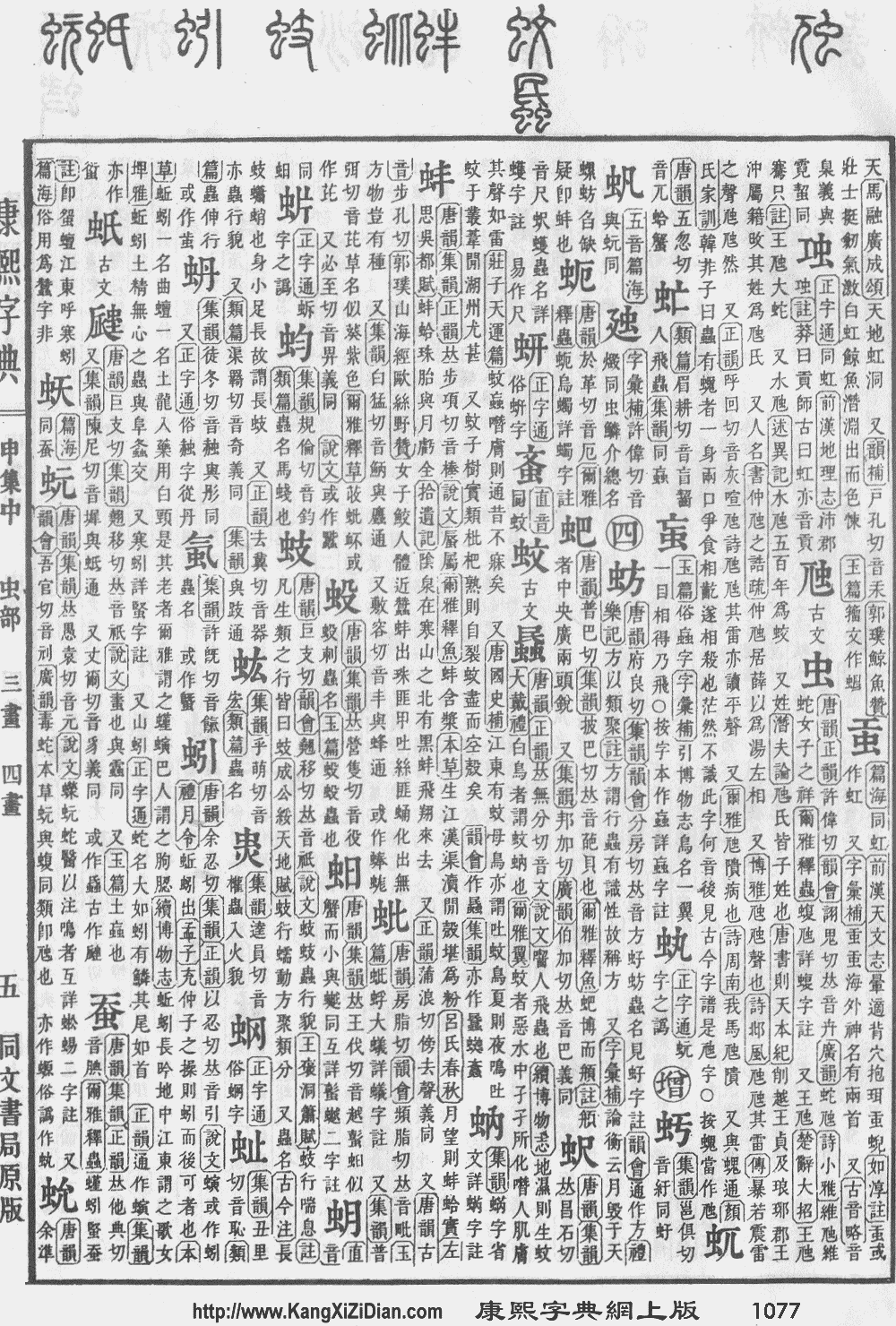
虺

See also: 蝰
虺 U+867A, 虺
CJK UNIFIED IDEOGRAPH-867A
← 虹
[U+8679]
CJK Unified Ideographs 虻 →
[U+867B]

Translingual

Han character

虺 (Kangxi radical 142, 虫+3, 9 strokes, cangjie input 一山中一戈 (MULMI), four-corner 15213, composition ⿺兀虫)

Derived characters

  • 𣸀, 𩄁

References

  • KangXi: page 1077, character 3
  • Dai Kanwa Jiten: character 32833
  • Dae Jaweon: page 1545, character 26
  • Hanyu Da Zidian (first edition): volume 4, page 2834, character 15
  • Unihan data for U+867A

Chinese

simp. and trad.
虺
alternative forms 虫 ancient
螝
𩗝
𡯥
𧉇

Glyph origin

Phono-semantic compound (形聲, OC *hŋuːl, *hŋruːl, *hŋlulʔ) : phonetic 兀 (OC *ŋuːd) + semantic 虫.

Etymology

“venomous snake”
From Proto-Sino-Tibetan *s-b/m-ruːl (“snake”). Cognate with Tibetan སྦྲུལ (sbrul), Japhug qapri, Chepang रु (ru), Burmese မြွေ (mrwe), S'gaw Karen ဂုၢ် (ghu̱).

Pronunciation 1


Rime
Character 虺
Reading # 3/3
Initial (聲) 曉 (32)
Final (韻) 微 (21)
Tone (調) Rising (X)
Openness (開合) Closed
Division (等) III
Fanqie 許偉切
Reconstructions
Zhengzhang
Shangfang
/hʉiX/
Pan
Wuyun
/hʷɨiX/
Shao
Rongfen
/xiuəiX/
Edwin
Pulleyblank
/hujX/
Li
Rong
/xiuəiX/
Wang
Li
/xĭwəiX/
Bernard
Karlgren
/xwe̯iX/
Expected
Mandarin
Reflex
huǐ
Expected
Cantonese
Reflex
fai2
Baxter–Sagart system 1.1 (2014)
Character 虺 虺
Reading # 2/3 3/3
Modern
Beijing
(Pinyin)
huǐ huǐ
Middle
Chinese
‹ xjwɨjX › ‹ xjwɨjX ›
Old
Chinese
/*[r̥]u[j]ʔ/ (W dialect: *r̥- > MC x-) /*r̥u[j]ʔ/ (W dialect: *r̥- > MC x-)
English snake-brood sound of thunder

Notes for Old Chinese notations in the Baxter–Sagart system:

* Parentheses "()" indicate uncertain presence;
* Square brackets "[]" indicate uncertain identity, e.g. *[t] as coda may in fact be *-t or *-p;
* Angle brackets "<>" indicate infix;
* Hyphen "-" indicates morpheme boundary;

* Period "." indicates syllable boundary.
Zhengzhang system (2003)
Character 虺
Reading # 3/3
No. 13193
Phonetic
component
兀
Rime
group
微
Rime
subdivision
2
Corresponding
MC rime
虺
Old
Chinese
/*hŋlulʔ/

Definitions

虺

  1. (Chinese mythology) venomous snake
  2. (Waxiang) snake
Synonyms

Compounds

  • 虺蜴
  • 虺豺 (huǐchái)
  • 夢虺/梦虺
  • 虺蛇入夢/虺蛇入梦
  • 蟠虺紋/蟠虺纹
  • 養虺成蛇/养虺成蛇

Pronunciation 2


Rime
Character 虺 虺
Reading # 1/3 2/3
Initial (聲) 曉 (32) 曉 (32)
Final (韻) 皆 (34) 灰 (42)
Tone (調) Level (Ø) Level (Ø)
Openness (開合) Closed Closed
Division (等) II I
Fanqie 呼懷切 呼恢切
Reconstructions
Zhengzhang
Shangfang
/hˠuɛi/ /huʌi/
Pan
Wuyun
/hʷᵚæi/ /huoi/
Shao
Rongfen
/xuɐi/ /xuɒi/
Edwin
Pulleyblank
/hwəɨj/ /hwəj/
Li
Rong
/xuɛi/ /xuᴀi/
Wang
Li
/xwɐi/ /xuɒi/
Bernard
Karlgren
/xwăi/ /xuɑ̆i/
Expected
Mandarin
Reflex
huāi huī
Expected
Cantonese
Reflex
faai1 fui1
Baxter–Sagart system 1.1 (2014)
Character 虺
Reading # 1/3
Modern
Beijing
(Pinyin)
huī
Middle
Chinese
‹ xwoj ›
Old
Chinese
/*[r̥]ˁu[j]/ (W dialect: *r̥- > MC x-)
English exhausted, weary

Notes for Old Chinese notations in the Baxter–Sagart system:

* Parentheses "()" indicate uncertain presence;
* Square brackets "[]" indicate uncertain identity, e.g. *[t] as coda may in fact be *-t or *-p;
* Angle brackets "<>" indicate infix;
* Hyphen "-" indicates morpheme boundary;

* Period "." indicates syllable boundary.
Zhengzhang system (2003)
Character 虺 虺
Reading # 1/3 2/3
No. 13189 13192
Phonetic
component
兀 兀
Rime
group
微 微
Rime
subdivision
2 2
Corresponding
MC rime
灰 虺
Old
Chinese
/*hŋuːl/ /*hŋruːl/

Definitions

虺

  1. Used in 虺隤/虺𬯎 (“sick; ambitionless”).

Compounds

  • 虺穨/虺颓
  • 虺隤/虺𬯎
  • 虺頽/虺颓

References

Japanese

Kanji

虺

(uncommon “Hyōgai” kanji)

  1. large poisonous snake

Readings

Alternative forms

  • (ancient form) 虫

Korean

Hanja

虺 • (hwe) (hangeul 훼, revised hwe, McCune–Reischauer hwe, Yale hwey)

  1. viper
  2. big snake

Vietnamese

Han character

虺: Hán Nôm readings: hủy/huỷ

  1. This term needs a translation to English. Please help out and add a translation, then remove the text {{rfdef}}.
This article is issued from Wiktionary. The text is licensed under Creative Commons - Attribution - Sharealike. Additional terms may apply for the media files.