轛

轛 U+8F5B, 轛
CJK UNIFIED IDEOGRAPH-8F5B
← 轚
[U+8F5A]
CJK Unified Ideographs 轜 →
[U+8F5C]

Translingual

Han character

轛 (Kangxi radical 159, 車+14, 21 strokes, cangjie input 十十廿土戈 (JJTGI) or X十十廿土 (XJJTG), four-corner 54000, composition ⿰車對)

References

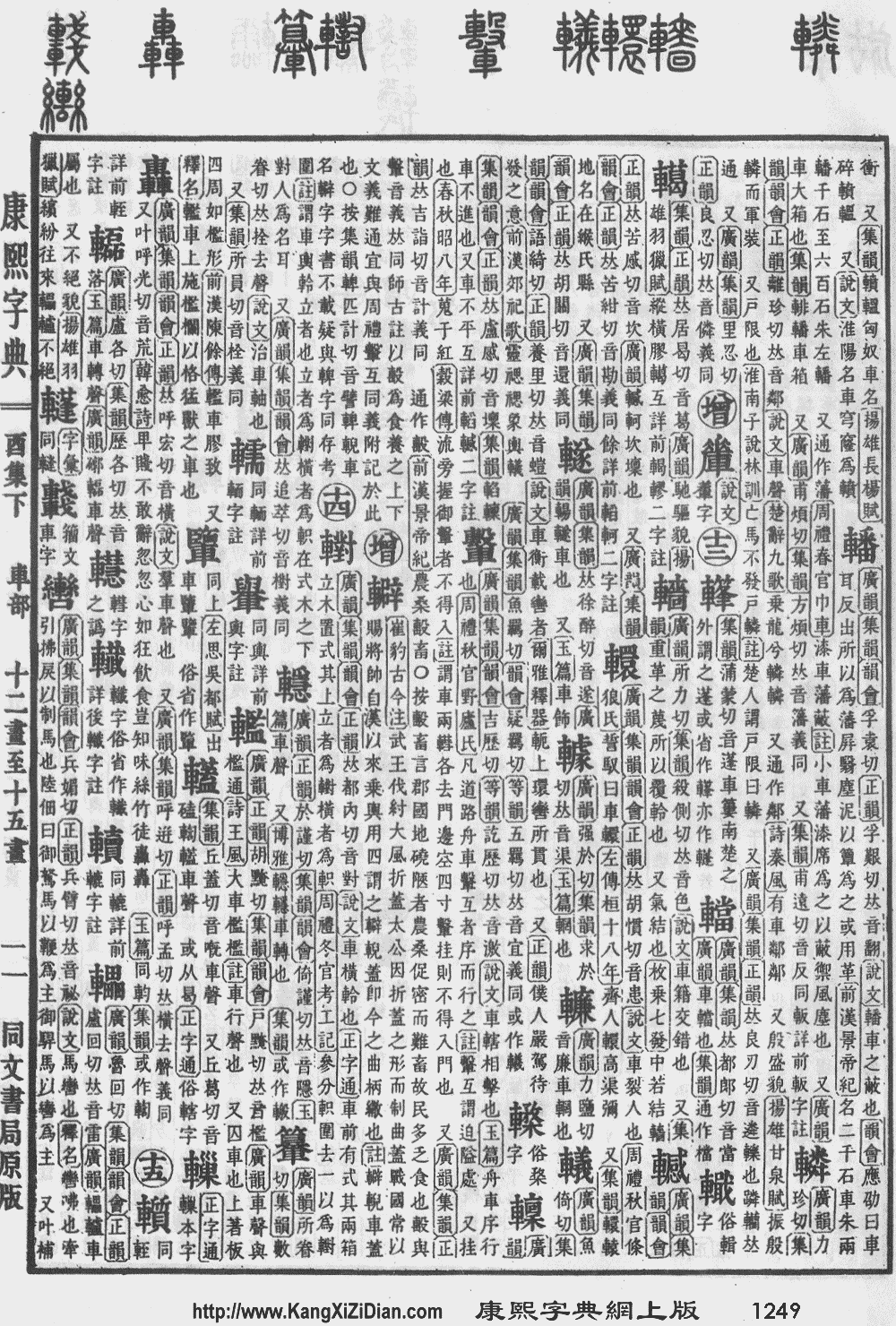
  • KangXi: page 1249, character 19
  • Dai Kanwa Jiten: character 38568
  • Dae Jaweon: page 1728, character 10
  • Hanyu Da Zidian (first edition): volume 5, page 3560, character 4
  • Unihan data for U+8F5B

Chinese

trad. 轛
simp. 𰺃

Glyph origin

Pronunciation


Rime
Character 轛 轛
Reading # 1/2 2/2
Initial (聲) 知 (9) 端 (5)
Final (韻) 脂 (18) 灰 (42)
Tone (調) Departing (H) Departing (H)
Openness (開合) Closed Closed
Division (等) III I
Fanqie 追萃切 都隊切
Reconstructions
Zhengzhang
Shangfang
/ʈˠiuɪH/ /tuʌiH/
Pan
Wuyun
/ʈʷᵚiH/ /tuoiH/
Shao
Rongfen
/ȶiuɪH/ /tuɒiH/
Edwin
Pulleyblank
/ʈjwiH/ /twəjH/
Li
Rong
/ȶjuiH/ /tuᴀiH/
Wang
Li
/ȶwiH/ /tuɒiH/
Bernard
Karlgren
/ȶwiH/ /tuɑ̆iH/
Expected
Mandarin
Reflex
zhuì duì
Expected
Cantonese
Reflex
zeoi3 deoi3
Baxter–Sagart system 1.1 (2014)
Character 轛
Reading # 1/1
Modern
Beijing
(Pinyin)
duì
Middle
Chinese
‹ trwijH ›
Old
Chinese
/*[t]<r>u[t]-s/
English wooden crosspieces under carriage box

Notes for Old Chinese notations in the Baxter–Sagart system:

* Parentheses "()" indicate uncertain presence;
* Square brackets "[]" indicate uncertain identity, e.g. *[t] as coda may in fact be *-t or *-p;
* Angle brackets "<>" indicate infix;
* Hyphen "-" indicates morpheme boundary;

* Period "." indicates syllable boundary.
Zhengzhang system (2003)
Character 轛 轛
Reading # 1/2 2/2
No. 2581 2584
Phonetic
component
對 對
Rime
group
內 內
Rime
subdivision
2 2
Corresponding
MC rime
對 轛
Old
Chinese
/*tuːbs/ /*tubs/

Definitions

轛

  1. (obsolete) wooden crosspieces under a carriage crossbar
This article is issued from Wiktionary. The text is licensed under Creative Commons - Attribution - Sharealike. Additional terms may apply for the media files.