颻

See also: 飖
颻 U+98BB, 颻
CJK UNIFIED IDEOGRAPH-98BB
← 颺
[U+98BA]
CJK Unified Ideographs 颼 →
[U+98BC]

Translingual

Han character

颻 (Kangxi radical 182, 風+10, 19 strokes, cangjie input 月山竹弓戈 (BUHNI), four-corner 27710, composition ⿰䍃風)

  1. sway
  2. floating in air, drifting with the wind

References

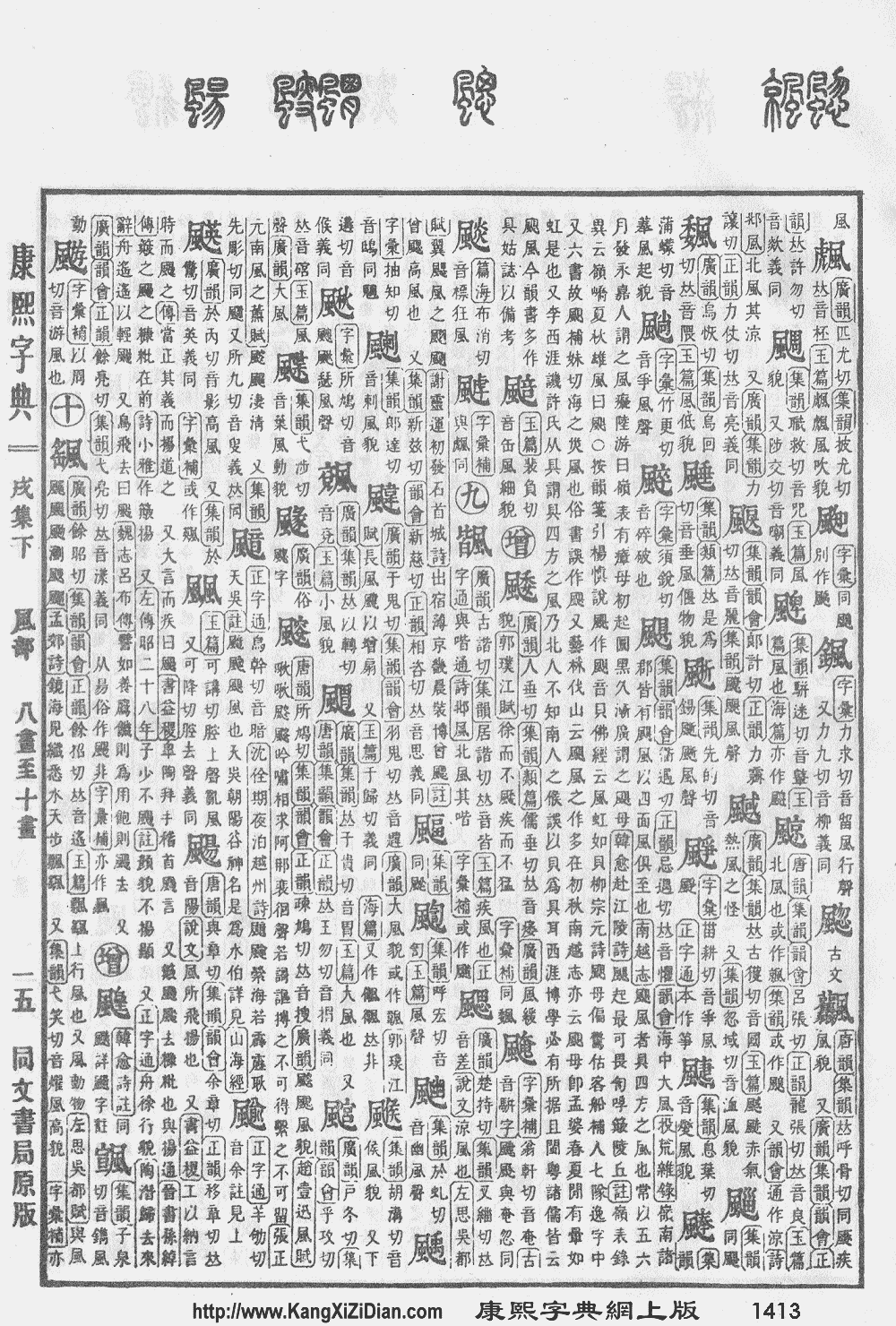
  • KangXi: page 1413, character 50
  • Dai Kanwa Jiten: character 43917
  • Dae Jaweon: page 1936, character 3
  • Hanyu Da Zidian (first edition): volume 7, page 4490, character 7
  • Unihan data for U+98BB

Chinese

trad. 颻
simp. 飖

Glyph origin

Pronunciation


Rime
Character 颻
Reading # 1/1
Initial (聲) 以 (36)
Final (韻) 宵 (91)
Tone (調) Level (Ø)
Openness (開合) Open
Division (等) III
Fanqie 餘昭切
Reconstructions
Zhengzhang
Shangfang
/jiᴇu/
Pan
Wuyun
/jiɛu/
Shao
Rongfen
/jæu/
Edwin
Pulleyblank
/jiaw/
Li
Rong
/iɛu/
Wang
Li
/jĭɛu/
Bernard
Karlgren
/i̯ɛu/
Expected
Mandarin
Reflex
yáo
Expected
Cantonese
Reflex
jiu4
Zhengzhang system (2003)
Character 颻
Reading # 1/1
No. 14711
Phonetic
component
謠
Rime
group
宵
Rime
subdivision
3
Corresponding
MC rime
遙
Old
Chinese
/*lew/

Definitions

颻

  1. floating in the air; drifting with the wind
  2. sway

Compounds

  • 颻颺/飖飏

Japanese

Kanji

颻

(uncommon “Hyōgai” kanji)

  1. floating in air
  2. drifting with wind

Readings

  • On (unclassified): よう (yō)

Korean

Hanja

颻 • (yo) (hangeul 요, revised yo, McCune–Reischauer yo)

  1. wind
  2. gale
This article is issued from Wiktionary. The text is licensed under Creative Commons - Attribution - Sharealike. Additional terms may apply for the media files.