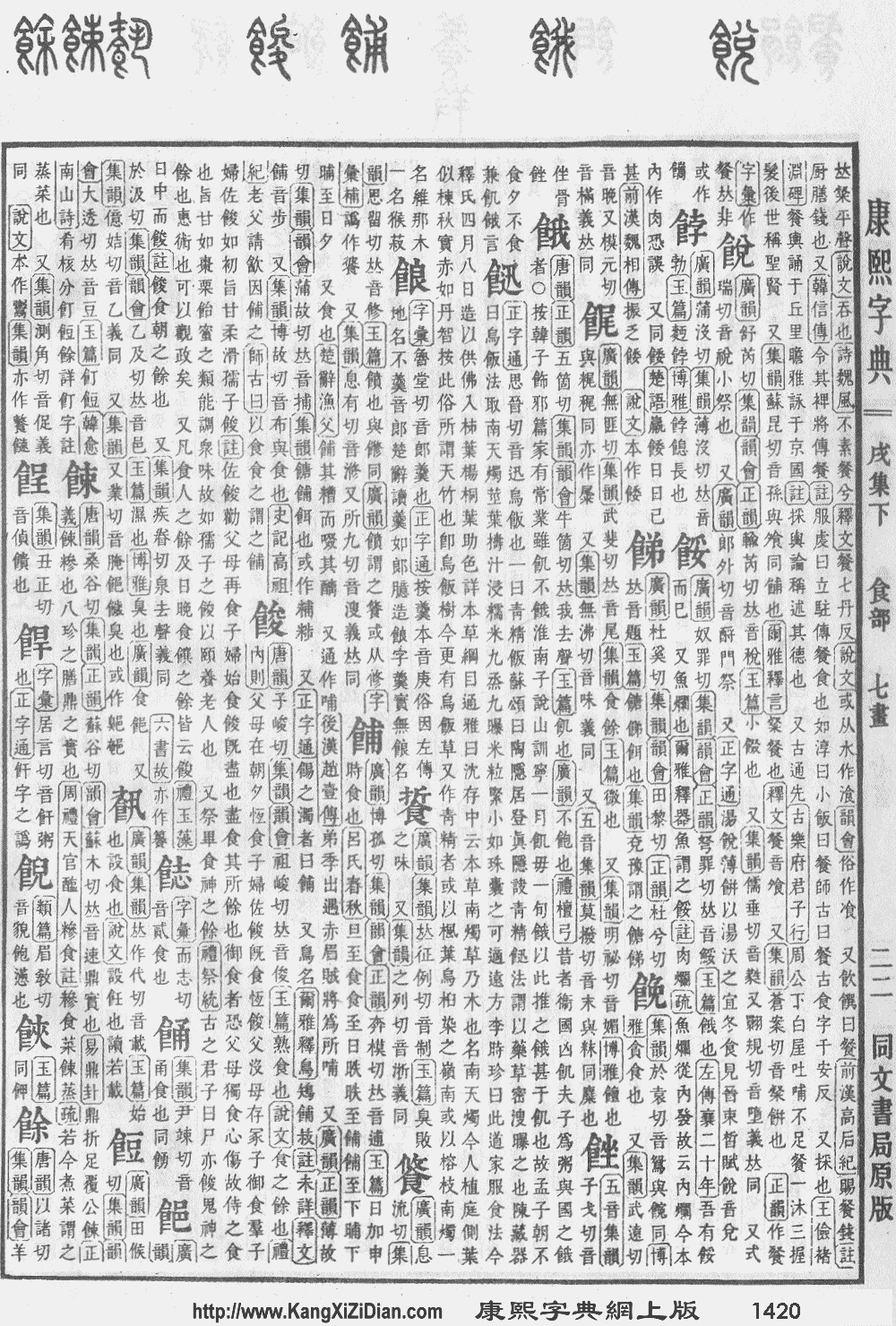
餒

See also: 馁
餒 U+9912, 餒
CJK UNIFIED IDEOGRAPH-9912
← 餑
[U+9911]
CJK Unified Ideographs 餓 →
[U+9913]

Translingual

Han character

餒 (Kangxi radical 184, 食+7, 16 strokes, cangjie input 人戈月女 (OIBV), four-corner 82744, composition ⿰飠妥)

Derived characters

  • 𤃠 𩟼 𥷓

References

  • KangXi: page 1420, character 3
  • Dai Kanwa Jiten: character 44163
  • Dae Jaweon: page 1945, character 3
  • Hanyu Da Zidian (first edition): volume 7, page 4457, character 3
  • Unihan data for U+9912

Chinese

trad. 餒
simp. 馁

Glyph origin

Pronunciation


Rime
Character 餒
Reading # 1/1
Initial (聲) 泥 (8)
Final (韻) 灰 (42)
Tone (調) Rising (X)
Openness (開合) Closed
Division (等) I
Fanqie 奴罪切
Reconstructions
Zhengzhang
Shangfang
/nuʌiX/
Pan
Wuyun
/nuoiX/
Shao
Rongfen
/nuɒiX/
Edwin
Pulleyblank
/nwəjX/
Li
Rong
/nuᴀiX/
Wang
Li
/nuɒiX/
Bernard
Karlgren
/nuɑ̆iX/
Expected
Mandarin
Reflex
něi
Expected
Cantonese
Reflex
neoi5
Baxter–Sagart system 1.1 (2014)
Character 餒
Reading # 1/1
Modern
Beijing
(Pinyin)
něi
Middle
Chinese
‹ nwojX ›
Old
Chinese
/*nˁujʔ/
English hungry, starve

Notes for Old Chinese notations in the Baxter–Sagart system:

* Parentheses "()" indicate uncertain presence;
* Square brackets "[]" indicate uncertain identity, e.g. *[t] as coda may in fact be *-t or *-p;
* Angle brackets "<>" indicate infix;
* Hyphen "-" indicates morpheme boundary;

* Period "." indicates syllable boundary.
Zhengzhang system (2003)
Character 餒
Reading # 1/1
No. 12590
Phonetic
component
妥
Rime
group
微
Rime
subdivision
2
Corresponding
MC rime
餧
Old
Chinese
/*nuːlʔ/
Notes 同説文餧,本妥聲

Definitions

餒

  1. hungry; starving; famished
    凍餒/冻馁  ―  dòngněi  ―  cold and hungry
  2. discouraged
    氣餒/气馁  ―  qìněi  ―  to be discouraged
    勝不驕,敗不餒/胜不骄,败不馁  ―  shèng bù jiāo, bài bù něi  ―  There is no arrogance in victory, no despair in defeat
  3. (obsolete, of fish) rotten; putrid

Compounds

  • 飢餒/饥馁 (jīněi)
  • 餒士/馁士
  • 餒怯/馁怯
  • 餒死/馁死
  • 餒殍相望/馁殍相望
  • 餒病/馁病
  • 餒餓/馁饿

Japanese

Kanji

餒

(uncommon “Hyōgai” kanji)

  1. This term needs a translation to English. Please help out and add a translation, then remove the text {{rfdef}}.

Readings

  • Go-on: ない (nai)
  • Kan-on: だい (dai)
  • Kun: うえる (ueru, 餒える)

Korean

Hanja

餒 • (noe) (hangeul 뇌, revised noe, McCune–Reischauer noe, Yale noy)

  1. This term needs a translation to English. Please help out and add a translation, then remove the text {{rfdef}}.
This article is issued from Wiktionary. The text is licensed under Creative Commons - Attribution - Sharealike. Additional terms may apply for the media files.