駁
| ||||||||
Translingual
Han character
駁 (Kangxi radical 187, 馬+4, 14 strokes, cangjie input 尸火大大 (SFKK), four-corner 74340, composition ⿰馬爻)
Derived characters
- 礟, 𫬇
References
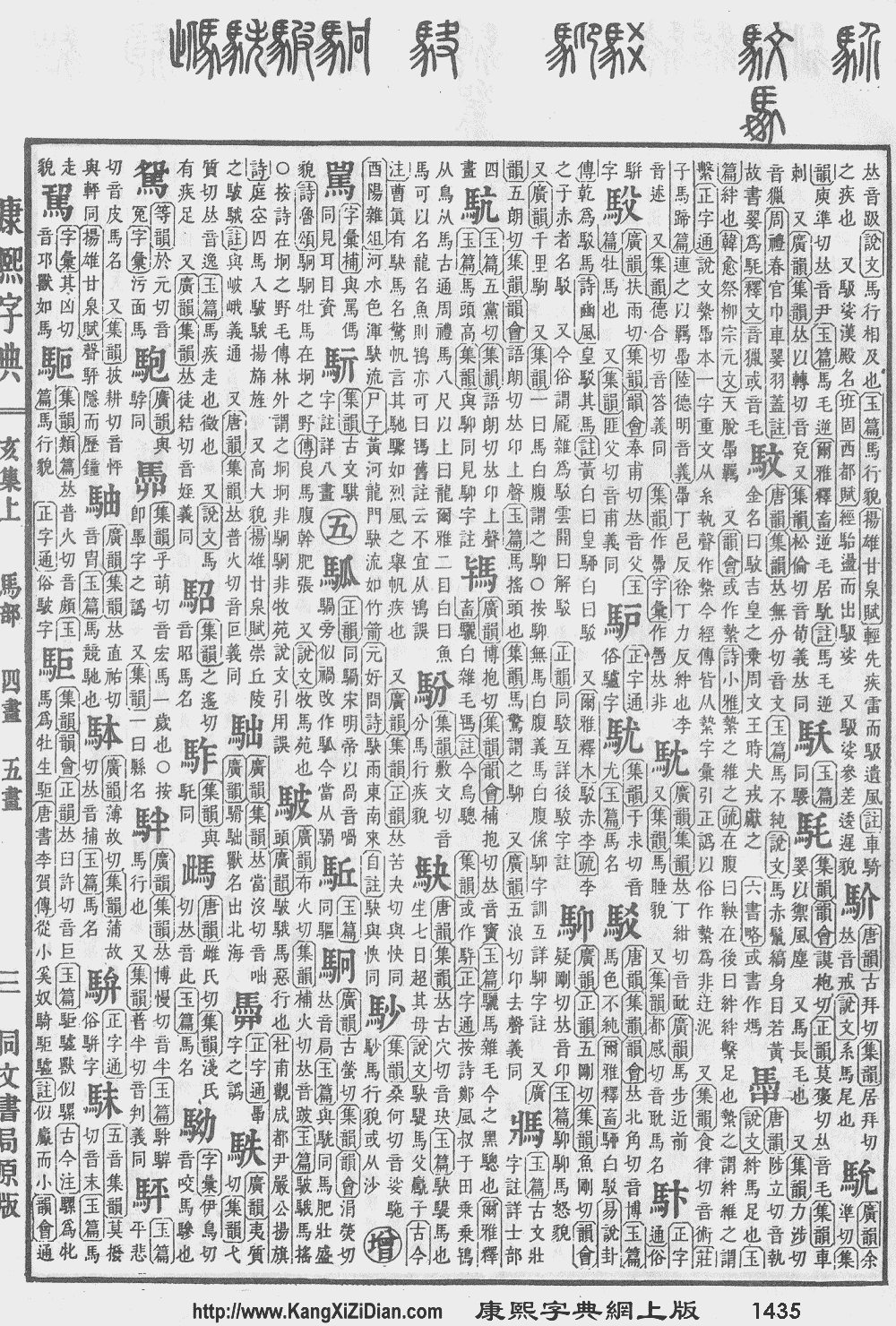
- KangXi: page 1435, character 12
- Dai Kanwa Jiten: character 44619
- Dae Jaweon: page 1959, character 23
- Hanyu Da Zidian (first edition): volume 7, page 4544, character 9
- Unihan data for U+99C1
Chinese
| trad. | 駁 | |
|---|---|---|
| simp. | 驳 | |
| alternative forms | 駮/驳 | |
Glyph origin
Characters in the same phonetic series (爻) (Zhengzhang, 2003)
Phono-semantic compound (形聲, OC *praːwɢ) : semantic 馬 (“horse”) + phonetic 爻 (OC *ɢraːw).
Etymology
From Proto-Sino-Tibetan *bruk (“piebald”) (Schuessler, 2007, STEDT); cognate with Burmese ပြောက် (prauk, “spotted, speckled”), Karbi pʰròk, Jingpho prúʔ, Mru preu (“of mixed colors”). Another Chinese cognate may be 斑 (OC *praːn).
豹 (OC *preːwɢs, “leopard”) is its exopassive derivative, literally meaning, "the spotted one".
Pronunciation
Definitions
駁
- (of a horse's fur) variegated
- mixed; heterogenous; impure
- 駁雜/驳杂 ― bózá ― multifarious
- 粹而王,駁而伯,無一焉而亡。 [Classical Chinese, trad.]
- From: Xunzi, c. 3rd century BCE
- Cuì ér wàng, bó ér bà, wú yī yān ér wáng. [Pinyin]
- Those who possess its essence shall be elevated King; even its impure application creates a great power; without it, one is doomed to ruin.
粹而王,驳而伯,无一焉而亡。 [Classical Chinese, simp.]
- to refute; to rebut
- to transport by barge
- barge; lighter
- suddenly
- Alternative form of 駮/驳 (bó, “a mythical beast that can eat tigers”).
Compounds
Japanese
Korean
Etymology
From Middle Chinese 駁 (MC pˠʌk̚). Recorded as Early Modern Korean 박 (Yale: pak) in Samun Seonghwi (三韻聲彙 / 삼운성휘), 1751.
Pronunciation
- (SK Standard/Seoul) IPA(key): [pa̠k̚]
- Phonetic hangul: [박]
Compounds
Vietnamese
This article is issued from Wiktionary. The text is licensed under Creative Commons - Attribution - Sharealike. Additional terms may apply for the media files.