亡
| ||||||||
Translingual
| Stroke order | |||
|---|---|---|---|
 | |||
Han character
亡 (Kangxi radical 8, 亠+1, 3 strokes, cangjie input 卜女 (YV), four-corner 00710, composition ⿱亠𠃊(GV) or ⿱亠㇄(HTJK) or ⿱丶匸 or ⿱丨匸)
Derived characters
References
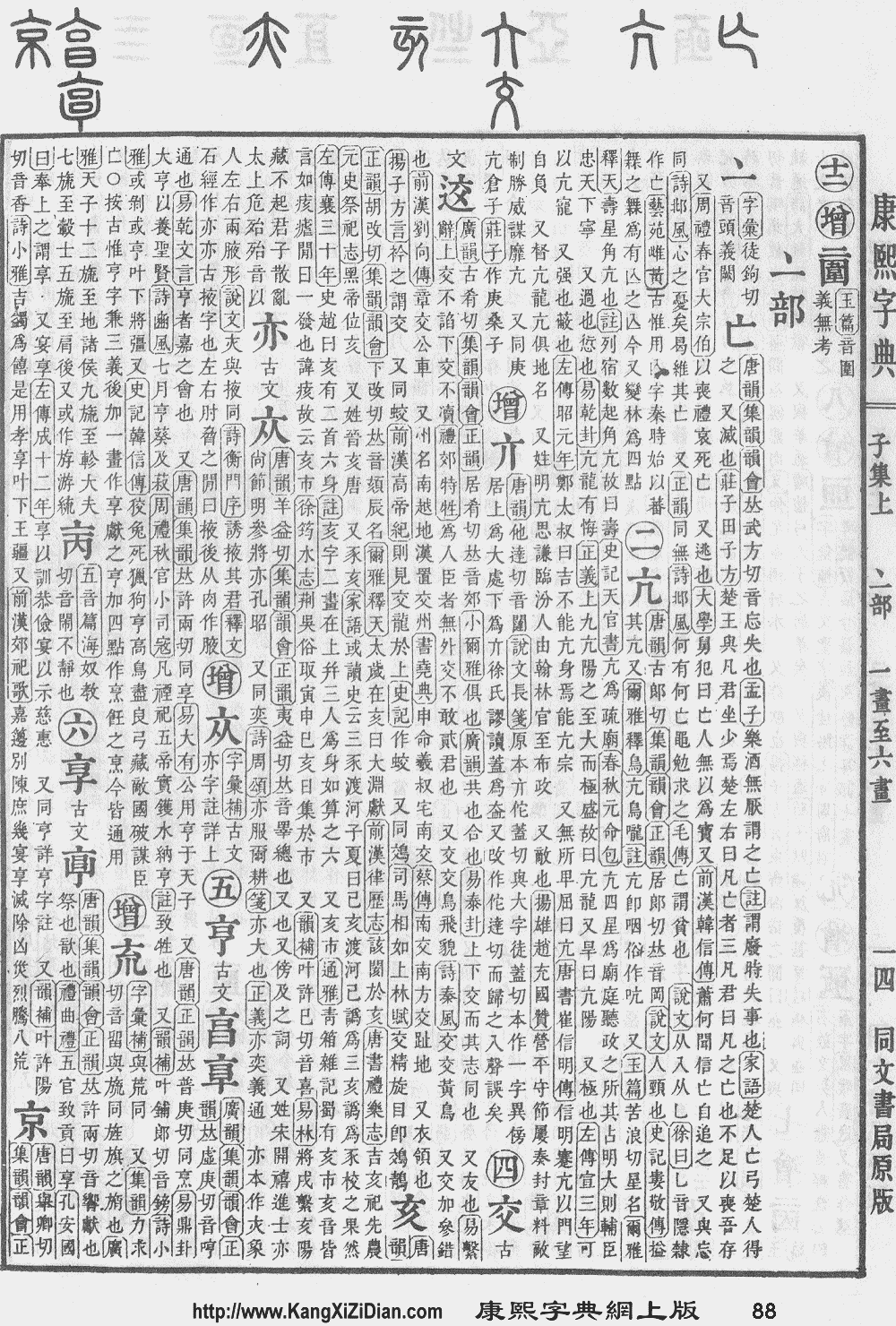
- KangXi: page 88, character 3
- Dai Kanwa Jiten: character 287
- Dae Jaweon: page 184, character 13
- Hanyu Da Zidian (first edition): volume 1, page 279, character 5
- Unihan data for U+4EA1
Chinese
| trad. | 亡 | |
|---|---|---|
| simp. # | 亡 | |
| alternative forms | 亾 𬼖 | |
Glyph origin
| Historical forms of the character 亡 | ||||||||||||||||||||||||||||||||||||||||||||||||||||||||||||||||||||||||||||||||||||||||||||||||||||||||||||||||||||||||||||||||||||||||||||||||||||||||||||||||||||||||||||||||||||||||||||||||||||||
|---|---|---|---|---|---|---|---|---|---|---|---|---|---|---|---|---|---|---|---|---|---|---|---|---|---|---|---|---|---|---|---|---|---|---|---|---|---|---|---|---|---|---|---|---|---|---|---|---|---|---|---|---|---|---|---|---|---|---|---|---|---|---|---|---|---|---|---|---|---|---|---|---|---|---|---|---|---|---|---|---|---|---|---|---|---|---|---|---|---|---|---|---|---|---|---|---|---|---|---|---|---|---|---|---|---|---|---|---|---|---|---|---|---|---|---|---|---|---|---|---|---|---|---|---|---|---|---|---|---|---|---|---|---|---|---|---|---|---|---|---|---|---|---|---|---|---|---|---|---|---|---|---|---|---|---|---|---|---|---|---|---|---|---|---|---|---|---|---|---|---|---|---|---|---|---|---|---|---|---|---|---|---|---|---|---|---|---|---|---|---|---|---|---|---|---|---|---|---|
| Shang | Western Zhou | Warring States | Shuowen Jiezi (compiled in Han) | Liushutong (compiled in Ming) | ||||||||||||||||||||||||||||||||||||||||||||||||||||||||||||||||||||||||||||||||||||||||||||||||||||||||||||||||||||||||||||||||||||||||||||||||||||||||||||||||||||||||||||||||||||||||||||||||||
| Oracle bone script | Bronze inscriptions | Chu slip and silk script | Small seal script | Transcribed ancient scripts | ||||||||||||||||||||||||||||||||||||||||||||||||||||||||||||||||||||||||||||||||||||||||||||||||||||||||||||||||||||||||||||||||||||||||||||||||||||||||||||||||||||||||||||||||||||||||||||||||||
 |
 |
 |
 |
 | ||||||||||||||||||||||||||||||||||||||||||||||||||||||||||||||||||||||||||||||||||||||||||||||||||||||||||||||||||||||||||||||||||||||||||||||||||||||||||||||||||||||||||||||||||||||||||||||||||
||||
|
References: Mostly from Richard Sears' Chinese Etymology site (authorisation),
| ||||||||||||||||||||||||||||||||||||||||||||||||||||||||||||||||||||||||||||||||||||||||||||||||||||||||||||||||||||||||||||||||||||||||||||||||||||||||||||||||||||||||||||||||||||||||||||||||||||||


| Old Chinese | |
|---|---|
| 忙 | *maːŋ |
| 芒 | *maːŋ, *maŋ |
| 茫 | *maːŋ |
| 恾 | *maːŋ |
| 吂 | *maːŋ, *maːŋs |
| 汒 | *maːŋ, *maŋs |
| 朚 | *maːŋ, *hmaːŋ, *maŋ, *mraːŋ, *mraːŋs |
| 邙 | *maːŋ, *maŋ |
| 杗 | *maːŋ, *maŋ |
| 荒 | *hmaːŋ, *hmaːŋs |
| 肓 | *hmaːŋ |
| 衁 | *hmaːŋ |
| 巟 | *hmaːŋ |
| 詤 | *hmaːŋ, *hmaːŋʔ, *hmaŋʔ |
| 慌 | *hmaːŋ, *hmaːŋʔ |
| 謊 | *hmaːŋʔ |
| 喪 | *smaːŋs, *smaːŋ |
| 亡 | *maŋ |
| 望 | *maŋ, *maŋs |
| 莣 | *maŋ |
| 朢 | *maŋ, *maŋs |
| 鋩 | *maŋ |
| 硭 | *maŋ |
| 忘 | *maŋ, *maŋs |
| 网 | *mlaŋʔ |
| 罔 | *mlaŋʔ |
| 蛧 | *maŋʔ |
| 網 | *mlaŋʔ |
| 輞 | *maŋʔ |
| 棢 | *maŋʔ |
| 惘 | *maŋʔ |
| 菵 | *maŋʔ |
| 誷 | *maŋʔ |
| 魍 | *maŋʔ |
| 妄 | *maŋs |
| 盲 | *mraːŋ |
| 蝱 | *mraːŋ |
| 虻 | *mraːŋ |
| 氓 | *mraːŋ |
| 甿 | *mraːŋ |
Ideogram (指事) : a line on 刀 – cutting edge of a knife; the original form of 芒 (OC *maːŋ, *maŋ, “edge of a knife”).
Etymology
From Proto-Sino-Tibetan *ma (“not”) + Proto-Sino-Tibetan terminative suffix *-ŋ. Cognate with 忘 (OC *maŋ, *maŋs, “to forget”), 罔 (OC *mlaŋʔ, “to not have”), 荒 (OC *hmaːŋ, *hmaːŋs, “to waste (land, time)”) and 喪 (OC *smaːŋs, *smaːŋ, “to lose”).
Pronunciation 1
Definitions
亡
- to flee
- 逃亡 ― táowáng ― to flee
- to lose
- to die
- to perish
- 國家將亡,必有妖孽。 [Classical Chinese, trad.]
- From: The Book of Rites, c. 4th – 2nd century BCE
- Guójiā jiāng wáng, bì yǒu yāoniè. [Pinyin]
- [and] when it is about to perish, there are sure to be unlucky omens.
国家将亡,必有妖孽。 [Classical Chinese, simp.]
- † Alternative form of 忘 (wàng, “to forget”).
Synonyms
| Variety | Location | Words |
|---|---|---|
| Classical Chinese | 死, 亡, 歿, 卒 | |
| Formal (Written Standard Chinese) | 死, 死亡, 亡故, 喪生, 喪命, 去世 †, 過世 †, 逝世 †, 離世 †, 下世 †, 不在 †, 過去 †, 仙逝 †, 歸天 †, 歸西 †, 升天 †, 作古 †, 長眠 †, 閉眼 †, 故去 †, ‡, 故世 †, ‡, 一命嗚呼 | |
| Mandarin | Beijing | 死, 故去 †, 老 †, ‡, 毛兒提 Hui |
| Taiwan | 死, 過世 † | |
| Harbin | 死, 老 †, ‡, 伸腿兒 ¤, 伸腿 ¤, 蹬腿兒 ¤, 奔兒咕 ¤, 桿兒屁 §, 桿兒細 §, 吹燈拔蠟 | |
| Yantai (Muping) | 死, 老 †, ‡, 上西天 § | |
| Jinan | 死, 歿, 過去 †, 老 †, ‡, 不在 †, ‡, 王八 §, 完蛋, 完錢, 完活, 無常 Hui, 歸主 Hui, 歸真 Hui | |
| Luoyang | 死, 過去, 過世, 下世, 亡故, 不在, 升天, 去世 †, 老 †, ‡, 擱那兒 ¤ | |
| Wanrong | 死, 歿, 老 †, ‡ | |
| Xi'an | 死, 不在 †, 老 †, ‡, 無常 Hui | |
| Yinchuan | 死, 走 †, 歿 Hui, 歸真 Hui, 冒提 Hui, 口喚 Hui, 無常 Hui, 完 Hui | |
| Lanzhou | 死, 過世 †, 緩下 †, 躺下 † | |
| Xining | 歿 | |
| Ürümqi | 死, 過世 †, 不在 † | |
| Wuhan | 死, 過身 †, 去 †, 老 †, ‡, 去回 ¤, 翹辮子 ¤, 翹 ¤, 瓜碼子 ¤, 瓜 ¤, 西皮 | |
| Chengdu | 死, 過去 †, 不在 †, 去 †, 過世 †, 老 †, ‡, 撬桿兒 §, 撬桿 §, 翹辮子 §, 見馬克思, 歸天, 去陰國, 爬高煙囪, 落氣, 冰凊, 沒脈 | |
| Guiyang | 死, 過世 †, 成神 †, ‡, 百年歸天 †, ‡, 嗚呼 ¤ | |
| Liuzhou | 死, 沒得脈, 過世 †, 過身 †, 沒在 †, 哦嚄 | |
| Yangzhou | 死, 不在 †, 走 †, 家去吃去 ¤, 家去 ¤, 翹辮子 ¤, 翹 ¤, 駝條 § | |
| Nanjing | 死, 過世 †, 歸天 †, ‡, 不在 †, 嗝兒得 ¤, 翹辮子 ¤ | |
| Hefei | 死, 不在 †, 老 † | |
| Singapore | 死, 死掉, 死翹翹, 過世 †, 去世 †, 上天堂 †, 賣鹹鴨蛋 † | |
| Cantonese | Guangzhou | 死, 過身 †, 過世 †, 老 †, ‡, 百年歸老 †, ‡, 去別有天 †, ¤, 去大煙筒 †, ¤, 瓜 ¤, 瓜老襯 ¤, 收檔 ¤, 攞竇 ¤, 進竇 §, 瓜竇, 直, 瓜直, 死直, 攤直, 雙腳撐直, 伸直腳, 拉柴, 瓜柴, 褸席, 歸西, 歸天, 食黃泥, 入黃泥窿, 入窿, 玩完, 嫌米貴, 一 argot |
| Hong Kong | 死, 過身 †, 走 †, 香 †, 去 †, 唔喺度 †, 百年歸老 †, 賣鹹鴨蛋 †, 兩腳一伸 †, 仙遊 †, 拜拜 †, 去閻羅王處報到 †, 瓜 ¤, 瓜老襯 ¤, 拉柴, 瓜柴, 釘蓋, 釘, 直, 歸西, 玩完 | |
| Hong Kong (San Tin Weitou) | 過身 | |
| Hong Kong (Kam Tin Weitou) | 過身 | |
| Hong Kong (Ting Kok) | 過身, 死 | |
| Hong Kong (Tung Ping Chau) | 過身 | |
| Macau | 過身, 去 | |
| Guangzhou (Panyu) | 過身, 死 | |
| Guangzhou (Huashan, Huadu) | 死 | |
| Guangzhou (Conghua) | 過身, 死 | |
| Guangzhou (Zengcheng) | 去歸, 過身 | |
| Foshan | 過身, 死 | |
| Foshan (Shatou, Nanhai) | 死, 過身 | |
| Foshan (Shunde) | 過身 | |
| Foshan (Sanshui) | 過身 | |
| Foshan (Mingcheng, Gaoming) | 死 | |
| Zhongshan (Shiqi) | 過身 | |
| Zhuhai (Qianshan) | 死 | |
| Zhuhai (Doumen, Shangheng Tanka) | 過身, 死 | |
| Zhuhai (Doumen) | 死, 過身 | |
| Jiangmen (Baisha) | 過身, 死 | |
| Jiangmen (Xinhui) | 死, 過身 | |
| Taishan | 死, 善, 去 | |
| Kaiping (Chikan) | 死, 登仙 | |
| Enping (Niujiang) | 過身, 死 | |
| Heshan (Yayao) | 死 | |
| Dongguan | 死, 老 †, 去返 †, 去舊時嗰處 †, 視埋眼 †, 伸直腳 †, 入罌 †, 拉柴 §, 去大煙筒 § | |
| Shenzhen (Shajing, Bao'an) | 死, 過身 | |
| Yangjiang | 死, 過輩 †, 老 †, ‡, 老大 †, ‡ | |
| Singapore (Guangfu) | 死, 過身 † | |
| Gan | Nanchang | 死, 過世 †, 老 † |
| Lichuan | 死 | |
| Pingxiang | 死, 過 †, 走路 †, 老 †, ‡, 去 | |
| Hakka | Meixian | 死, 老, 過身 †, 老壽 †, ‡ |
| Huizhou (Huicheng Bendihua) | 過身 | |
| Dongguan (Qingxi) | 過身, 死 | |
| Shenzhen (Shatoujiao) | 死, 過身 | |
| Zhongshan (Nanlang Heshui) | 死 | |
| Conghua (Lütian) | 死, 過身 | |
| Yudu | 死, 過世 †, 過套 †, 過身 †, 轉去 †, 轉該背 †, 歸仙 †, 轉老外婆裡 ¤ | |
| Miaoli (N. Sixian) | 死, 過身 †, 往生 † | |
| Pingtung (Neipu; S. Sixian) | 死, 過身 †, 往生 † | |
| Hsinchu County (Zhudong; Hailu) | 死, 過身 †, 往生 † | |
| Taichung (Dongshi; Dabu) | 死, 過身 †, 往生 † | |
| Hsinchu County (Qionglin; Raoping) | 死, 過身 †, 往生 † | |
| Yunlin (Lunbei; Zhao'an) | 死, 過身 † | |
| Hong Kong | 過身, 老 | |
| Huizhou | Jixi | 死, 過世 †, 過輩 †, 過身 †, 不在 †, 過老 §, 過邊 §, 進棺材 §, 進風水 §, 翹扁 §, ¤ |
| Jin | Taiyuan | 死, 沒啦 †, 走 †, 過去 †, 老 †, ‡, 老客 †, ‡ |
| Xinzhou | 死, 回老家 †, 硬 §, 㞗朝天 of a man, vulgar, 倒蕎麥皮 | |
| Min Bei | Jian'ou | 死, 過身 †, 老 †, ‡ |
| Min Dong | Fuzhou | 死, 過去 †, 過世 †, 過後 †, 歸西 †, 百歲 †, 老去 †, ‡, 堯街去 ¤, 堯生去 ¤, 溜翹 ¤, 殂 ¤, 去算米數 ¤, 去外媽食齋 ¤, 去外媽 ¤, 去䁐廬山 ¤, 去厝去 ¤, 睏長暝眠 ¤, 翹齋 ¤, 揭兜去 ¤, 拔直去 ¤, 上天去 ¤, 生去 ¤, 𣪟去 ¤, 䁐松柏樹 ¤, 䁐松柏 ¤, 轉祖 § |
| Min Nan | Xiamen | 死, 過身 †, 過氣 †, 百歲 †, 百年 †, 百歲年老 †, 行去 †, 無去 †, 㾀 †, 老去 †, ‡, 老咯 †, ‡, 蟯 ¤, 蟯歹 ¤, 蟯癱 ¤, 行雞 ¤, 馬滴 § |
| Quanzhou | 死, 過身 †, 過氣 †, 百歲 †, 百年 †, 無去 †, 老去 †, ‡, 老咯 †, ‡, 行雞 ¤, 馬滴 § | |
| Zhangzhou | 死, 過身 †, 過氣 †, 百歲 †, 百年 †, 百歲年老 †, 行去 †, 無去 †, 起身 †, 老去 †, ‡, 老咯 †, ‡, 蟯 ¤, 蟯歹 ¤, 蟯癱 ¤, 行雞 ¤, 誆牽 §, 㾀 §, 㾀歹 §, 馬滴 § | |
| Taipei | 死去, 老 †, 過身 † | |
| New Taipei (Sanxia) | 死去, 老去 †, 往生 †, 過身 † | |
| Kaohsiung | 死去, 老去 †, 行去 †, 往生 †, 無佇咧 †, 過身 †, 轉去 † | |
| Yilan | 死去, 老去 †, 往生 †, 無佇咧 †, 過身 †, 過往 † | |
| Changhua (Lukang) | 死去, 老 †, 無去 †, 過身 †, 轉去 † | |
| Taichung | 死去, 往生 †, 過身 † | |
| Tainan | 死去, 老去 †, 行去 †, 往生 †, 無佇咧 †, 過身 †, 轉去 † | |
| Hsinchu | 曲去, 去咯 †, 往生 †, 過身 †, 老去 † | |
| Kinmen | 死去, 往生 †, 過身 †, 行去 † | |
| Penghu (Magong) | 死去, 往生 †, 過身 †, 老去 † | |
| Singapore (Hokkien) | 死, 馬滴, 死翹翹, 過身 †, 百年 †, 百歲 †, 過氣 †, 起車 †, 老去 †, 老咯 †, 行去 †, 蟯去 †, 吭跤翹, 交登記 † | |
| Manila (Hokkien) | 死, 死去, 過面 †, 過身 † | |
| Chaozhou | 死, 過身 † | |
| Jieyang | 過身, 吭跤翹, 吭翹 | |
| Singapore (Teochew) | 死, 過身 | |
| Leizhou | 死, 過世 †, 過輩 †, 過目焗 ¤, 直筒 §, 刮薯減米 § | |
| Haikou | 死, 過層 †, ‡, 老 †, ‡, 貓使 § | |
| Singapore (Hainanese) | 死 | |
| Zhongshan Min | Shaxi (Longdu) | 死 |
| Southern Pinghua | Nanning (Tingzi) | 死, 瓜老襯, 過世, 歸西 |
| Wu | Shanghai | 死, 故 †, 過世 †, 嘸沒 †, 一腳去 †, 翹辮子 §, ¤, 彈老三 §, 翹老三 § |
| Shanghai (Chongming) | 死, 老 †, 故 †, 翹辮子 ¤ | |
| Suzhou | 死, 壞, 去, 過世 †, 翹辮子 § | |
| Danyang | 死 | |
| Hangzhou | 死, 故 †, 過世 †, 翹辮兒 ¤, 到龍駒塢去 | |
| Ningbo | 死, 翹辮子 §, 過世 †, 嘸沒 †, 死脫 §, 燂茶, 山裡去, 吃豆腐羹, 嘸沒來的 † | |
| Wenzhou | 死, 冇 †, 過輩 †, ‡, 蹻 ¤ | |
| Jinhua | 死, 過世 †, 過輩 †, 弗在 †, 老 †, ‡ | |
| Xiang | Changsha | 死, 過 †, 去 †, 瓜, 彈, 彈四郎 |
| Loudi | 死, 過世 †, 故 †, 上岸 † | |
| Shuangfeng | 死, 過世 †, 故 † | |
| Note | † - euphemistic; ‡ - usually of the elderly; ¤ - humorous; § - derogatory/disrespectful | |
Compounds
|
|
|
Pronunciation 2
Definitions
亡
- † Alternative form of 無/无 (wú, “not have”).
- 何有何亡,黽勉求之。 [Pre-Classical Chinese, trad.]
- From: The Classic of Poetry, c. 11th – 7th centuries BCE, translated based on James Legge's version
- Hé yǒu hé wú, mǐn miǎn qiú zhī. [Pinyin]
- Whether we had plenty or not, I exerted myself to be getting.
何有何亡,黾勉求之。 [Pre-Classical Chinese, simp.]- 夷狄之有君,不如諸夏之亡也。 [Classical Chinese, trad.]
- From: The Analects of Confucius, c. 475 – 221 BCE, translated based on James Legge's version
- Yídí zhī yǒu jūn, bùrú zhūxià zhī wú yě. [Pinyin]
- The rude tribes of the east and north have their princes, and are not like the States of our great land which are without them.
夷狄之有君,不如诸夏之亡也。 [Classical Chinese, simp.]- 司馬牛憂曰:「人皆有兄弟,我獨亡。」 [Classical Chinese, trad.]
- From: The Analects of Confucius, c. 475 – 221 BCE, translated based on James Legge's version
- Sīmǎ Niú yōu yuē: “Rén jiē yǒu xiōngdì, wǒ dú wú.” [Pinyin]
- Sima Niu, full of anxiety, said, "Other men all have their brothers, I only have not."
司马牛忧曰:“人皆有兄弟,我独亡。” [Classical Chinese, simp.]
- † Alternative form of 毋 (wú, “don't”).
References
- 諸橋轍次 (Morohashi Tetsuji), chief ed. 大漢和辞典 (Dai Kan-Wa Jiten, “Comprehensive Chinese–Japanese Dictionary”). 13 vols. 1955–1960. Revised and enlarged ed. 1984–1986. Tokyo: Taishukan.
Japanese
Readings
- Go-on: もう (mō, Jōyō †)←まう (mau, historical)
- Kan-on: ぼう (bō, Jōyō)←ばう (bau, historical)
- Kun: ない (nai, 亡い, Jōyō); なき (naki, 亡き); ほろぶ (horobu, 亡ぶ); ほろびる (horobiru, 亡びる); ほろぼす (horobosu, 亡ぼす)
As an alternative form of 無 (“not”):
Compounds
- Common
- 死亡 (shibō)
- 亡夫 (bōfu)
- 亡父 (bōfu)
- 存亡 (sonbō)
- 逃亡 (tōbō)
- 亡骸 (nakigara)
- 亡命 (bōmei)
- 亡霊 (bōrei)
- 滅亡 (metsubō)
- 死亡者 (shibōsha)
- 死亡率 (shibōritsu)
- 未亡人 (mibōjin)
- 亡くなる (nakunaru)
- Uncommon
- 亡柿 (bōshi)
- 亡子 (bōshi)
- 亡児 (bōji)
- 亡婦 (bōfu)
- 亡母 (bōbo)
- 興亡 (kōbō)
- 衰亡 (suibō)
- 損亡 (sonbō)
- 敗亡 (haibō)
- 亡君 (bōkun)
- 亡兄 (bōkei)
- 亡国 (bōkoku)
- 亡魂 (bōkon)
- 亡妻 (bōsai)
- 亡失 (bōshitsu)
- 亡親 (bōshin)
- 亡弟 (bōtei)
- 亡八 (bōhachi)
- 亡妹 (bōmai)
- 亡友 (bōyū)
- 死亡地 (shibōchi)
- 亡き後 (nakiato)
- 亡き人 (nakihito)
- 亡き者 (nakimono)
- 亡状 (bōjō)
- 流亡 (ryūbō)
- 死亡記事 (shibōkiji)
- 逃亡者 (tōbōsha)
- 逃亡犯 (tōbōhan)
- 亡命者 (bōmeisha)
- 死亡時刻 (shibōjikoku)
- 死亡届 (shibōtodoke)
- 死亡保険 (shibōhoken)
- 胎児死亡 (taijishibō)
- 多岐亡羊 (takibōyō)
- 逃亡中 (tōbōchū)
- 死亡広告 (shibōkōkoku)
- Rare
- 陰亡 (onbō)
- 亡き魂 (nakitama)
Korean
Etymology 1
From Middle Chinese 亡 (MC mʉɐŋ).
Compounds
Etymology 2
Related to Middle Chinese 無 (MC mɨo).
Vietnamese
Han character
- This term needs a translation to English. Please help out and add a translation, then remove the text
{{rfdef}}.