鮞
See also: 鲕
| ||||||||
Translingual
Han character
鮞 (Kangxi radical 195, 魚+6, 17 strokes, cangjie input 弓火一月中 (NFMBL), four-corner 21327, composition ⿰魚而)
References
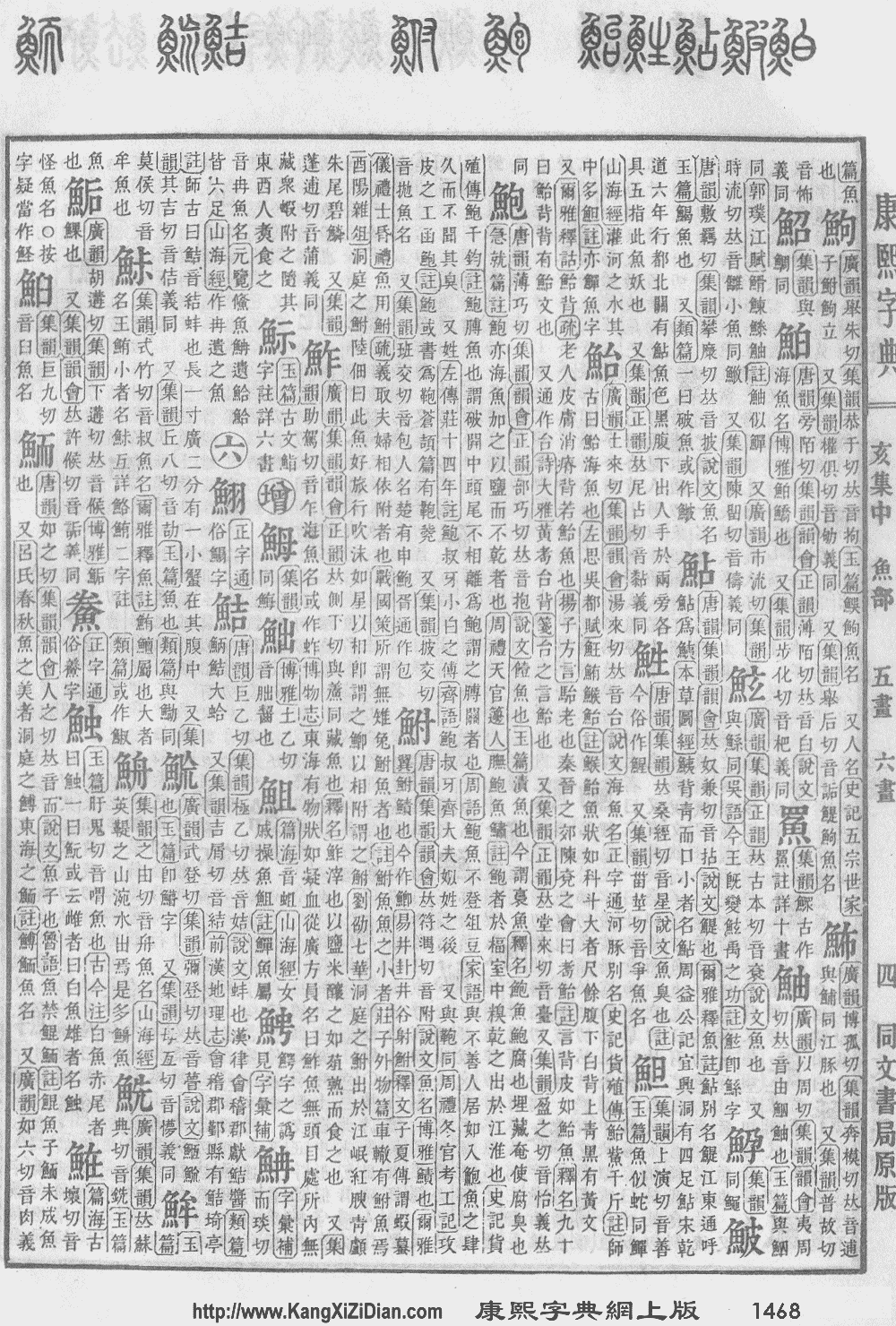
- KangXi: page 1468, character 35
- Dai Kanwa Jiten: character 46105
- Dae Jaweon: page 2001, character 39
- Hanyu Da Zidian (first edition): volume 7, page 4685, character 11
- Unihan data for U+9B9E
Chinese
| trad. | 鮞 | |
|---|---|---|
| simp. | 鲕 | |
Glyph origin
Pronunciation
Definitions
鮞
- This term needs a translation to English. Please help out and add a translation, then remove the text
{{rfdef}}.
Japanese
Etymology 1
| Kanji in this term |
|---|
| 鮞 |
| はららご Hyōgaiji |
| kun’yomi |
Compound of はらら (harara, “separately and in an unorderly fashion”, adverb) + 子 (ko, “small thing”).[1][2][3] The ko changes to go as an instance of rendaku (連濁).
First attested in 1578.[1]
The specific salmon roe sense has been largely replaced by the term イクラ (ikura) since the latter term's introduction in the mid-1920s.[4]
Pronunciation
Noun
鮞 • (hararago)
- [from 1578] (uncommon) fish eggs, roe (generally refers to roe removed from the ovary)
- Synonyms: 腹子 (harako, “roe” in general), 筋子 (sujiko, generally refers to roe still in the ovary), はらら (harara, feminine speech, obsolete)
- [1578–1920s or 30s] (archaic) (more specifically) salmon roe (generally refers to roe removed from the ovary)
- [1578–???] (archaic, possibly obsolete) (by extension) a kind of red bean where the bean seeds catch the light in a manner similar to red grapes or salmon roe
Etymology 2
| Kanji in this term |
|---|
| 鮞 |
| はらこ Hyōgaiji |
| irregular |
Rare alternative spelling.
| For pronunciation and definitions of 鮞 – see 腹子. (This term, 鮞, is an alternative spelling of the above terms.) |
(The following entry is uncreated: 腹子.)
References
- “鮞”, in 日本国語大辞典 (Nihon Kokugo Daijiten, “Nihon Kokugo Daijiten”) (in Japanese), 2nd edition, Tōkyō: Shogakukan, 2000, →ISBN
- 1995, 大辞泉 (Daijisen) (in Japanese), Tōkyō: Shogakukan, →ISBN
- 2006, 大辞林 (Daijirin), Third Edition (in Japanese), Tōkyō: Sanseidō, →ISBN
- “イクラ”, in 日本国語大辞典 (Nihon Kokugo Daijiten, “Nihon Kokugo Daijiten”) (in Japanese), 2nd edition, Tōkyō: Shogakukan, 2000, →ISBN
- 1997, 新明解国語辞典 (Shin Meikai Kokugo Jiten), Fifth Edition (in Japanese), Tōkyō: Sanseidō, →ISBN
This article is issued from Wiktionary. The text is licensed under Creative Commons - Attribution - Sharealike. Additional terms may apply for the media files.