蛋
| ||||||||
Translingual
| Stroke order | |||
|---|---|---|---|
 | |||
Han character
蛋 (Kangxi radical 142, 虫+5, 11 strokes, cangjie input 弓人中一戈 (NOLMI), four-corner 17136, composition ⿱疋虫)
References
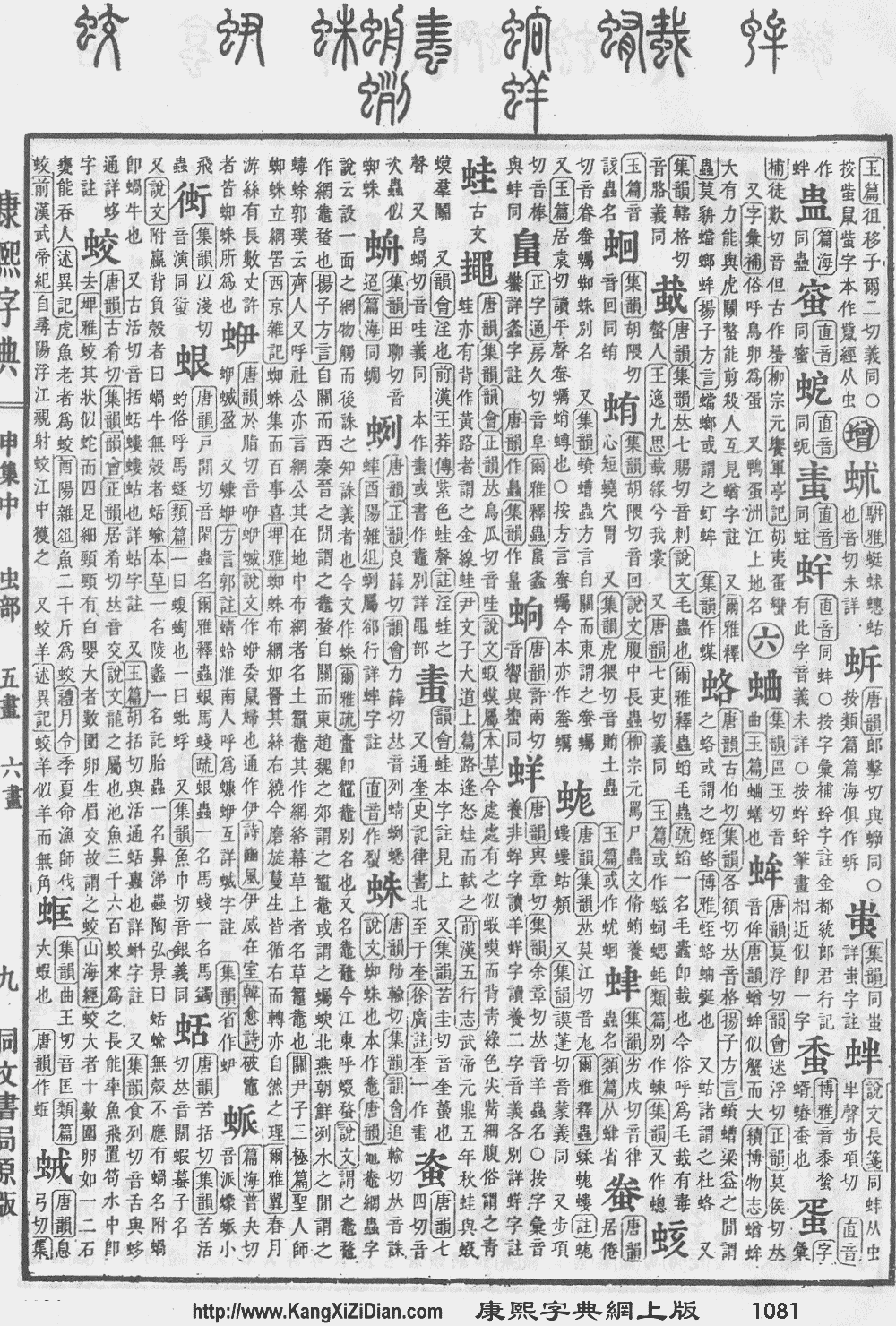
- KangXi: page 1081, character 11
- Dai Kanwa Jiten: character 32977
- Dae Jaweon: page 1549, character 5
- Hanyu Da Zidian (first edition): volume 4, page 2845, character 18
- Unihan data for U+86CB
Chinese
Glyph origin
Characters in the same phonetic series (延) (Zhengzhang, 2003)
Phono-semantic compound (形聲, OC *l'aːns) : phonetic 延 (OC *lan, *lans) + semantic 虫 (“snake, insect”). 延 is abbreviated to 疋.
Etymology 1
| simp. and trad. |
蛋 | |
|---|---|---|
| 2nd round simp. | 旦 | |
| alternative forms | 疍 蜑 鴠/𱉗 旦 informal (especially Cantonese) | |

蛋
From 彈 (MC dɑnH, “pellet”) (Zhengzhang, 2003).
Pronunciation
Definitions
蛋
Usage notes
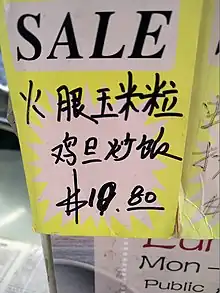
A sign reading 鸡旦炒饭 ("[chicken] egg fried rice"), which uses 旦 instead of 蛋
Occasionally spelled with the character 旦 instead, especially in the menus of cha chaan tengs, as it is faster to write when taking orders).
Synonyms
Dialectal synonyms of 蛋 (“egg (of a bird or reptile)”) [map]
Dialectal synonyms of 睪丸 (“testicle”) [map]
Compounds
Derived terms from 蛋
|
|
|
Etymology 2
| simp. and trad. |
蛋 | |
|---|---|---|
| alternative forms | 單/单 端 | |
(This etymology is missing or incomplete. Please add to it, or discuss it at the Etymology scriptorium.)
Pronunciation
Japanese
Compounds
Compounds
- 蛋白 (tanpaku): protein; egg white
- 蛋白質 (tanpakushitsu): protein
- 蛋白尿 (tanpakunyō): albuminuria
- 蛋白分解酵素 (tanpaku bunkai kōso): protease, an enzyme that breaks down protein
- 蛋白消化酵素 (tanpaku shōka kōso): protease, an enzyme that breaks down protein
- 蛋白石 (tanpakuseki): opal
- 蛋民 (tanmin): the Tanka ethnic group of southern China
Korean
Hanja
蛋 • (dan) (hangeul 단)
- This term needs a translation to English. Please help out and add a translation, then remove the text
{{rfdef}}.
Vietnamese
Han character
蛋: Hán Nôm readings: đản
- This term needs a translation to English. Please help out and add a translation, then remove the text
{{rfdef}}.
This article is issued from Wiktionary. The text is licensed under Creative Commons - Attribution - Sharealike. Additional terms may apply for the media files.